
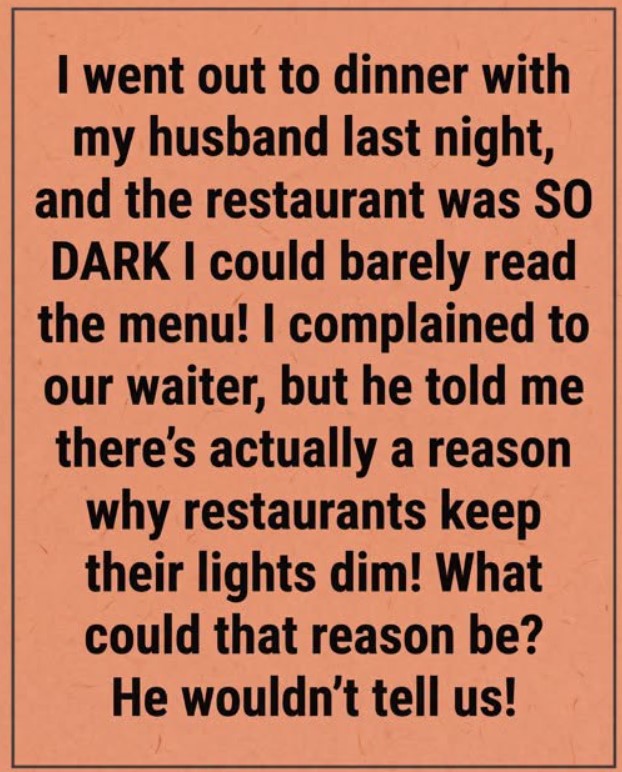
Have you ever walked into a restaurant, sat down at your table, and immediately noticed how difficult it was to see the menu? Perhaps the room was filled with warm, soft lighting, small candles, and a cozy atmosphere that made everything feel more relaxing. While some diners love this kind of environment, others wonder why restaurants don’t simply turn up the lights.
It may seem like restaurants are trying to save electricity or hide something, but dim lighting is often a carefully planned part of the dining experience. Restaurant owners and interior designers use lighting to influence the atmosphere, make guests feel comfortable, highlight certain areas, and create an environment that encourages people to enjoy their meals.
The truth is that restaurant lighting serves several purposes. From creating a romantic mood to shaping how customers experience their food, the level of brightness can make a surprising difference.
Let’s explore the real reasons restaurants keep their lights so low and why this design choice is more intentional than many people realize.
1. Dim Lighting Creates a Cozy and Intimate Atmosphere
One of the biggest reasons restaurants use low lighting is to create a comfortable and intimate environment.
Bright lights can make a restaurant feel more like a cafeteria, office, or fast-food dining area. While this type of lighting is practical, it doesn’t always create the relaxing atmosphere people expect when going out for dinner.
Softer lighting, on the other hand, makes a room feel warmer and more inviting. It can help diners relax, forget about their busy schedules, and enjoy spending time with the people around them.
This is especially important in restaurants that attract couples, families, or groups celebrating special occasions.
Imagine having dinner with someone you love. A softly illuminated table, gentle background music, and warm surroundings can make the evening feel more personal. The lighting helps create an experience that feels different from eating at home.
Restaurants understand that customers aren’t always paying for food alone. They’re also paying for the atmosphere and the overall experience.
2. It Helps Create a Romantic Setting
Have you noticed that many romantic restaurants use candles, small table lamps, or warm decorative lights instead of bright ceiling fixtures?
This is rarely an accident.
Low lighting can make a dining room feel more private and peaceful. It reduces the sense that everyone is being watched and helps couples focus on their conversation.
For restaurants that specialize in date nights, anniversaries, and special celebrations, this atmosphere can be an important part of their identity.
Soft lighting also creates a sense of occasion. A simple dinner can feel more memorable when the surroundings are carefully designed.
Some restaurants use small lights directly above tables while keeping the rest of the room relatively dark. This approach creates individual pockets of light, allowing guests to enjoy their own space without feeling completely separated from the rest of the restaurant.
The goal isn’t necessarily to make the restaurant difficult to see. It’s to create a balance between privacy, comfort, and visibility.
3. Lighting Can Influence How Customers Experience Food
One of the more surprising reasons restaurants pay attention to lighting is its relationship with the way people experience food.
Eating involves more than taste alone. Smell, appearance, texture, atmosphere, and even the surroundings can influence how enjoyable a meal feels.
Researchers have investigated how restaurant lighting affects food choices and taste perceptions. A 2017 study published in the Journal of Marketing Research found that people in dimly lit environments tended to make less healthy food choices than those dining under brighter lighting. The researchers suggested that lower light levels could influence mental alertness and, in turn, food decisions.
Other research has explored how dim lighting can influence perceived taste, although the effects may depend on the type of food being served.
This doesn’t mean that dim lighting automatically makes every dish taste better. However, it demonstrates that the dining environment can influence the way customers experience their meals.
For restaurant owners, lighting is one of several tools that can help shape the overall experience.
4. It Makes the Restaurant Look More Elegant
Lighting plays an important role in interior design.
A restaurant with carefully arranged warm lighting can look more sophisticated than the same room illuminated by strong, bright overhead lights.
Designers often use lighting to highlight certain details while allowing other areas to remain in the background.
For example, a restaurant might use small lamps to illuminate dining tables, accent lighting to draw attention to decorative walls, and softer lights around the bar.
This creates layers of light rather than making the entire room equally bright.
The effect can make architectural features, furniture, artwork, and decorative materials stand out. It also gives the space a more distinctive appearance.
Luxury restaurants frequently use this approach because their goal is to create an atmosphere that feels special and different from everyday dining.
The lighting becomes part of the restaurant’s personality, just like its furniture, music, menu, and service.
5. It Helps Customers Focus on Their Own Tables
In a brightly illuminated room, everything is visible at once. Customers can easily see every table, every movement, and every detail around them.
That isn’t necessarily a bad thing, but it can make a restaurant feel busy and less personal.
Dim lighting can reduce the visual distractions in a dining room. When individual tables are softly illuminated, guests naturally focus more on their meals and conversations.
This is particularly useful in larger restaurants where many people are dining at the same time.
Instead of making the entire room the center of attention, designers create smaller areas that feel comfortable and welcoming.
The result can be a more relaxed dining experience, especially for people who prefer quieter surroundings.
6. It Can Encourage Customers to Stay Longer
Restaurants often want customers to feel comfortable enough to enjoy their meals without feeling rushed.
Lighting can contribute to that feeling.
Bright, functional lighting is common in places where customers are expected to order quickly, eat, and leave. Fast-food restaurants and busy lunch spots often prioritize visibility and efficiency.
A restaurant offering a slower dining experience may choose softer lighting to create a more relaxed atmosphere.
When customers feel comfortable, they may be more willing to spend additional time talking, enjoying dessert, or ordering another drink.
This is not a universal rule, and lighting alone cannot determine how long someone stays. Service speed, food quality, prices, noise levels, and the restaurant’s overall atmosphere also matter.
Still, creating a comfortable environment is one way restaurants encourage guests to enjoy the experience rather than simply finish their meals.
7. Warm Lighting Makes People Feel More Comfortable
The color of the light matters almost as much as its brightness.
Many restaurants choose warm-toned lighting that produces a gentle yellow or amber glow. This type of light can make a dining room feel softer and more welcoming.
Cool white lighting, by comparison, often creates a sharper and more practical appearance. It is useful in kitchens, work areas, and spaces where clear visibility is essential.
Warm lighting is particularly popular in restaurants because it helps create a relaxed atmosphere.
It can also make materials such as wood, brick, stone, and fabric appear richer and more inviting.
Designers may combine warm general lighting with brighter task lighting in areas where staff need to work safely and efficiently.
This means that a restaurant can feel dim to customers while still providing employees with enough light to perform their jobs.
8. Restaurants Use Different Lighting for Different Areas
Not every part of a restaurant needs the same level of brightness.
A well-designed restaurant usually has several lighting zones.
The dining room may have soft ambient lighting, while the kitchen requires bright illumination so chefs can prepare food safely and accurately.
The bar might have decorative accent lights, while hallways, staircases, entrances, and restrooms need enough light for customers to move around safely.
Some restaurants also use adjustable lighting systems that allow staff to change the brightness throughout the day.
For example, a restaurant may use brighter lighting during lunch service and gradually lower it in the evening when customers arrive for dinner.
This flexibility allows the same space to serve different purposes without changing its furniture or decoration.
Lighting designers call attention to the difference between general illumination, task lighting, and accent lighting. Each serves a different purpose, and combining them can make a restaurant both attractive and practical.
9. It Can Support the Restaurant’s Brand and Identity
Lighting can also help a restaurant communicate what kind of experience it offers.
A family restaurant may prefer bright, cheerful lighting that makes the space feel open and welcoming.
A fine-dining establishment might choose warm, low lighting to create a more formal and intimate atmosphere.
A modern cocktail bar may use carefully placed accent lights to create a distinctive evening setting.
Customers often form an impression of a restaurant before they even look at the menu. The lighting, furniture, colors, and decorations all contribute to that first impression.
For this reason, restaurant owners often treat lighting as part of their branding strategy.
A particular atmosphere can become something customers recognize and associate with the restaurant.
It is one more way to distinguish a business from its competitors.
10. Is It Really About Saving Electricity?
Some people assume restaurants keep their lights low simply to reduce electricity bills.
Although energy costs are a consideration for every business, dim lighting is not always primarily about saving money.
Modern LED lighting systems allow businesses to control brightness while using energy efficiently. Restaurants can choose warm light, adjust individual zones, and create different moods without relying on traditional high-energy bulbs.
The main purpose of dim restaurant lighting is often design and atmosphere rather than reducing the electricity bill.
Of course, energy efficiency can be an additional benefit, especially when businesses install modern lighting systems and use them carefully.
11. Why Some Restaurants Take It Too Far
Although low lighting can make a restaurant feel attractive, there is a point where it becomes inconvenient.
Have you ever struggled to read a menu because the restaurant was so dark? Perhaps you had to use your phone’s flashlight or move closer to a candle just to see the prices.
This can quickly become frustrating.
Customers should be able to read menus, recognize their food, see their companions, and move around without difficulty.
Excessively dark restaurants may also create practical problems for older customers and people with visual impairments.
A good lighting design should balance atmosphere with comfort and safety.
Restaurants can achieve this by using small table lamps, adjustable lighting, illuminated menus, and brighter pathways.
The best dining environments don’t force customers to choose between enjoying the atmosphere and being able to see what they’re eating.
Frequently Asked Questions
Why are romantic restaurants usually so dark?
Romantic restaurants often use low, warm lighting because it creates a private and relaxing atmosphere. Candles and small lamps can make tables feel more intimate and help couples focus on their conversations.
Does dim lighting make food taste better?
Some studies suggest that dim lighting can influence taste perceptions, but the effect is not the same for every food. Other factors, including smell, presentation, ingredients, and personal preferences, also influence how a meal tastes.
Why do fast-food restaurants usually have brighter lights?
Fast-food restaurants often prioritize visibility, quick service, and convenience. Brighter lighting makes it easier for customers to read menus, place orders, and move through the dining area.
Do restaurants deliberately make customers stay longer?
Some restaurants use comfortable lighting as part of an atmosphere designed for relaxed dining. However, lighting is only one factor that may influence how long customers stay. Food, service, seating, and the overall experience also play important roles.
Is dim lighting always better for a restaurant?
No. The right lighting depends on the restaurant’s purpose, design, and customers. A romantic dining room may benefit from softer lighting, while a family restaurant or casual lunch spot may work better with brighter illumination.
Conclusion: Restaurant Lighting Is More Than Just Decoration
The next time you walk into a restaurant and notice that the lights are surprisingly low, remember that there is usually a reason behind the design.
Dim lighting can create a cozy atmosphere, make a dining room feel more intimate, highlight decorative details, and help a restaurant establish its own identity. It can also influence the way customers experience their food and encourage them to enjoy a more relaxed evening.
However, the best restaurants understand that atmosphere should never come at the expense of comfort. Guests still need to read their menus, see their meals, and move around safely.
Ultimately, restaurant lighting is about creating the right balance. A little softness can make an ordinary dinner feel special, but too much darkness can turn a pleasant experience into an inconvenience.
So, the next time you find yourself dining under candlelight or warm, low ceiling lights, take a closer look. What seems like a simple decorating choice may actually be an important part of the experience the restaurant wants you to remember.