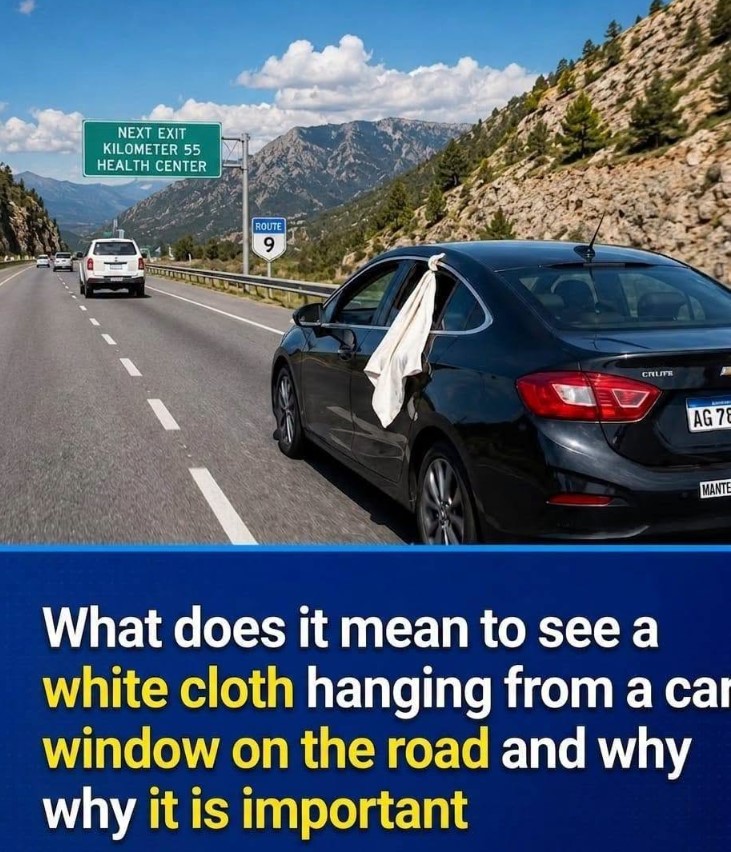
You may have noticed a white cloth, towel, or piece of fabric hanging from a car window, door handle, or side mirror and wondered what it means. At first glance, it may seem random or insignificant, but in many situations, it serves as a simple signal to communicate that a vehicle needs assistance or has been temporarily abandoned.
Long before smartphones and roadside assistance apps became common, drivers used visible objects to alert others that they were experiencing car trouble. Even today, many people continue this practice because it is easy, inexpensive, and immediately noticeable.
However, the meaning of a white cloth can vary depending on the location, situation, and local customs. Understanding these meanings can help you respond appropriately if you encounter one while driving.
This article explains why people place white cloths on their vehicles, what they commonly signify, and how to stay safe if you see one.
What Does a White Cloth on a Car Usually Mean?
In many cases, a white cloth is a universal sign that the vehicle is experiencing mechanical trouble.
It often signals:
- The vehicle has broken down.
- The driver has left temporarily to seek help.
- Roadside assistance is on the way.
- The vehicle is not abandoned.
The purpose is to inform other drivers, law enforcement, or emergency responders that the situation is already being handled.
Why White Is Commonly Used
White is often chosen because it is:
- Easy to see from a distance.
- Recognized as a neutral signal.
- Visible both day and night.
- Associated with surrender or requesting assistance.
Drivers may use a towel, T-shirt, handkerchief, rag, or any available white fabric.
When Did This Practice Start?
This tradition existed long before modern technology.
Years ago, if a vehicle broke down on a remote road, drivers would place a white cloth on the vehicle to indicate:
- They had gone to find help.
- They intended to return.
- The vehicle was not abandoned.
This simple method reduced confusion and prevented unnecessary towing in some areas.
Where Is the White Cloth Usually Placed?
Drivers commonly place it in visible areas, including:
1. The Driver’s Side Window
Partially hanging outside the window.
2. The Side Mirror
Wrapped or tied around the mirror.
3. The Door Handle
Used when windows are closed.
4. The Antenna (Older Vehicles)
A traditional placement on vehicles equipped with antennas.
The key objective is visibility.
What Should You Do If You See One?
In most situations:
Keep Driving Normally
The cloth simply indicates the owner is aware of the issue.
Stay Alert
Slow down if the vehicle is positioned dangerously.
Offer Help Only If Safe
If someone is present and appears to need assistance, you may safely ask if they are okay.
Call Authorities If Necessary
If the situation seems dangerous or an accident has occurred, contact local emergency services.
Modern Alternatives Drivers Use Today
Technology has changed roadside emergencies.
Many people now use:
- Hazard lights
- Emergency triangles
- Reflective safety vests
- Roadside assistance apps
- GPS emergency services
However, the white cloth tradition still exists because it is simple and effective.
Safety Tips If Your Own Vehicle Breaks Down
If your car becomes disabled:
Move to a Safe Area
Pull over as far from traffic as possible.
Turn on Hazard Lights
This immediately increases visibility.
Stay Inside if Conditions Are Unsafe
Busy highways can be dangerous.
Call for Help
Contact roadside assistance or emergency services if needed.
Use Visible Warning Devices
Place a white cloth, reflective triangle, or emergency markers if available.
Common Misconceptions
Many people incorrectly assume:
- The car has been abandoned.
- The vehicle is involved in criminal activity.
- The owner forgot the cloth.
In reality, it is usually a straightforward distress signal.
Why Small Signals Still Matter
Even in today’s technology-driven world, simple visual communication remains valuable.
A white cloth can quickly communicate important information without requiring batteries, internet access, or special equipment.
Sometimes the oldest solutions continue to work because they are universally understandable.
Conclusion :
A white cloth hanging from a car window may seem insignificant, but it often carries a practical message. In many cases, it simply tells others that the vehicle has experienced a problem and that the driver is already seeking assistance.
This long-standing practice reminds us that even in an age of smartphones and advanced technology, simple communication methods still have value. They help reduce confusion, increase awareness, and can even improve roadside safety.
The next time you see a white cloth attached to a vehicle, you will understand that it is usually not something mysterious or alarming. Instead, it is often a helpful signal from a driver facing an unexpected situation.
Knowing these small pieces of practical knowledge can make us more aware, more prepared, and ultimately safer while sharing the road with others.