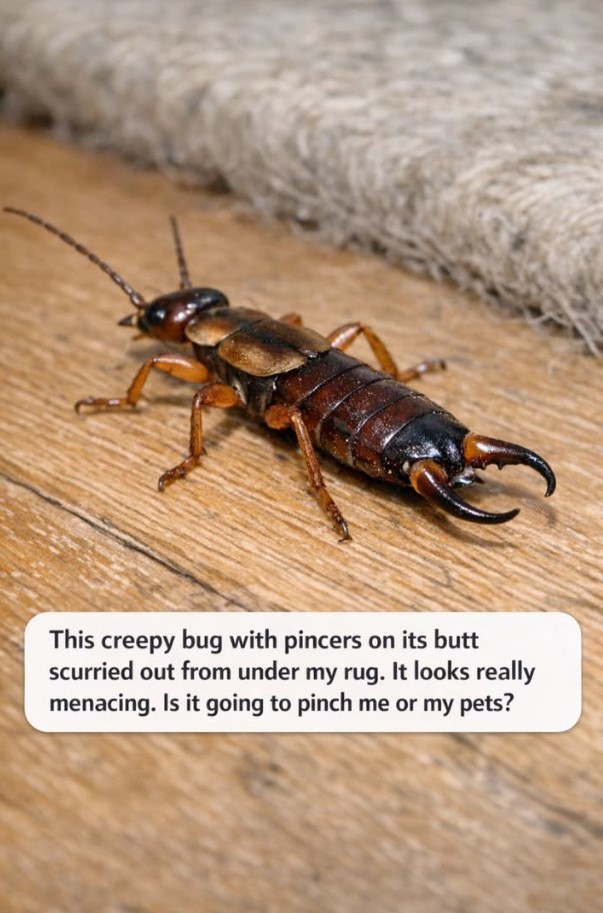
Finding a strange bug racing out from under a rug or hiding in a dark corner of your home can be enough to make anyone jump—especially when it has what looks like pincers on its back. Its quick movements and unusual shape can make it seem aggressive, dangerous, or even like something out of a horror movie.
In most cases, this insect is simply an earwig, sometimes called a “pincher bug.” Earwigs are small insects known for the forceps-like pincers at the end of their abdomen. While they may look intimidating, they are generally harmless to people and pets.
Many people worry they might pinch, bite, or even crawl into ears because of old myths—but most of those stories are far more dramatic than reality.
What Is This Bug?
Earwigs are small brown or reddish-brown insects with:
- Long, flat bodies
- Six legs
- Antennae
- A pair of pincers (called cerci) on the back
The most recognizable feature is the pincer-like tail, which often causes alarm.
According to pest experts, these pincers are mainly used for defense, catching prey, and mating—not for attacking people.
Will It Pinch You?
Technically, yes—an earwig can pinch if it feels trapped or threatened.
However:
- The pinch is usually mild
- It rarely breaks the skin
- It is not venomous
- It does not spread disease through pinching
Most people describe it as more surprising than painful. Their pincers look much worse than they actually are. Orkin notes that while an adult earwig may give an unpleasant pinch, the forceps are not dangerous to humans.
What About Pets?
Earwigs are not considered dangerous to cats or dogs.
They do not sting or inject venom, and pets are usually only curious about them. If a pet paws at one, the bug may try to defend itself, but serious harm is very unlikely.
They are more of a nuisance than a threat.
Do Earwigs Crawl Into Ears?
This is one of the oldest myths about earwigs—and it’s mostly false.
Despite the name “earwig,” they do not seek out human ears to lay eggs or burrow into the brain. Health sources confirm there is no scientific basis for that belief. If one ever ends up near an ear, it would be accidental, not intentional.
Why Are They in the House?
Earwigs love:
- Dark places
- Moist environments
- Bathrooms
- Basements
- Under rugs
- Near sinks or leaks
- Around mulch, wood piles, and damp gardens
They usually come indoors by accident while looking for shelter from heat, cold, or dryness.
They are especially active at night and hide during the day.
How to Keep Them Away
Simple prevention helps:
- Reduce indoor moisture
- Fix leaks
- Keep floors dry
- Seal cracks near doors and windows
- Move mulch and wood piles away from the house
- Vacuum or sweep them up if found indoors
Since they prefer damp hiding spots, reducing moisture is often the best solution.
Conclusion :
A bug with pincers on its back may look alarming, but in most cases, it is simply an earwig—a strange-looking insect with a much scarier appearance than reality. While its forceps may look threatening, they are mostly used for defense and rarely cause more than a small pinch.
The good news is that earwigs are not dangerous to people or pets, they do not crawl into ears on purpose, and they are usually just accidental visitors looking for dark, damp shelter.
Understanding what they are helps remove a lot of unnecessary fear. Sometimes the creepiest-looking bugs turn out to be the least harmful.
In the end, earwigs are more annoying than dangerous—and once you know that, they become a lot less frightening.