M&M’s are among the most recognizable candies in the world. Their colorful shells, delicious chocolate centers, and familiar little letter printed on each piece have made them a favorite for generations. Whether you enjoy them straight from the bag, sprinkle them over cookies, or add them to homemade desserts, these small candies are difficult to miss.
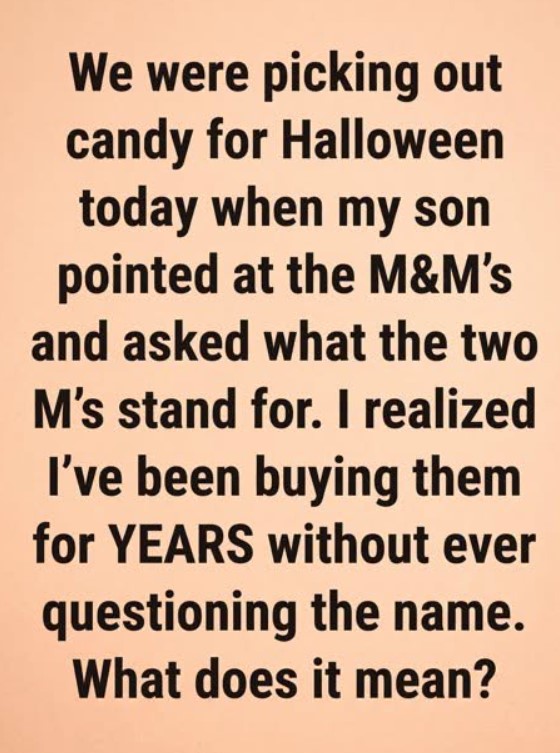
But have you ever stopped to wonder what the two letters in M&M’s actually mean?
Many people see the familiar name every time they buy a bag without knowing that it has a fascinating story behind it. The initials are not random, and they were not chosen simply because they look attractive on a candy package. They represent the surnames of two men whose business partnership helped create one of the most successful chocolate candies in history.
The story begins in the early 1940s, when Forrest Mars and Bruce Murrie joined forces to develop a chocolate treat that could be carried easily and would be less likely to melt when handled. Their idea eventually became the famous M&M’s brand, which grew from a practical wartime snack into an international favorite.
The answer is surprisingly simple, but the history behind those two letters is much more interesting than you might expect.
What Do the M&M Initials Actually Stand For?
The initials M&M stand for Mars and Murrie.
The first M represents Forrest Mars Sr., the son of Frank C. Mars, who founded the Mars candy business. The second M represents Bruce Murrie, the son of William Murrie, a senior executive associated with the Hershey Chocolate Company.
These two men came from different business backgrounds, but they found an opportunity to work together on a new kind of chocolate candy.
Forrest Mars brought the idea and business ambition behind the product, while Bruce Murrie became his business partner. Their surnames were combined to create the short and memorable name M&M’s.
It is a simple explanation, but it reveals that the famous candy brand began with a partnership between two families connected to the American chocolate industry.
Who Was Forrest Mars?
Forrest Mars Sr. was an American businessman and the son of Frank C. Mars, the founder of the Mars candy company.
He became involved in the family business but eventually developed ambitions of his own. He was interested in creating products that could appeal to consumers while solving practical problems.
One idea that influenced the development of M&M’s was the possibility of making chocolate easier to carry in warm conditions.
Traditional chocolate could become soft or melt when exposed to heat, making it inconvenient in certain situations. Forrest Mars saw an opportunity to develop a small chocolate candy protected by a hard outer coating.
His idea would eventually become one of the most recognizable products associated with the Mars name.
Who Was Bruce Murrie?
Bruce Murrie was the son of William Murrie, a prominent executive at the Hershey Chocolate Company.
His family connection to Hershey was particularly important during the early development of M&M’s. At the time, access to chocolate supplies was an important consideration for anyone hoping to manufacture chocolate products on a large scale.
Bruce Murrie joined Forrest Mars in the new business venture, helping establish the partnership that gave the candy its name.
The agreement connected the Mars and Murrie families and helped provide the resources needed to bring the new product to market.
Why Were M&M’s Created in the First Place?
The original idea behind M&M’s was not simply to make another chocolate candy. Forrest Mars wanted to create something practical, portable, and easier to handle than ordinary chocolate.
One story frequently associated with the invention dates back to the Spanish Civil War, which took place between 1936 and 1939.
According to the commonly told account, Forrest Mars observed soldiers eating small pieces of chocolate covered in a hard sugar coating. The coating helped protect the chocolate from direct contact with the fingers and made it less likely to melt immediately in warm conditions.
This inspired him to explore the possibility of creating a similar product for the American market.
The concept was particularly appealing because chocolate could be difficult to transport in hot weather. A protective outer shell offered a practical solution.
Rather than selling a conventional chocolate bar, the new product would consist of small chocolate pieces surrounded by a hard candy coating.
This design made the candies convenient to carry, distribute, and eat.
The Importance of the Hard Candy Shell
The hard outer shell became one of the most distinctive features of M&M’s.
Unlike an ordinary chocolate bar, which can quickly become messy when exposed to warmth or handled directly, the candy coating provides a protective layer around the chocolate.
It also gives each piece its familiar colorful appearance.
Although the coating does not make the candy completely immune to heat, it helps protect the chocolate center during ordinary handling.
This practical feature was one of the reasons the product became particularly useful during a period when portable food was important.
How Did the Partnership Between Mars and Murrie Work?
The partnership between Forrest Mars and Bruce Murrie was an important part of the candy’s early history.
Forrest Mars had the product idea and wanted to develop a business capable of manufacturing and distributing it.
However, producing chocolate candies required access to ingredients, manufacturing resources, and a reliable supply chain.
Bruce Murrie’s connection to Hershey was valuable because the company was an established chocolate manufacturer.
Hershey supplied chocolate for the early production of M&M’s, helping the new venture obtain an important ingredient during a period of uncertainty.
The partnership therefore brought together different strengths. Forrest Mars contributed the product vision and business direction, while Bruce Murrie’s involvement helped establish the commercial venture.
The two surnames eventually became the name recognized by millions of candy lovers.
Why Was Hershey Involved?
During the early 1940s, the availability of important ingredients was becoming increasingly complicated because of World War II.
Chocolate and other commodities were affected by wartime demand and restrictions. Having access to a dependable chocolate supplier was therefore especially valuable.
The connection with Hershey helped the new business obtain the chocolate required for production.
This relationship also demonstrates how business partnerships can bring together people and resources that would be difficult to combine independently.
When Were M&M’s First Introduced?
M&M’s were introduced in 1941.
The first candies were produced in Newark, New Jersey, and were initially associated with the needs of American military personnel.
Their hard candy coating made them convenient for transportation and storage compared with ordinary chocolate products.
During World War II, M&M’s were supplied to American military personnel, making the candy particularly well suited to people who needed portable food.
The original packaging was also different from the familiar colorful bags available today. Early M&M’s were sold in cardboard tubes, which made them convenient to carry.
After the war, the candies became available to the general public and gradually developed into a popular everyday treat.
From a Military Snack to a Household Favorite
The transition from military use to everyday consumption helped M&M’s reach a much wider audience.
When soldiers returned home after the war, they were already familiar with the candy. Its portability, distinctive taste, and convenient size helped make it attractive to other consumers as well.
The company continued developing the product, improving its packaging, and expanding its availability.
Over time, M&M’s became much more than a practical chocolate snack. They became a familiar part of celebrations, movie nights, desserts, and everyday treats.
Why Is There a Small Letter M Printed on Every Candy?
One of the most recognizable details of M&M’s is the small letter printed on each candy.
However, the original candies did not always have this familiar marking.
The letter M was introduced in 1950 as a way to help consumers identify genuine M&M’s and distinguish them from competing products.
At the time, the candies had become popular enough that the company wanted a recognizable mark that would help customers identify the original product.
The slogan “Look for the m on every piece” encouraged consumers to check for the distinctive letter.
Initially, the M was printed in black. In 1954, the color was changed to white, creating the familiar appearance that many people recognize today.
This small marking became an important part of the brand’s identity.
The Letter M Became a Symbol of Authenticity
Today, the letter M is more than a simple manufacturing detail.
It is one of the visual features that makes the candy instantly recognizable.
Even when the candies are removed from their packaging and placed in a bowl, the printed letter helps identify them.
It is also a reminder of how a small design decision can become an important part of a product’s identity.
How Did M&M’s Become So Popular?
The success of M&M’s did not happen overnight. Several factors helped the brand become one of the most familiar names in the candy industry.
1. A Convenient and Practical Design
The hard outer shell helped protect the chocolate and made the candies easier to carry.
Their small size also made them convenient to share and enjoy in different situations.
2. A Recognizable Appearance
The colorful candy shells and small printed M created a distinctive appearance.
Consumers could easily recognize the product, even when it was displayed alongside other sweets.
3. Different Flavors and Varieties
Over the years, the company introduced different versions of the original candy.
Peanut M&M’s became available in 1954, giving customers another option with a crunchy nut center.
Later developments included peanut butter, caramel, and other varieties, allowing the brand to appeal to people with different tastes.
4. Creative Advertising
M&M’s became particularly recognizable through its memorable advertising campaigns.
The colorful characters, humorous commercials, and playful brand personality helped the candies become part of popular culture.
The brand eventually developed a collection of recognizable characters, each with its own personality and appearance.
5. A Candy for Different Occasions
Another reason for the product’s popularity is its versatility.
M&M’s can be enjoyed directly from the package or used in homemade desserts, including cookies, brownies, cakes, ice cream, and other sweet treats.
Their bright colors also make them popular for birthday parties, holiday celebrations, and decorative dessert recipes.
Interesting Facts About M&M’s You May Not Know
Although the name has a simple explanation, the history of M&M’s contains several interesting details.
1. M&M’s Were Originally Sold in Cardboard Tubes
Before the familiar bags became common, early M&M’s were packaged in cardboard tubes.
This packaging was practical for carrying and distributing the candies, especially during their early military use.
It looked very different from the colorful packages available in supermarkets today.
2. The Original M Was Black
The famous letter printed on each candy was initially black when it appeared in 1950.
The company changed it to white in 1954, giving the candies the marking that consumers recognize today.
3. Peanut M&M’s Arrived in 1954
The original chocolate version was not the only variety for long.
Peanut M&M’s were introduced in 1954, adding a crunchy peanut center beneath the chocolate and candy shell.
This helped expand the brand beyond its original product.
4. M&M’s Have Been to Space
M&M’s became part of space history when they were selected as food for astronauts aboard the first space shuttle missions in the early 1980s.
Their small size and convenient packaging made them suitable for use as a snack in space.
This unusual achievement became another memorable chapter in the brand’s history.
5. The Name Has Remained Recognizable for Generations
Although the company has introduced new products, packaging, characters, and advertising campaigns, the original initials have remained central to the brand.
The two letters continue to connect the modern product with the partnership between Forrest Mars and Bruce Murrie in the early 1940s.
What Happened to the Original Mars and Murrie Partnership?
The partnership between Forrest Mars and Bruce Murrie did not last forever.
As the business developed, the relationship eventually came to an end. Forrest Mars later gained control of the M&M brand after buying out Murrie’s interest.
Although the original partnership ended, the name created from their surnames remained.
This is an interesting part of the story because the brand continued to grow long after the two men stopped working together.
Today, millions of people recognize the initials without necessarily knowing that they represent two individuals who helped establish the original business.
The story also shows how a name can outlive the partnership or circumstances that first created it.
Why Do People Still Love M&M’s Today?
Decades after their introduction, M&M’s remain a familiar treat for people of different ages.
Part of their appeal comes from their simple combination of chocolate and a crunchy candy shell.
They are easy to share, convenient to carry, and available in several varieties.
Their colorful appearance also makes them especially popular for baking and decorating desserts.
Many people associate M&M’s with childhood memories, family celebrations, movie nights, and special occasions.
The brand has also managed to maintain a recognizable identity while introducing new flavors and products.
Although the candy has changed in many ways since 1941, the original idea remains easy to recognize: small pieces of chocolate protected by a hard outer shell.
Conclusion :
The next time you open a bag of M&M’s, take a moment to look at the two familiar letters printed on the packaging and the small M stamped on each candy. They may seem like ordinary details, but they represent a fascinating piece of chocolate history.
The initials M&M stand for Mars and Murrie, the surnames of Forrest Mars Sr. and Bruce Murrie, the two men whose partnership helped bring the famous candy to life. Forrest Mars was the son of the founder of the Mars candy business, while Bruce Murrie was the son of a senior executive at Hershey. Their collaboration brought together a product idea, business experience, and access to chocolate supplies at a time when those resources were particularly important.
What began as an idea for a convenient chocolate snack eventually became one of the most recognizable candy brands in the world. The hard sugar coating helped protect the chocolate center, making the candies easier to carry and handle. Their usefulness during World War II helped establish their reputation, and their introduction to the general public after the war allowed the brand to reach an even larger audience.
The story becomes even more interesting when you consider how much attention was given to the smallest details. The famous letter M was added in 1950 to help customers identify genuine candies, and its color changed from black to white in 1954. Over time, this little marking became one of the most recognizable features of the product.
M&M’s also continued to evolve. New varieties, including peanut and peanut butter versions, expanded the original idea, while memorable advertising campaigns and colorful characters helped the brand become part of popular culture. From supermarket shelves to homemade desserts and even space missions, these small chocolate candies have found their way into many different parts of everyday life.
Perhaps the most surprising part of the story is that the two letters are not simply a catchy brand name. They are a reminder of the people and partnership behind the original product. Even though Forrest Mars and Bruce Murrie eventually went their separate ways, the name they created together remained and became known around the world.
So, if you ever hear someone wondering what M&M actually means, you now know the answer: Mars and Murrie. It is a small piece of history hidden in a name that millions of people see every day.
Sometimes, the most familiar products have the most interesting stories behind them. And in the case of M&M’s, two simple initials tell the story of a partnership that helped turn a practical chocolate idea into a lasting candy favorite.