
Have you ever wondered whether there is a proper way to pour wine into a glass? It may seem like a simple task, but the amount you pour can actually make a difference to the drinking experience.
Imagine that you are hosting a lovely dinner with friends or family. The table is ready, the food is delicious, and you have opened a bottle of red wine to serve your guests. You take four different glasses, each containing a different amount of wine, and suddenly face an interesting question: Which one is filled correctly?
At first glance, the answer might seem obvious. Some people may choose the glass that looks half-full, while others might prefer a more generous serving. However, there is a reason why wine glasses have their distinctive shape, and experienced wine drinkers often follow a particular pouring technique.
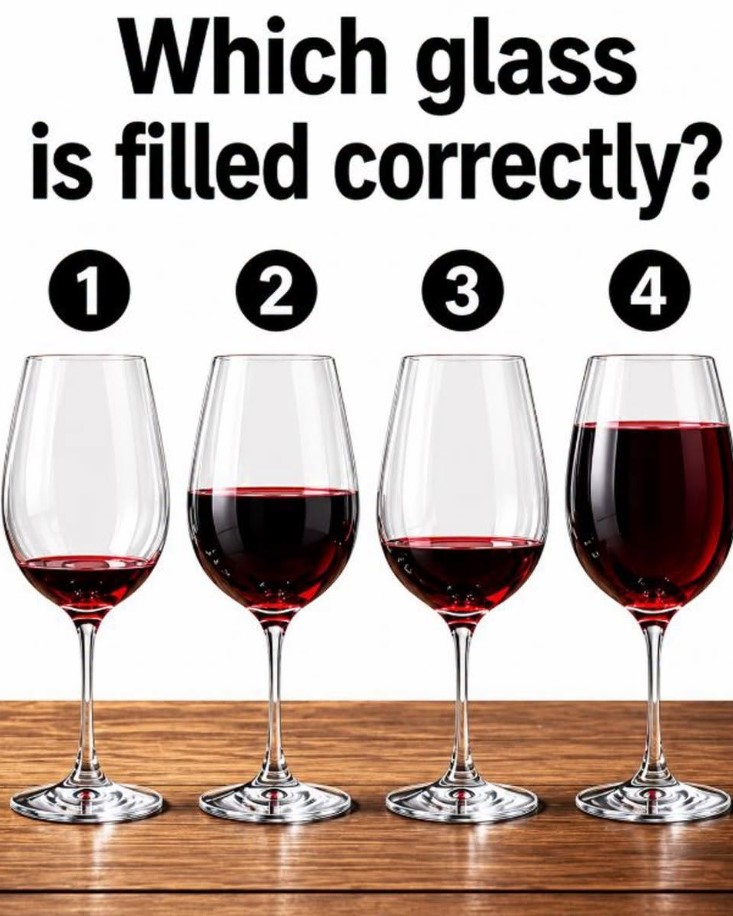
Take a close look at the four glasses in the picture. They are numbered from 1 to 4, and each contains a different amount of red wine.
Before reading further, try to choose the glass you believe is filled correctly. Don’t simply pick the one that looks most generous or the one that appears most balanced. Think about how wine is meant to be enjoyed and how much empty space should remain inside the glass.
The Four Glasses: Which One Would You Choose?
Let’s examine the four options and understand what each serving looks like.
Glass Number 1: The Very Small Pour
The first glass contains only a small amount of red wine at the bottom.
Although this might be suitable for a quick tasting or sampling several different wines, it is considerably smaller than a typical serving.
A small pour is not necessarily wrong in every situation. For example, wine tastings often involve smaller portions because participants want to compare several varieties without drinking a full glass of each.
However, if you are serving wine with dinner, this amount may feel rather insufficient.
Glass Number 2: The Generous Pour
The second glass contains noticeably more wine. The liquid reaches approximately the widest part of the bowl, creating a substantial-looking serving.
Many people might choose this option because it looks balanced and generous.
It provides more wine than the first glass while still leaving some empty space at the top.
However, the important question is not simply how much wine the glass contains. Its shape also matters.
A wine glass is designed to leave room for the liquid to move when the glass is gently swirled. Depending on the glass size and shape, filling it to the widest point may leave less room than ideal.
Glass Number 3: The Balanced Pour
The third glass contains a moderate amount of wine, slightly below the widest part of the bowl.
It may look smaller than the second glass, but this is precisely what makes it interesting.
There is enough wine to enjoy a proper serving, while the empty space above the liquid allows the drinker to gently swirl the wine without spilling it.
This space also helps collect the wine’s aromas, making it easier to appreciate its smell before taking a sip.
As you will discover, this is the option recommended by the original puzzle.
Glass Number 4: The Almost Full Glass
The fourth glass is filled nearly to the top.
At first, this might look like the most generous option. After all, nobody can complain about receiving plenty of wine!
However, filling a wine glass this much creates a practical problem.
There is very little room left for swirling, and even a small movement can cause the wine to spill over the edge.
More importantly, the drinker loses some of the benefits of the glass’s special shape.
A wine glass is not designed to be filled to the rim. Leaving enough empty space is part of serving wine properly.
The Correct Answer: Glass Number 3
If you selected Glass Number 3, congratulations! According to the original puzzle, this is the correctly filled glass.
The reason is that it contains a moderate serving while leaving enough room above the wine for swirling and enjoying its aromas.
Wine glasses are designed with a rounded bowl that becomes narrower toward the opening. This shape helps concentrate aromas near the top of the glass, allowing the drinker to notice the wine’s different scents.
When you gently swirl the glass, the wine moves around the bowl and comes into contact with more air. This can help release aromatic compounds that contribute to the wine’s smell.
If the glass is filled too close to the top, swirling becomes difficult and messy.
Glass Number 3 offers a practical balance between the amount of wine served and the space needed to appreciate it.
Why Should You Never Fill a Wine Glass to the Top?
One of the biggest mistakes people make when serving wine is assuming that a full glass is always better.
Unlike ordinary water glasses, wine glasses are specifically designed to support the wine’s aroma and tasting experience.
Leaving empty space inside the glass serves several purposes.
1. It Gives You Room to Swirl
Swirling is a common technique used by wine drinkers to move the wine around the bowl.
This movement increases the surface area exposed to air and can help release aromas.
However, if the glass is filled to the rim, even a gentle swirl can send wine over the edge.
Leaving enough space makes the process easier and more comfortable.
2. It Helps Concentrate the Aromas
The narrower opening of a wine glass helps gather aromas above the liquid.
When you bring the glass toward your nose, you can smell different characteristics of the wine, such as fruit, flowers, spices, or oak.
These aromas are an important part of the overall tasting experience.
A glass filled too high leaves very little room for them to collect.
3. It Makes Drinking More Comfortable
A properly poured glass is easier to hold, move, and carry.
Whether you are sitting at the dinner table or talking with guests, having enough space at the top reduces the risk of accidental spills.
It also makes the wine easier to enjoy without worrying about every movement.
How Much Wine Should You Actually Pour?
For a typical serving of table wine, a standard restaurant portion is around 5 ounces, which is approximately 150 milliliters.
However, the correct level depends on the size and shape of the glass.
A large wine glass can hold considerably more than a smaller one, so pouring the same amount into different glasses may create very different appearances.
For red wine, a moderate pour often leaves plenty of room for swirling and allows the aromas to collect.
White wine is also commonly served in moderate portions, although the ideal amount can vary depending on the glass and serving temperature.
The important thing is to avoid filling the glass completely.
Does the Type of Wine Glass Matter?
Yes. Different wine glasses are designed with different shapes to suit different styles of wine.
Although you do not need a separate glass for every bottle, understanding the basic differences can help you serve wine more comfortably.
Red wine glasses: These often have larger bowls that provide room for swirling and allow aromas to develop.
White wine glasses: These are commonly narrower and smaller than many red wine glasses. Their shape can help preserve cooler serving temperatures.
Sparkling wine glasses: Flutes have a tall, narrow shape that helps display the bubbles and maintain carbonation for longer.
Universal wine glasses: These are designed to work reasonably well with several types of wine, making them a practical option for everyday use.
No matter which style you choose, the same basic principle applies: leave enough space at the top rather than filling the glass to its maximum capacity.
Simple Tips for Serving Wine Like a Pro
You do not need to be a professional sommelier to serve wine properly. A few simple habits can make the experience more enjoyable for everyone.
- Choose a clean glass that is appropriate for the type of wine.
- Avoid filling the glass to the rim.
- Pour slowly to prevent splashing.
- Hold the glass by its stem when possible, especially when serving chilled wine.
- Leave enough room for gentle swirling.
- Serve the wine at an appropriate temperature.
- Allow guests to decide whether they would like another serving rather than automatically filling their glasses.
These small details can make a dinner gathering feel more comfortable and thoughtfully prepared.
Conclusion :
The question of which glass is filled correctly may seem like a simple visual challenge, but it reveals an interesting detail about the way wine should be served. Many people naturally choose the fullest glass or the one that appears to contain the most satisfying portion. However, when it comes to enjoying wine, filling a glass completely is not always the best approach.
The correct answer in this puzzle is Glass Number 3. Its moderate serving leaves enough empty space for the wine to be gently swirled, helping release its aromas while reducing the risk of spills. The shape of a wine glass is designed to support this experience, and leaving room above the liquid allows the drinker to appreciate more than just the taste.
Of course, the ideal amount can vary depending on the size of the glass, the type of wine, and personal preferences. A small tasting portion may be perfectly appropriate in one situation, while a larger serving may suit another. The important lesson is that a wine glass does not need to be full to be served correctly.
This little challenge also reminds us that everyday habits often have more thought behind them than we realize. Something as ordinary as pouring a drink can involve practical considerations that improve the experience.
So, did you choose Glass Number 3, or were you tempted by the more generous serving in Glass Number 2? Share the puzzle with your friends and family, compare your answers, and see who already knew the secret behind a proper wine pour. Sometimes, the best choice is not the one that contains the most, but the one that leaves just enough room to enjoy what is inside.