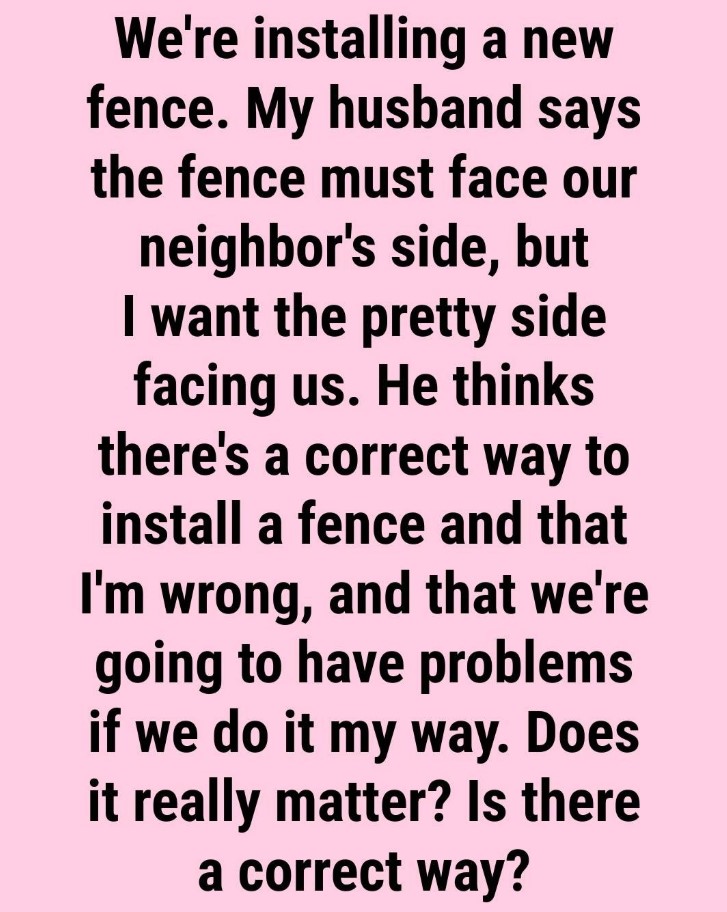
Installing a fence may seem like a simple home improvement project, but it often raises questions about property boundaries, appearance, and neighborhood etiquette. One of the most common questions homeowners ask is: “Which side of the fence should face the neighbor?”
This topic becomes especially important in residential areas where fences separate two properties. While many people assume there is one universal rule, the answer can actually depend on local regulations, homeowners’ associations, and the type of fence being installed.
Beyond legal rules, fence placement also involves courtesy and maintaining positive relationships with neighbors. Understanding the common practices can help homeowners avoid disagreements and make better decisions before beginning a fencing project.
WHY FENCE DIRECTION MATTERS
1. Appearance and curb appeal
Most fences have a “finished” side and a “support” side. The finished side is usually smoother and more attractive, while the back side may show posts, rails, or structural supports.
The direction the fence faces affects how the property looks from both sides.
2. Neighbor relationships
Fence disputes are common when neighbors feel ignored or treated unfairly. Something as simple as facing the unfinished side toward a neighbor can sometimes create tension.
Good communication before installation can help prevent misunderstandings.
3. Local rules and regulations
Some neighborhoods or local governments have specific requirements about fence height, placement, or orientation. Ignoring these rules may result in fines or required modifications later.
THE MOST COMMON FENCE RULE
1. The finished side usually faces outward
In many areas, the standard practice is for the finished or attractive side of the fence to face the neighbor or public street.
This is often considered proper etiquette because it presents the cleaner, more visually appealing side to others rather than keeping it only for the property owner’s view.
2. The support side faces inward
The side showing posts and rails typically faces the owner’s property. This arrangement is common for privacy fences and wooden fences.
It also allows easier access for maintenance and repairs from the owner’s side.
3. Why this tradition exists
This practice developed because outward-facing finished fences are generally seen as more respectful and aesthetically pleasing for the surrounding neighborhood.
EXCEPTIONS TO THE RULE
1. Double-sided fences
Some modern fences are designed to look identical on both sides. These “good neighbor” fences remove the issue completely because neither side appears unfinished.
2. Shared fence agreements
When neighbors split the cost of a fence, they may agree on a specific style or orientation together.
Communication and written agreements can help avoid future disputes.
3. HOA or city regulations
Certain homeowner associations or local building codes may require specific fence styles or directions. Always checking local rules before installation is important.
COMMON TYPES OF FENCES
1. Wooden privacy fences
These are among the most common residential fences and often have a clear finished side and support side.
2. Vinyl fences
Vinyl fences are popular because they require less maintenance and often look similar on both sides.
3. Chain-link fences
Chain-link fences are usually neutral in appearance, though some homeowners still choose which side of the posts faces outward.
4. Decorative metal fences
Metal fences often look attractive from both directions and are commonly used for style rather than privacy.
HOW TO AVOID FENCE DISPUTES
1. Talk to neighbors before installation
Discussing plans beforehand can reduce tension and create mutual understanding.
2. Check property boundaries carefully
Installing a fence in the wrong location can lead to serious disagreements and legal issues.
3. Review local regulations
Permits, height limits, and orientation rules vary by location, so research is important before construction begins.
4. Choose durable materials
A strong, well-maintained fence benefits both properties and reduces future repair concerns.
WHY “GOOD NEIGHBOR” FENCES ARE POPULAR
1. They look the same on both sides
These fences avoid arguments about which side is more attractive.
2. They improve neighborhood appearance
Balanced fence designs create a cleaner and more uniform look between properties.
3. They promote fairness
Both neighbors enjoy the same visual quality instead of one side appearing unfinished.
COMMON MISTAKES HOMEOWNERS MAKE
1. Ignoring local rules
Skipping permits or regulations can create expensive problems later.
2. Building without communication
Unexpected construction can sometimes damage neighbor relationships unnecessarily.
3. Choosing appearance over function
A fence should provide both durability and practical value, not just visual appeal.
Conclusion :
The question of which side of a fence should face the neighbor may seem small, but it reflects larger issues involving property care, neighborhood respect, and home design. In many cases, the accepted standard is for the finished side of the fence to face outward toward neighbors or public areas, while the structural side faces inward toward the owner’s property.
However, the best solution often depends on local regulations, fence style, and communication between neighbors. Modern “good neighbor” fences have become especially popular because they remove visual differences and create a more balanced appearance for both properties.
Beyond rules and appearance, fences also symbolize boundaries and cooperation. A well-planned fence can improve privacy, security, and property value while still maintaining positive relationships with the people living nearby.
In the end, the most important part of any fencing project is not only how the fence looks, but how thoughtfully the project is handled. Careful planning, respect for neighbors, and attention to local guidelines can help create a result that benefits everyone involved.