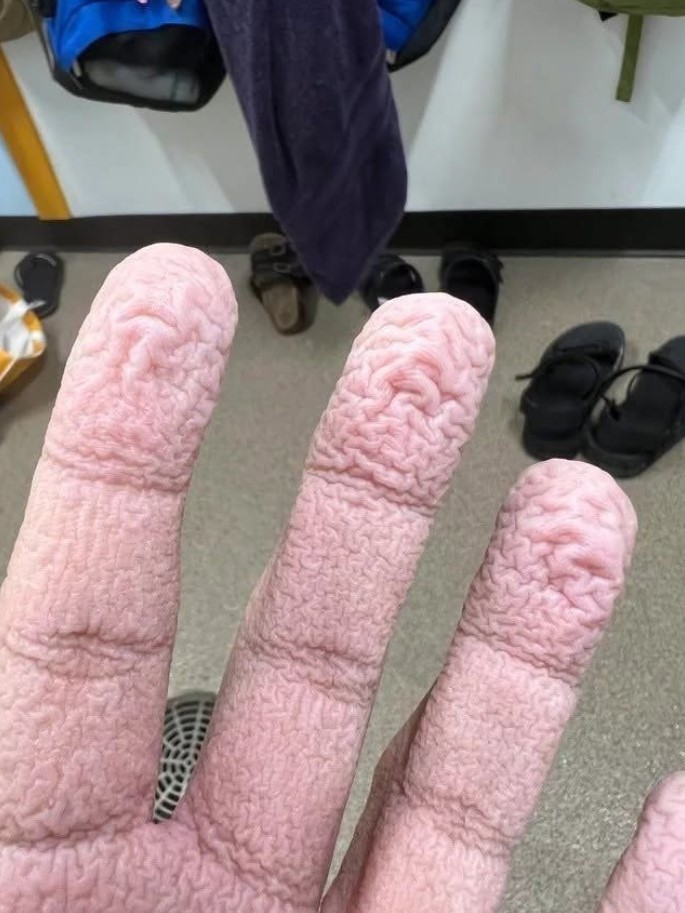
Almost everyone has noticed their fingers becoming wrinkled after spending time in the bath, swimming pool, or even while washing dishes. For years, many people believed this happened simply because the skin absorbed water and expanded. However, modern scientific research has revealed that the process is actually much more fascinating. Wrinkled fingers are the result of an active response by your nervous system rather than passive water absorption alone.
While temporary wrinkling after water exposure is usually completely normal, the way your skin reacts can sometimes provide subtle clues about your body’s overall health. In rare situations, changes in how quickly your fingers wrinkle—or if they stop wrinkling altogether—may indicate issues involving the nerves, circulation, or certain medical conditions.
In this article, we’ll explore why your fingers wrinkle in water, what purpose this unique response serves, when it may be worth paying closer attention, and how to keep your skin healthy if you spend a lot of time in the water.
Why Do Fingers Wrinkle in Water?
For many decades, scientists assumed wrinkling occurred because the outer layer of skin absorbed water and swelled. While the skin does absorb a small amount of moisture, researchers have discovered that this explanation isn’t the whole story.
Instead, wrinkling is largely controlled by the autonomic nervous system—the same system responsible for regulating breathing, heart rate, digestion, and other automatic body functions.
When your hands remain submerged for several minutes, water enters the sweat ducts in your fingertips. This triggers tiny blood vessels beneath the skin to constrict, reducing the volume of tissue underneath. As the tissue shrinks while the outer skin remains the same size, folds and wrinkles begin to appear.
How Long Does It Take?
The amount of time required varies from person to person, but most people notice visible wrinkling after approximately:
- 5 to 10 minutes in warm water
- Slightly longer in cooler water
- Faster in very warm water
Once your hands dry completely, the wrinkles gradually disappear within a few minutes to an hour.
Why Does the Body Do This?
Scientists believe wrinkled fingertips serve an important evolutionary purpose.
Similar to the tread on a tire, wrinkles may improve grip on wet objects by channeling water away from the surface of the skin. This makes it easier to hold slippery items, walk across wet rocks, or gather food in damp environments.
Several studies have found that people with wrinkled fingers often perform better when handling wet objects compared to those with smooth fingertips.
This suggests the response may have evolved to improve survival long before modern tools and footwear existed.
The Science Behind the Wrinkles
The process involves several biological systems working together.
When your fingertips stay underwater:
- Water enters sweat pores.
- The nervous system detects the change.
- Small blood vessels narrow.
- Blood volume beneath the skin decreases.
- The skin collapses into folds.
Because the response depends on healthy nerve function, researchers sometimes use water-induced wrinkling as a simple clinical test when evaluating certain nerve disorders.
Are Wrinkled Fingers Normal?
Yes. For the vast majority of people, wrinkled fingers after water exposure are completely harmless.
They simply indicate that your nervous system is functioning normally.
Most people experience:
- Wrinkled fingertips.
- Slightly pale skin.
- Mild tightness.
- Temporary changes that disappear shortly after drying off.
These changes require no treatment.
When Could It Signal Something Else?
Although uncommon, unusual wrinkling patterns may occasionally be associated with underlying health issues.
You should consider discussing the symptom with a healthcare professional if:
- Your fingers wrinkle almost immediately after brief water exposure.
- They no longer wrinkle at all despite prolonged soaking.
- Wrinkling occurs without any water contact.
- The wrinkles are accompanied by pain, numbness, weakness, or color changes.
These symptoms don’t automatically indicate a serious condition, but they may warrant further evaluation.
Conditions That May Affect Finger Wrinkling
Several medical conditions can interfere with the body’s normal wrinkling response.
Nerve Damage
Peripheral nerve injuries may prevent the blood vessels from responding normally, reducing or eliminating wrinkling.
Diabetes
Long-term diabetes can damage nerves throughout the body, sometimes affecting the wrinkling response.
Circulatory Disorders
Poor blood circulation may influence how quickly blood vessels constrict during water exposure.
Autoimmune Diseases
Some autoimmune disorders affect blood vessels or nerve function and could alter skin responses.
Certain Medications
Medications that influence blood flow or nervous system activity may occasionally change how the skin reacts to prolonged water exposure.
Why Do Some People’s Fingers Wrinkle Faster?
Several factors influence how quickly wrinkles develop.
Water Temperature
Warm water generally speeds up the process.
Age
Older adults often develop wrinkles more rapidly because aging skin naturally loses elasticity.
Skin Thickness
People with thinner skin may notice wrinkles sooner than those with thicker skin.
Individual Biology
Every person’s nervous system responds slightly differently, making wrinkling times vary naturally.
Can Frequent Water Exposure Harm Your Skin?
Occasional wrinkling isn’t harmful, but frequent exposure to water can affect the skin barrier.
People who spend hours each day washing dishes, cleaning, swimming, or working in healthcare may experience:
- Dry skin.
- Cracking.
- Irritation.
- Increased sensitivity.
- Eczema flare-ups.
These problems result from repeated moisture loss after the skin dries—not from the wrinkles themselves.
Tips to Protect Your Hands
Keeping your skin healthy doesn’t require complicated routines.
Simple habits can make a significant difference.
Moisturize Regularly
Apply a fragrance-free moisturizer after washing your hands to restore lost moisture.
Wear Protective Gloves
Use waterproof gloves when cleaning, gardening, or washing dishes for extended periods.
Avoid Extremely Hot Water
Very hot water strips natural oils from the skin, increasing dryness.
Choose Gentle Soap
Harsh cleansers may damage the skin barrier. Mild soaps are usually a better choice for frequent hand washing.
Stay Hydrated
Proper hydration supports overall skin health from the inside out.
Common Myths About Wrinkled Fingers
Myth: Fingers Wrinkle Because They Absorb Water
Only partially true. While the skin absorbs some water, nerve-controlled blood vessel changes play the primary role.
Myth: Wrinkled Fingers Mean You’re Dehydrated
False. Temporary wrinkling after water exposure has nothing to do with dehydration.
Myth: Wrinkles Damage the Skin
False. Normal wrinkling is temporary and harmless.
Myth: Everyone Wrinkles at the Same Rate
False. Age, temperature, genetics, and nerve function all influence how quickly wrinkles appear.
Interesting Facts About Finger Wrinkling
- Only fingers and toes wrinkle significantly after soaking.
- Researchers use the wrinkling response in some neurological evaluations.
- Wrinkles improve grip on wet surfaces rather than making the skin weaker.
- The response disappears once the skin dries.
- Children and adults both experience the phenomenon, although timing varies.
Frequently Asked Questions
Should I worry if my fingers wrinkle in the shower?
No. This is a normal response to water exposure.
Why don’t my palms wrinkle as much?
The fingertips contain specialized skin and nerve structures that produce the most noticeable wrinkling.
Can lotions prevent wrinkling?
Moisturizers improve skin health but won’t stop the normal biological response to water.
Is finger wrinkling permanent?
No. The skin returns to normal after drying.
Can wrinkled fingers predict disease?
Not by themselves. However, significant changes in the normal wrinkling response may sometimes provide useful information for healthcare providers when combined with other symptoms.
Conclusion :
Wrinkled fingers after spending time in water are far more than a simple cosmetic curiosity—they’re a remarkable example of how the human body adapts to its environment. Rather than resulting solely from water absorption, the familiar folds on your fingertips are produced by a coordinated response involving your nervous system and tiny blood vessels, likely helping improve your grip on wet objects. In most cases, this temporary wrinkling is perfectly normal and disappears soon after your skin dries. However, paying attention to unusual changes—such as a complete absence of wrinkling, extremely rapid wrinkling, or symptoms like numbness, pain, or discoloration—can occasionally provide valuable clues about underlying nerve or circulation issues. By understanding why this happens and taking simple steps to care for your skin, you can better appreciate one of the body’s many fascinating natural responses while knowing when it’s appropriate to seek medical advice if something doesn’t seem quite right.