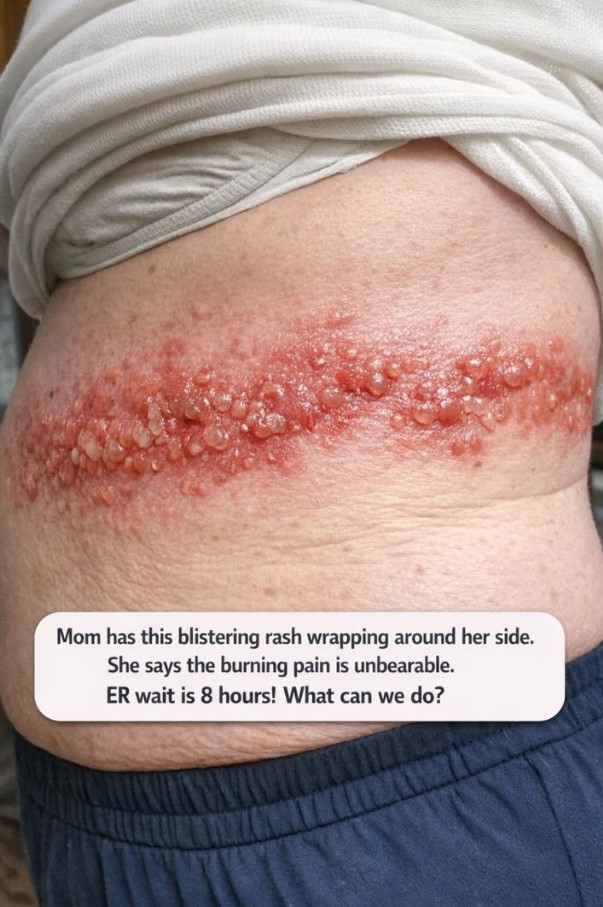
It’s one of those moments that instantly causes panic. A loved one suddenly develops a painful, blistering rash that seems to wrap around one side of the body—and the pain is described as intense, burning, and unbearable. Naturally, your first instinct is to head straight to the emergency room. But what happens when the wait time is hours long?
Situations like this can feel overwhelming, especially when the symptoms appear suddenly and look serious. The combination of visible blisters and severe pain can make it seem like a medical emergency. But before rushing into panic, it’s important to understand what this condition might be and what steps you can take right away.
What could this blistering rash be?
Based on the description—a painful, blistering rash on one side of the body with burning pain—this is very likely Shingles.
Shingles is a viral infection caused by the same virus that causes chickenpox. It can stay inactive in the body for years and suddenly reactivate later in life.
One of the most recognizable signs is:
- A rash that appears only on one side of the body
- Often forming a band or stripe around the torso
Why is the pain so intense?
One of the defining features of shingles is nerve pain.
Before the rash even appears, many people feel:
- Burning
- Tingling
- Sharp or stabbing pain
This happens because the virus affects the nerves under the skin, not just the surface.
Once the rash develops, the pain can become severe—even unbearable for some people.
What does shingles look like?
The rash typically goes through stages:
- Starts as red or irritated skin
- Develops into clusters of fluid-filled blisters
- Blisters may break, crust, and heal over time
It usually:
- Stays on one side only
- Follows a band-like pattern around the body
- Can appear on the chest, back, or side
Do you need to go to the hospital?
Not always—but you should take it seriously.
Shingles is usually not an emergency, but it does require prompt medical treatment.
Doctors typically prescribe antiviral medications, which:
- Help reduce severity
- Speed up healing
- Lower the risk of complications
Important: These medications work best if started within 72 hours of the rash appearing.
What can you do right now (while waiting)?
If the ER wait is long, here are some safe things you can do in the meantime:
1. Manage the pain
- Use over-the-counter pain relievers (like paracetamol or ibuprofen if safe)
- Apply a cool, damp cloth to the area
2. Protect the skin
- Keep the rash clean and dry
- Avoid scratching or breaking the blisters
3. Wear loose clothing
- Tight clothes can worsen the pain because the skin becomes very sensitive
4. Reduce irritation
- Avoid heat or friction on the area
- Rest as much as possible
When should you NOT wait?
Even though shingles is usually not an emergency, there are cases where you should seek immediate care:
- The rash is near the eyes or face
- There is fever or confusion
- The pain is completely unmanageable
- The person has a weak immune system
- The rash is spreading unusually
These situations can lead to complications and need faster attention.
Why quick treatment matters
Without treatment, shingles can lead to complications like:
- Long-term nerve pain (called postherpetic neuralgia)
- Skin infections
- Rarely, vision problems if it affects the eye
Early treatment can significantly reduce these risks.
Conclusion :
Seeing a painful, blistering rash suddenly appear on one side of the body—especially when it comes with intense burning pain—can be frightening. It’s natural to think the worst, especially when the discomfort is severe and the cause is unclear.
However, in many cases, this condition is shingles—a common but painful viral infection that, while not usually life-threatening, should be treated quickly. The key is not panic, but acting promptly and wisely. Even if the emergency room has long wait times, there are steps you can take right away to ease discomfort and protect the affected area.
Understanding what’s happening can make a big difference. What looks alarming is often manageable with the right care and timing. The sooner treatment begins, the better the outcome—and the lower the risk of lingering pain.
If you’re ever unsure, it’s always better to seek medical advice. But for now, knowing what you’re dealing with and how to respond can help you stay calm, take control of the situation, and support your loved one through it.