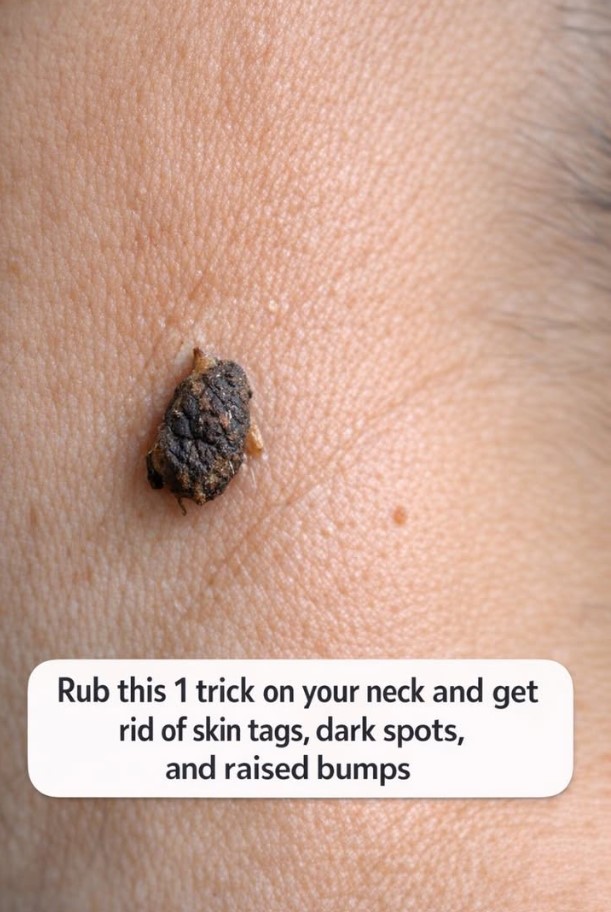
If you’ve ever noticed small skin tags, dark spots, or tiny raised bumps on your neck, you’re definitely not alone. These common skin concerns can appear gradually over time, often without any clear cause, and while they’re usually harmless, they can be frustrating—especially when they affect your confidence.
That’s why “miracle tricks” promising to remove them quickly and effortlessly tend to spread fast online. One popular claim suggests that applying a simple household ingredient can eliminate these skin issues with little to no effort.
But does this really work? Or is there more to the story?
Let’s break down what this trick is, how it’s supposed to work, and what doctors actually say about it.
What is the “1 trick” people are talking about?
Most versions of this viral method involve using apple cider vinegar or a similar acidic solution applied directly to the skin.
The idea is that:
- The acidity helps “break down” skin tags or discoloration
- Over time, the area dries out and fades
- The skin appears smoother and clearer
It sounds simple—but the reality is more complicated.
What are skin tags and dark spots?
Before trying to remove them, it’s important to understand what they are:
Skin tags
- Small, soft, harmless growths
- Common in areas like the neck, armpits, and folds
- Often caused by friction or skin changes
Dark spots (hyperpigmentation)
- Areas where the skin produces more pigment
- Often caused by sun exposure, aging, or irritation
Raised bumps
- Can be skin tags, clogged pores, or other minor skin conditions
While they may look similar, they don’t all have the same cause—and they don’t respond to the same treatment.
Does this trick actually work?
Short answer: not reliably—and it can be risky.
There is no strong scientific evidence that apple cider vinegar can safely remove skin tags or similar growths.
Some people report that:
- The skin tag dries out and falls off
- The area lightens slightly
But this often happens because the acid is irritating or damaging the skin, not because it’s safely treating the condition.
The risks you should know
This is the part most viral articles skip.
Using acidic substances directly on your skin can lead to:
- Skin irritation or burns
- Scarring or discoloration
- Infection if the skin is damaged
In some reported cases, people experienced chemical burns after applying vinegar repeatedly.
Doctors generally advise against trying to remove skin tags at home for this reason.
Why these “quick fixes” seem to work
Sometimes, these tricks appear effective because:
- Skin tags can dry out naturally over time
- Mild irritation may cause temporary peeling
- Lighting or perception makes the skin look clearer
But this doesn’t mean the method is safe—or the best option.
Safer ways to deal with these skin concerns
If you’re dealing with skin tags, dark spots, or bumps, there are better options:
For skin tags
- Dermatologists can remove them quickly and safely
- Methods include freezing, cutting, or cauterizing
For dark spots
- Use sunscreen daily
- Try products with vitamin C or gentle exfoliants
- Be consistent—results take time
For raised bumps
- Keep skin clean and moisturized
- Avoid harsh products
- Identify the cause before treating
When you should see a doctor
You should get checked if:
- A growth changes shape, color, or size
- It becomes painful or bleeds
- You’re unsure what it is
Not everything that looks like a skin tag is harmless—so proper diagnosis matters.
Can you prevent them?
You can reduce the chances by:
- Minimizing skin friction
- Maintaining a healthy weight
- Protecting your skin from sun damage
But some people are simply more prone to them—and that’s normal.
Conclusion :
The idea of removing skin tags, dark spots, or bumps with a simple “rub-on” trick is definitely appealing—but it’s not as safe or effective as it sounds. While methods like applying apple cider vinegar may seem like an easy solution, they often work by irritating the skin rather than treating the root cause.
In many cases, these skin concerns are completely harmless and don’t require any treatment at all. And when removal is desired, the safest and most reliable approach is still professional care or well-tested skincare methods.
The real takeaway is this: when it comes to your skin, quick fixes aren’t always the best fixes. Understanding what you’re dealing with—and choosing safe, proven options—will always give you better results in the long run.
So instead of risking irritation or damage, it’s worth taking a more informed approach. Your skin will thank you for it.