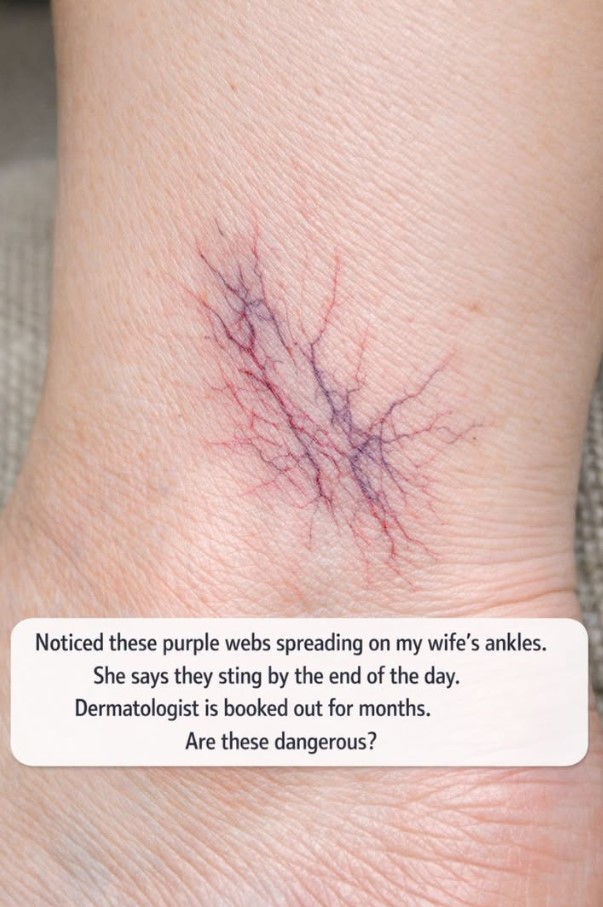
Noticing unusual purple, web-like patterns spreading across the ankles can be worrying—especially when they seem to appear suddenly, feel irritating, or even cause a stinging sensation by the end of the day. Because the skin on the ankles is often exposed to pressure from standing, walking, and clothing, any change in color or texture tends to stand out quickly.
While the word “web” may sound alarming, many skin changes that look like purple lines or patterns are actually linked to circulation issues, minor inflammation, or visible surface blood vessels. In many cases, they are not dangerous on their own—but they can sometimes be a sign that the body needs attention.
Understanding what these patterns might represent can help reduce anxiety and guide the next best steps.
What These Purple Web-Like Marks Often Are
When purple or bluish patterns appear around the ankles, one of the most common explanations is visible superficial blood vessels, sometimes called spider veins or early vein changes.
These occur when tiny veins under the skin become more noticeable due to pressure or weakened vein valves, leading to:
- Blue or purple thread-like lines
- Web or branching patterns
- Discoloration around the ankles or lower legs
Spider veins are usually harmless, but they can sometimes cause mild discomfort or a heavy, tired feeling in the legs, especially after long periods of standing.
Why They Often Appear Around the Ankles
The ankles are one of the most common areas for visible vein changes because they are farthest from the heart. Blood must travel upward against gravity, which puts extra pressure on the veins in this area.
When vein valves weaken, blood can pool slightly, causing:
- Visible purple or blue lines
- Mild swelling
- Heaviness or discomfort
- Occasional itching or stinging
This condition is often linked to early circulation changes rather than anything immediately dangerous.
Other Possible Causes of Purple Patterns on the Skin
Not all purple marks are vein-related. Other possibilities include:
1. Skin pressure or irritation
Tight socks, shoes, or prolonged standing can temporarily affect blood flow and create discoloration.
2. Inflammatory skin conditions
Some inflammatory reactions can cause purple or reddish bumps or patches that may feel tender or itchy.
3. Circulation sensitivity
Cold, heat, or long periods of inactivity can sometimes cause temporary changes in skin color due to reduced or uneven blood flow.
4. Bruising or minor unnoticed trauma
Small bumps or pressure can sometimes lead to subtle bruising that appears as purple patches.
When Symptoms Feel More Noticeable
If the area also:
- Stings or itches by the end of the day
- Feels tight or heavy
- Becomes more visible after standing
- Shows gradual spreading over time
…it may suggest that the veins or surrounding skin are under increased stress, especially if circulation is involved.
When It’s Important to Get It Checked
Even though many cases are harmless, it’s a good idea to get medical advice if:
- The discoloration spreads quickly
- There is significant swelling
- Pain becomes strong or persistent
- The skin becomes thickened or hard
- New symptoms appear in both legs
Some circulation-related skin conditions can progress over time and benefit from early management.
Simple Things That May Help Reduce Discomfort
While not a cure, these habits can help support better comfort and circulation:
- Avoid standing in one position for long periods
- Elevate legs when resting
- Stay active with light walking
- Wear comfortable, non-restrictive socks
- Keep skin moisturized to reduce irritation
- Stay hydrated
Conclusion :
Purple, web-like marks around the ankles can look strange and even a little alarming, but in many cases they are linked to common circulation patterns such as visible veins or mild blood flow changes under the skin. While they are often harmless, they can sometimes cause discomfort like stinging or heaviness, especially after a long day.
The important thing is to observe how the skin changes over time. If the marks remain stable and cause only mild symptoms, they are usually not serious. However, if they spread, worsen, or come with swelling or pain, it’s worth having them checked to rule out circulation issues.
In most situations, these skin changes are the body’s way of showing how blood flow is behaving in the lower legs—not an immediate danger, but a signal that deserves attention and care.