Personality tests and visual brain teasers have become incredibly popular online because they offer a fun and interesting way to explore human behavior. Many people enjoy discovering what certain images, colors, or hidden objects might say about their mindset, emotions, or personality traits. One trend that continues to capture attention is the “what you see first” illusion, where viewers interpret an image differently depending on their focus and perception.
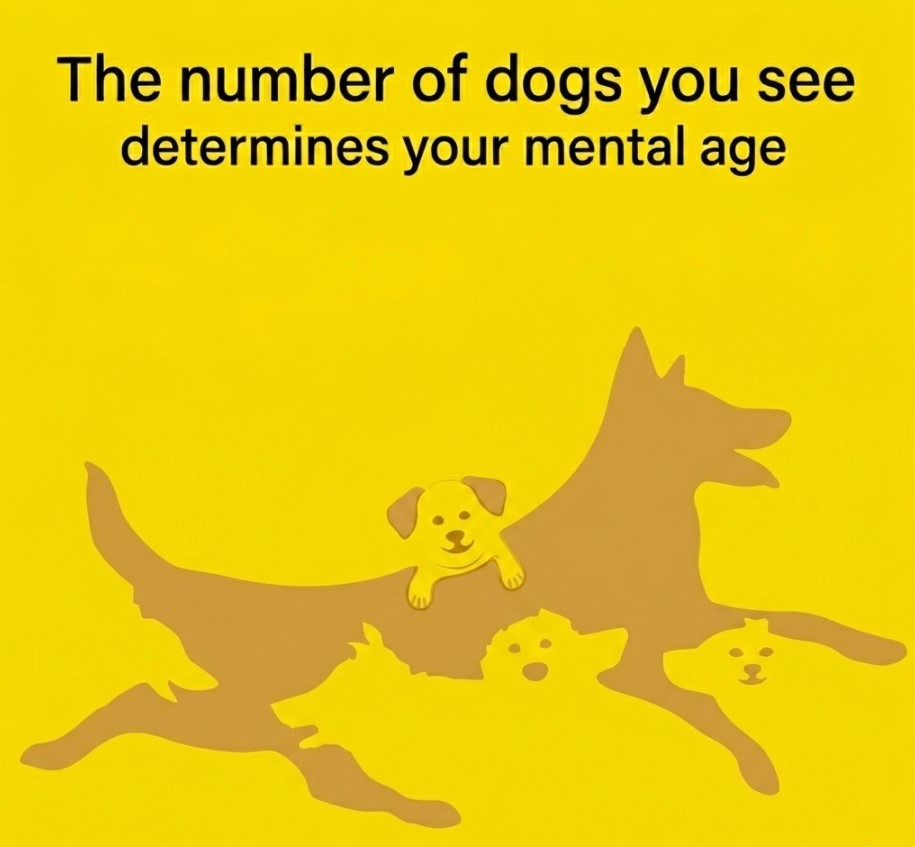
Among these viral personality puzzles, dog-themed optical illusions have become especially popular. Dogs are often associated with loyalty, intelligence, friendliness, and emotional connection, making them a fascinating subject for personality interpretations. Some visual tests claim that the number of dogs you notice in an image may reveal hidden characteristics about your thinking style, emotional awareness, or approach to life.
While these quizzes are entertaining, psychologists remind us that personality is much more complex than a single image or quick test can explain. Real personality traits are shaped by genetics, life experiences, environment, emotions, and social interactions. Studies on both humans and animals show that personality develops through a combination of biological and environmental influences over time.
Still, visual personality tests can be a fun way to spark self-reflection and curiosity. They encourage people to think about how they observe the world and how perception differs from person to person. In this article, we’ll explore why these dog illusion tests are so fascinating, what different interpretations often claim to reveal, and why human perception is far more unique than many people realize.
Why Optical Illusions Fascinate People
Optical illusions capture attention because they challenge the brain’s normal way of processing information. Instead of seeing one obvious answer, the brain must interpret shapes, shadows, colors, and patterns in multiple possible ways.
Two people can look at the exact same image and notice completely different things. This happens because perception depends on several factors, including:
- Focus and attention
- Past experiences
- Emotional state
- Visual processing
- Expectations and imagination
The human brain constantly tries to organize visual information into recognizable patterns. Sometimes this process happens so quickly that people notice one object immediately while completely missing another hidden detail.
This is why illusion-based personality quizzes feel so personal and surprising. People enjoy comparing results with friends and discovering how differently everyone sees the same image.
What Seeing Different Numbers of Dogs Might Suggest
Many viral personality quizzes claim that the number of dogs you notice first can reveal aspects of your personality. While these interpretations are mostly for entertainment, they often connect certain observations with common personality traits.
Here are some examples frequently associated with these visual tests:
Seeing Only One Dog
People who immediately notice a single dog are often described as focused, practical, and detail-oriented. They may prefer simplicity and clear goals instead of overanalyzing situations.
These individuals are sometimes viewed as:
- Calm decision-makers
- Independent thinkers
- Organized and disciplined
- More comfortable with structure and routine
They may also prefer concentrating deeply on one task at a time rather than multitasking constantly.
Seeing Several Dogs Quickly
Those who spot multiple dogs right away are often associated with creativity and strong observational skills. They may naturally pay attention to small details others miss.
These people are commonly described as:
- Curious and imaginative
- Emotionally aware
- Open-minded
- Social and expressive
They may enjoy exploring new ideas and seeing connections between things that others overlook.
Struggling to Find All the Dogs
Some personality quizzes suggest that people who take longer to identify every hidden dog may be more reflective and analytical. Instead of reacting instantly, they carefully process information before drawing conclusions.
This personality type is often linked with:
- Thoughtfulness
- Patience
- Problem-solving ability
- Deep concentration
Rather than rushing through situations, these individuals may prefer to examine all possibilities carefully.
The Science Behind Personality
Although internet quizzes can be entertaining, psychologists emphasize that real personality cannot be accurately measured through a single image alone.
Scientific studies show that personality is influenced by many factors, including:
- Genetics
- Environment
- Childhood experiences
- Social interactions
- Education
- Emotional development
Research involving dogs themselves has even shown that personality traits are shaped by both genetics and environment. Breed, age, training, socialization, and life experiences all influence canine behavior and temperament.
Similarly, human personalities are dynamic and constantly evolving over time.
Why Dogs Are Often Used in Personality Tests
Dogs are one of the most emotionally recognizable animals in the world. Humans naturally form strong emotional connections with dogs because they are often associated with:
- Loyalty
- Protection
- Friendship
- Emotional sensitivity
- Intelligence
Studies show that dogs are highly skilled at reading human emotions and behavior. Researchers have found that dogs can respond to human moods, body language, and even emotional signals.
Because people already connect emotionally with dogs, using them in visual puzzles and personality tests makes these quizzes feel more engaging and relatable.
Can Visual Tests Really Reveal Personality?
Visual personality tests should mainly be viewed as entertainment rather than scientific evaluations. While they may occasionally reflect certain thinking patterns or preferences, they are not reliable psychological tools.
Professional personality assessments usually involve:
- Detailed questionnaires
- Behavioral analysis
- Long-term observation
- Scientifically validated methods
However, casual visual tests can still provide value by encouraging self-reflection and conversation. They can help people think about how they process information and interact with the world around them.
The fun often comes less from the accuracy of the results and more from comparing perspectives with others.
The Power of Human Perception
One of the most fascinating aspects of illusion tests is the reminder that perception differs from person to person. No two brains interpret information in exactly the same way.
This uniqueness affects:
- Creativity
- Communication
- Emotional understanding
- Problem-solving
- Relationships
Some people naturally focus on the bigger picture, while others immediately notice tiny details. Neither approach is better — they simply reflect different cognitive strengths.
Optical illusions highlight just how flexible and powerful the human brain truly is.
Conclusion :
Dog-themed personality illusions continue to spread across the internet because they combine curiosity, entertainment, and self-discovery in a simple visual experience. Whether someone spots one dog or several, these playful quizzes encourage people to think about how they observe the world and how perception varies from person to person.
Although these tests are not scientifically accurate personality assessments, they can still be enjoyable and thought-provoking. Real personality is shaped by a complex combination of genetics, experiences, emotions, and environment — far more than any single image can fully explain.
At the end of the day, the real fun lies in the conversation, curiosity, and imagination these illusions inspire. Sometimes a simple image filled with hidden dogs is enough to remind us that every person sees the world a little differently — and that’s what makes human perception so fascinating.