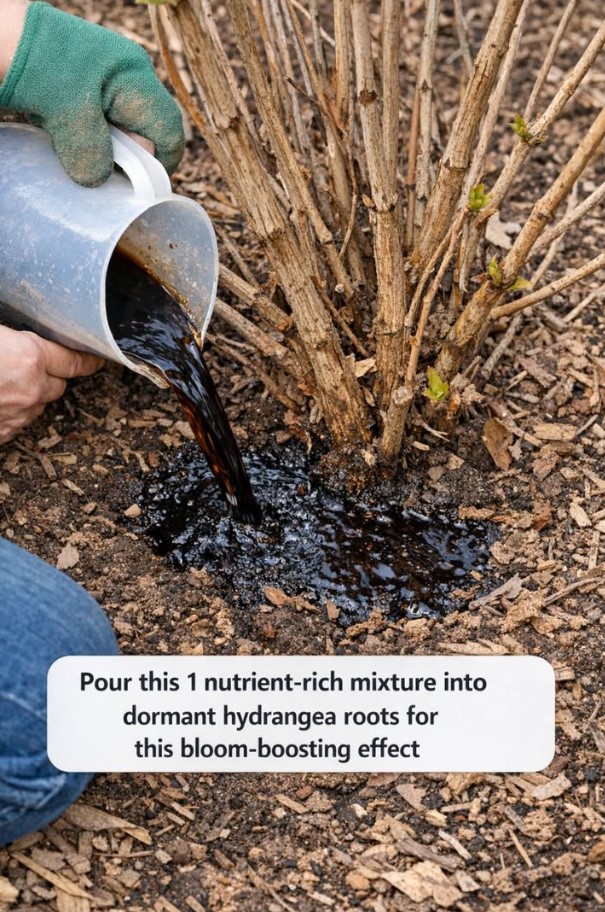
Hydrangeas are among the most popular flowering shrubs in home gardens because of their large, colorful blooms and long-lasting beauty. Whether planted along walkways, near fences, or in decorative garden beds, these plants can completely transform outdoor spaces during spring and summer. However, many gardeners struggle with weak flowering, small blooms, or plants that produce leaves but very few flowers.
One of the biggest secrets to healthier hydrangeas actually begins long before blooming season starts. During dormancy — the resting period in late winter or early spring — hydrangea roots are preparing for the next growth cycle. This stage is extremely important because the plant focuses its energy underground, strengthening roots and storing nutrients that will later support flower production. According to gardening experts, proper feeding during this phase can improve root development and support stronger blooms later in the season.
That’s why many gardeners use nutrient-rich mixtures around dormant hydrangea roots to encourage healthier growth and more abundant flowers. In this article, we’ll explore why dormant feeding matters, what ingredients are commonly used, how they help hydrangeas bloom better, and what mistakes gardeners should avoid.
Why Dormant Hydrangeas Respond Well to Nutrients :
When hydrangeas are dormant, they are not wasting energy on leaves or flowers. Instead, the plant concentrates on root maintenance and nutrient storage beneath the soil surface.
This stage is important because:
- Roots absorb nutrients more gradually
- The plant prepares for spring growth
- Soil conditions stabilize around the root system
- Nutrient reserves build up before blooming season
Experts note that healthy roots are one of the biggest factors behind strong hydrangea flowering later in the year.
The Popular Bloom-Boosting Mixture :
Many gardeners use a simple nutrient blend made from:
- Compost tea
- Bone meal
- Epsom salt
This combination became popular because each ingredient supports a different aspect of plant health.
According to gardening sources, compost tea improves soil biology and microbial activity, bone meal provides phosphorus for roots and flower development, and Epsom salt supplies magnesium that supports chlorophyll production and nutrient absorption.
Why Compost Tea Helps Hydrangeas :
Compost tea is created by soaking finished compost in water, producing a nutrient-rich liquid filled with beneficial microorganisms.
Gardeners often use it because it may:
- Improve soil texture
- Encourage healthy microbes
- Increase nutrient availability
- Support stronger root growth
Healthy soil biology helps hydrangeas absorb nutrients more efficiently throughout the growing season.
The Importance of Phosphorus for Blooms :
Bone meal is commonly included because it is rich in phosphorus, one of the key nutrients involved in root and flower production.
Hydrangeas that lack phosphorus may:
- Produce fewer blooms
- Grow slowly
- Develop weaker root systems
Many gardeners online report improved flowering after adding phosphorus-rich amendments around hydrangeas during dormant periods.
Why Magnesium Matters :
Epsom salt provides magnesium sulfate, which helps plants create chlorophyll and process nutrients more effectively.
Magnesium may help:
- Deepen leaf color
- Support photosynthesis
- Improve nutrient transport
- Encourage healthier foliage
Stronger foliage allows the plant to gather more energy for bloom production later in the season.
How to Apply the Mixture Properly :
The mixture is usually applied around the root zone rather than directly against the stems.
Basic application steps include:
- Clear debris from around the plant base
- Pour the mixture slowly around the roots
- Allow the soil to absorb moisture gradually
- Avoid oversaturating the area
Gardening experts recommend applying nutrients before active spring growth begins so the roots can access them during the transition out of dormancy.
Common Mistakes That Hurt Hydrangea Blooms :
Many hydrangea blooming problems are caused by simple care mistakes.
Common issues include:
- Overfertilizing
- Too much nitrogen
- Poor drainage
- Excessive pruning
- Insufficient watering
- Heat stress on roots
Gardeners on Reddit frequently mention that hydrangeas bloom poorly when roots become stressed or overheated. Mulching and consistent watering are often recommended for healthier flowering.
Why Soil Conditions Matter So Much :
Hydrangeas prefer moist, well-draining soil with balanced nutrients. Experts also note that soil pH affects flower color in some hydrangea varieties.
For example:
- Acidic soil often encourages blue blooms
- Alkaline soil may encourage pink blooms
Proper soil preparation and feeding help plants stay healthier regardless of bloom color.
Signs the Nutrient Boost Is Working :
Healthy hydrangeas usually show clear signs when conditions improve.
Positive signs include:
- Strong green foliage
- Thicker stems
- Larger flower buds
- Increased bloom quantity
- Longer flowering periods
Because hydrangeas sometimes take time to establish, gardeners often say patience is important during the first few growing seasons.
Conclusion :
Feeding dormant hydrangea roots with a nutrient-rich mixture has become a popular gardening technique because it supports the plant during one of its most important growth stages. While the plant may appear inactive above the soil, important root development is happening underground, and healthy roots are the foundation for strong flowering later in the season.
The combination of compost tea, phosphorus-rich amendments, and magnesium sources works because it addresses several essential plant needs at once — soil health, nutrient absorption, root strength, and flower production. When applied correctly and combined with proper watering, mulching, and sunlight, these nutrients can help hydrangeas produce fuller foliage and more vibrant blooms.
At the same time, gardeners should remember that hydrangeas respond best to overall balanced care rather than quick fixes alone. Soil quality, pruning habits, moisture levels, and root protection all play major roles in long-term plant health. Even the best nutrient mixture cannot fully compensate for poor drainage, root stress, or improper maintenance.
In the end, growing beautiful hydrangeas is about understanding the plant’s natural cycle. By supporting the roots during dormancy and giving the shrub the conditions it needs to thrive, gardeners can encourage healthier growth and enjoy the large, colorful blooms that make hydrangeas one of the most admired plants in any garden.