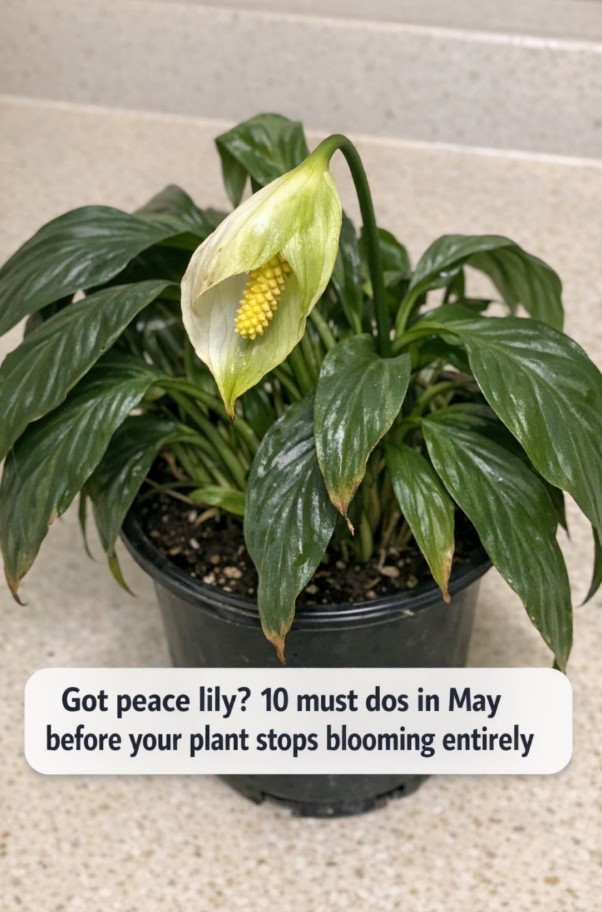
Peace lilies are among the most popular indoor plants because of their elegant white blooms, glossy green leaves, and relatively simple care routine. These beautiful houseplants can brighten almost any room and are loved for their calm, fresh appearance.
However, many people notice that their peace lily suddenly stops blooming or begins looking unhealthy during late spring and early summer. In many cases, the problem is not caused by disease, but by missed seasonal care steps. May is one of the most important months for peace lily maintenance because the plant enters a stronger growth period during warmer weather. Proper care during this time can encourage healthy flowers, stronger roots, and greener foliage throughout the season.
This guide explains the most important things you should do in May to keep your peace lily healthy, thriving, and blooming beautifully.
Understanding the Peace Lily
The peace lily, commonly known as Spathiphyllum, is a tropical plant native to warm and humid environments. Although it is called a lily, it is not a true lily plant. It is appreciated mainly for its white spathes, dark green leaves, and ability to adapt well indoors.
Peace lilies naturally grow beneath forest canopies in filtered light and moist conditions. Recreating those conditions indoors is the key to long-lasting blooms and healthy growth.
1. Move It to Brighter Indirect Light
One of the biggest reasons peace lilies stop flowering is insufficient light.
Many people believe peace lilies thrive in dark corners, but while they tolerate low light, they bloom best in bright indirect sunlight. During May, longer daylight hours provide an excellent opportunity to improve your plant’s lighting conditions.
Place the plant near:
- East-facing windows
- Bright rooms with filtered sunlight
- Areas away from direct harsh afternoon sun
Too much direct sunlight can scorch the leaves, while too little light may prevent flowering entirely.
2. Increase Watering Carefully
As temperatures rise in May, peace lilies begin using more water.
These plants prefer lightly moist soil, but they do not like sitting in soggy conditions. Overwatering can lead to root rot, while underwatering may cause drooping leaves and brown edges.
A good method is to:
- Check the top layer of soil regularly
- Water when the soil feels slightly dry
- Avoid letting the soil dry completely
Peace lilies are known for dramatically drooping when thirsty, but repeated extreme drying can weaken the plant over time.
3. Clean the Leaves Properly
Dust often collects on the broad leaves of peace lilies, especially indoors.
Dirty leaves reduce the plant’s ability to absorb light and perform healthy growth. Gently wiping the leaves with a soft damp cloth can improve appearance and help the plant photosynthesize more effectively.
This simple habit also allows you to inspect the plant for pests or damaged leaves.
4. Increase Humidity Levels
Because peace lilies are tropical plants, they enjoy moderate to high humidity.
Indoor air can become dry, especially near fans, windows, or air conditioning units. Dry air often causes brown leaf tips and reduced blooming.
To improve humidity:
- Mist the leaves lightly
- Place the pot near other plants
- Use a tray with pebbles and water beneath the pot
- Keep the plant away from dry heat sources
Bathrooms and kitchens with natural light are often good locations because humidity tends to be higher there.
5. Feed the Plant During Growing Season
May is part of the active growing season, making it a good time to fertilize peace lilies lightly.
Using too much fertilizer can damage the plant, but small amounts of balanced houseplant fertilizer may encourage healthier foliage and blooms.
Experts generally recommend:
- Feeding every 4–6 weeks during active growth
- Using diluted fertilizer rather than strong concentrations
- Avoiding overfeeding
Too much fertilizer may cause brown leaf edges or weak growth.
6. Remove Dead Flowers and Yellow Leaves
Pruning old growth helps the plant focus energy on new development.
Remove:
- Yellow leaves
- Brown or damaged foliage
- Spent flowers
Use clean scissors or pruning tools to avoid damaging the plant.
This not only improves appearance but also supports healthier future blooming.
7. Repot If the Plant Is Root-Bound
Peace lilies eventually outgrow their containers.
If roots are circling tightly inside the pot or pushing through drainage holes, your plant may need repotting. Spring and early summer are ideal times for this process.
Signs your peace lily may need a larger pot:
- Soil dries too quickly
- Roots appear crowded
- Growth slows down
- Water drains immediately through the pot
Choose a container only slightly larger than the current one to prevent excessive moisture buildup.
8. Keep Temperatures Stable
Peace lilies prefer warm indoor temperatures and dislike sudden environmental changes.
Ideal conditions are generally between 18°C and 27°C. Cold drafts, direct heat, or sudden temperature swings can stress the plant and reduce flowering.
Avoid placing your plant near:
- Air conditioners
- Heating vents
- Open windows with strong drafts
- Direct midday heat
Stable conditions help maintain healthy leaves and consistent blooming.
9. Watch for Common Problems
Several small issues can affect peace lilies during spring and summer.
Common signs include:
- Yellow leaves from overwatering
- Brown tips from dry air or chemicals in water
- Wilting from underwatering
- Lack of flowers due to insufficient light
Monitoring your plant regularly helps you correct problems before they become serious.
10. Be Patient With Blooming
Peace lilies do not bloom continuously all year.
Healthy plants may flower more actively during brighter seasons, especially when lighting, watering, humidity, and feeding conditions are balanced correctly. Some plants need time to recover after winter before producing new blooms.
Patience and consistent care are often more effective than making sudden changes.
Conclusion :
Peace lilies are beautiful and rewarding houseplants, but they still require proper seasonal care to remain healthy and continue blooming. May is one of the most important months because it marks the beginning of stronger growth and flowering activity.
By improving light exposure, maintaining proper watering, increasing humidity, cleaning the leaves, and feeding carefully, you can help your peace lily stay vibrant throughout the warmer months.
The secret to a thriving peace lily is not complicated care, but consistent attention. Small adjustments made during spring can make a major difference in the plant’s appearance, strength, and blooming potential for the rest of the year.