At first glance, counting squares in a simple image may seem like an easy task. Most people look at the puzzle and assume they can solve it in just a few seconds. However, these visual brain teasers are specifically designed to trick your eyes and challenge the way your brain processes information.
In fact, many people underestimate these puzzles because they only focus on the most obvious shapes while overlooking larger combinations hidden within the image. What appears to be a straightforward exercise quickly turns into an engaging mental challenge that requires concentration, patience, and a systematic approach.
Whether you enjoy brain games, logic puzzles, or simply testing your observation skills, counting square puzzles are a great way to exercise your mind while having fun.
Why Are Counting Square Puzzles So Difficult?
The challenge isn’t usually about math itself. Instead, it’s about visual perception.
Our brains are naturally programmed to identify patterns quickly, but sometimes that speed causes us to miss important details.
People often make these mistakes:
- Counting only the smallest squares
- Forgetting to look for larger overlapping squares
- Rushing to an answer too quickly
- Missing combined shapes hidden within the design
This is why these puzzles frequently fool even people who are normally very observant.
Why Brain Teasers Are Good for Your Mind
Visual puzzles offer more than entertainment. They also provide several cognitive benefits.
Regularly solving these challenges may help improve:
- Problem-solving skills
- Attention to detail
- Concentration
- Visual processing abilities
- Memory retention
- Critical thinking skills
Brain exercises can be a fun way to keep your mind active at any age.
How to Approach a Square Counting Puzzle
Instead of guessing, use a step-by-step method.
Step 1: Count the smallest squares
Begin with the most obvious shapes before moving to larger combinations.
Step 2: Look for medium-sized squares
Many people forget that smaller squares can combine to form bigger ones.
Step 3: Search for the largest square
The outer border itself may count as an additional square.
Step 4: Double-check your work
Go back through the image slowly to make sure nothing was missed.
A systematic approach usually produces much better results than simply guessing.
Why So Many People Get the Wrong Answer
Several factors contribute to mistakes.
Our brains prefer shortcuts
The brain likes efficiency and often skips details that seem unimportant.
We rush
Many people try to solve these puzzles in just a few seconds.
We stop too early
Once we think we’ve found an answer, we often stop searching.
Visual illusions trick us
Overlapping shapes can easily hide within larger patterns.
These factors combine to make simple-looking puzzles surprisingly difficult.
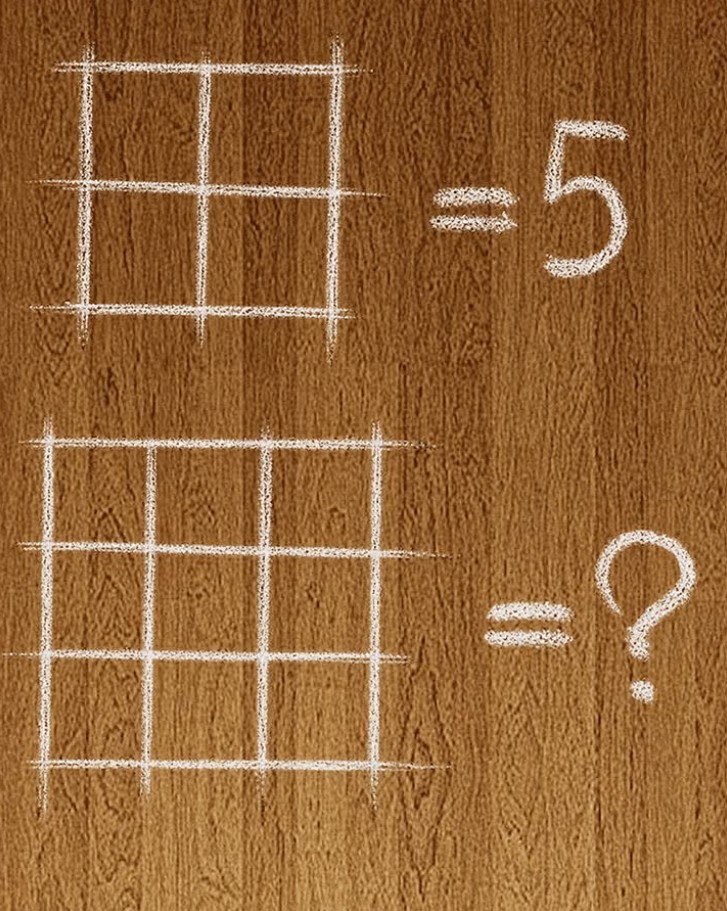
The Famous 3×3 Grid Example
One of the most common square puzzles uses a basic 3×3 grid.
At first, many people count only the nine small squares.
However, there are additional squares hidden within the larger arrangement.
The complete breakdown is:
- 9 small squares
- 4 medium squares
- 1 large square
This brings the total to 14 squares.
The simplicity of the design is exactly what makes it so deceptive.
Ways to Challenge Yourself Further
If you enjoy these puzzles, try increasing the difficulty.
You can:
- Set a timer
- Challenge family members
- Create your own square puzzles
- Solve larger grids
- Try other visual brain teasers
These activities can become fun games for parties, classrooms, or family gatherings.
Why People Love Brain Puzzles
There is something satisfying about solving a puzzle that initially seemed impossible.
Brain teasers create a sense of accomplishment because they:
- Stimulate curiosity
- Encourage patience
- Reward careful observation
- Make learning enjoyable
They remind us that simple challenges can often be the most effective.
Conclusion :
Counting square puzzles prove that appearances can be deceiving. What seems like a simple task often turns into a surprisingly difficult mental exercise that challenges both your observation skills and your patience.
The true value of these puzzles goes beyond finding the correct answer. They teach us to slow down, pay attention to details, and approach problems methodically rather than rushing to conclusions. In many ways, these are valuable skills that extend far beyond games and puzzles and can be applied to everyday life.
Perhaps that’s why these visual challenges remain so popular online. They are simple enough for anyone to try, yet tricky enough to spark conversation and friendly competition. Whether you solve them immediately or need several attempts, the process itself becomes part of the fun.
The next time you come across a puzzle that looks easy, don’t underestimate it. Sometimes the simplest images hide the biggest challenges, and taking an extra moment to look more carefully can reveal far more than you initially expected.