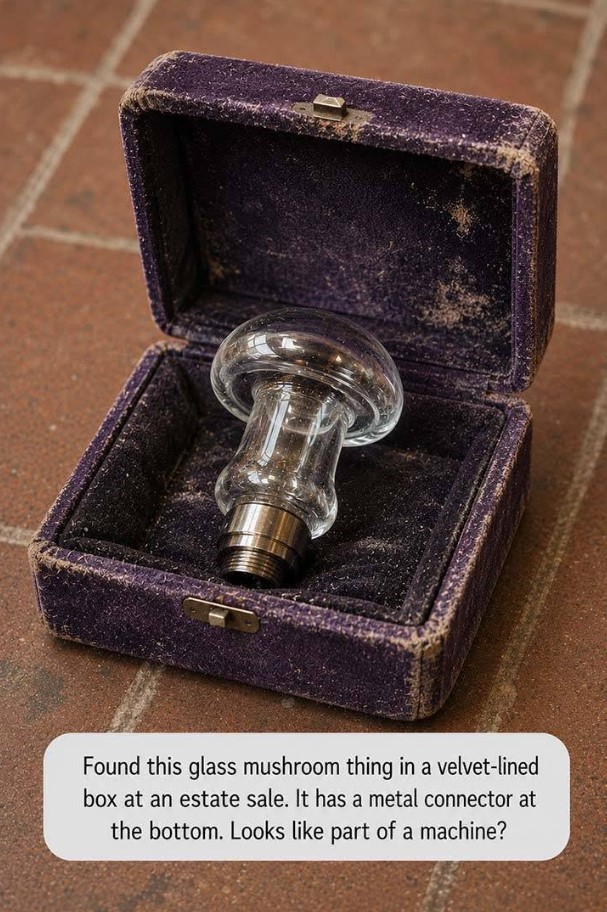
Every now and then, people come across strange-looking metal objects, antique parts, or unfamiliar devices and wonder what they were originally used for. These mysterious items often appear during house cleanouts, garage discoveries, or even while walking through old buildings and storage spaces.
At first glance, they can be confusing—sometimes even unrecognizable—because modern technology has replaced many older machines and tools. What once was a common household or industrial device may now look completely alien to us.
In this article, we’ll explore why these mysterious objects appear, how to identify them, and why old tools often look so unusual compared to modern equipment.
Why Old Devices Look So Strange Today
One of the main reasons people struggle to identify old machines is that technology has changed rapidly over time.
Many older tools were designed for specific manual tasks and often included:
- Heavy metal construction
- Mechanical gears and levers
- Hand-powered operation
- Custom-shaped parts for specific jobs
Unlike modern devices, which tend to be compact and digital, older machines were built for durability and function rather than appearance or convenience.
As a result, when these objects are separated from their original context, they can be difficult to recognize.
The Importance of Context in Identification
Understanding what a mysterious object is often depends heavily on where it was found.
For example:
- Items found in kitchens may belong to old cooking appliances
- Objects discovered in barns may be farming tools
- Metal parts in garages may belong to vehicles or machinery
- Industrial-looking pieces may come from factories or workshops
Without context, even simple tools can look confusing and unfamiliar.
Common Types of Misidentified Objects
Many people share photos online asking what a strange object might be. Some of the most commonly confused items include:
1. Old Mechanical Parts
Gears, springs, and metal fittings from outdated machines often puzzle people because they no longer resemble modern equivalents.
2. Antique Kitchen Tools
Before electric appliances, kitchens used hand-cranked devices for grinding, mixing, and cutting food. These can look very strange today.
3. Agricultural Equipment Pieces
Farm tools from past decades were often large, rugged, and specialized for manual labor, making them hard to identify when removed from machinery.
4. Industrial Machine Components
Factories used complex mechanical systems, and individual parts may look meaningless once separated from the full machine.
5. Household Utility Devices
Items like old irons, manual pumps, or early cleaning tools can also be confusing when seen out of context.
How to Identify Unknown Objects
If you ever find a mysterious device, there are several steps you can take to figure out what it is.
1. Examine its shape and material
Look at whether it is metal, wood, or plastic and note any moving parts.
2. Check for markings or labels
Brand names, numbers, or stamps can give important clues.
3. Consider where it was found
Location often provides the strongest hint about its purpose.
4. Compare with online images
Searching similar objects can help match it with known tools or machines.
5. Ask experts or communities
Online forums and antique groups can often identify obscure items quickly.
Why People Are Fascinated by Mystery Objects
There is something naturally interesting about unknown tools and forgotten technology.
People enjoy them because they:
- Spark curiosity
- Connect us to history
- Show how technology has evolved
- Encourage problem-solving and research
- Make everyday objects feel like puzzles
These discoveries often lead to learning something new about how people lived and worked in the past.
The Evolution of Tools and Technology
Modern tools are designed to be:
- Lightweight
- Efficient
- Easy to use
- Digitally enhanced
In contrast, older tools focused more on strength, repairability, and long-term durability. This difference in design philosophy is why many older devices look so unfamiliar today.
Conclusion :
Mysterious old machines and unidentified devices often create a sense of curiosity because they remind us how much everyday technology has changed over time. What looks strange or completely unfamiliar today was often once a normal, practical tool used in homes, workshops, farms, or factories. As modern designs become more compact, automated, and digital, many older mechanical objects lose their recognizable context, making them appear puzzling when discovered years later.
This is why finding an unknown device can feel like solving a small historical mystery. Each piece has a story behind it—what it was used for, who used it, and how it fit into daily life in a different era. Even broken or incomplete parts can still offer valuable clues about past technologies and the way people approached problem-solving before modern conveniences existed.
Taking the time to investigate these objects is more than just curiosity; it is also a way of reconnecting with history. Simple details like material, shape, wear patterns, or location can reveal surprising information. And in many cases, identifying these items helps preserve knowledge that might otherwise be forgotten as older tools disappear from use.
There is also something meaningful about realizing how innovation builds on the past. Many modern machines are improved versions of older ideas, refined through decades of experimentation and design changes. What once required manual effort or complex mechanical systems may now be handled instantly by electronic devices, yet the basic principles often remain the same.
In the end, these mysterious objects are more than just “unknown items”—they are quiet reminders of human creativity and progress. They show us how people adapted to their environment, solved practical problems, and developed tools that shaped everyday life long before modern technology took over. Every unidentified device has the potential to teach us something, not only about history but also about how far we’ve come.
So the next time you come across an unfamiliar piece of metal or an odd-looking gadget, it’s worth taking a closer look. What seems confusing at first might turn out to be a fascinating link to the past, carrying stories, ingenuity, and lessons from a time when every tool had a very specific purpose and meaning.