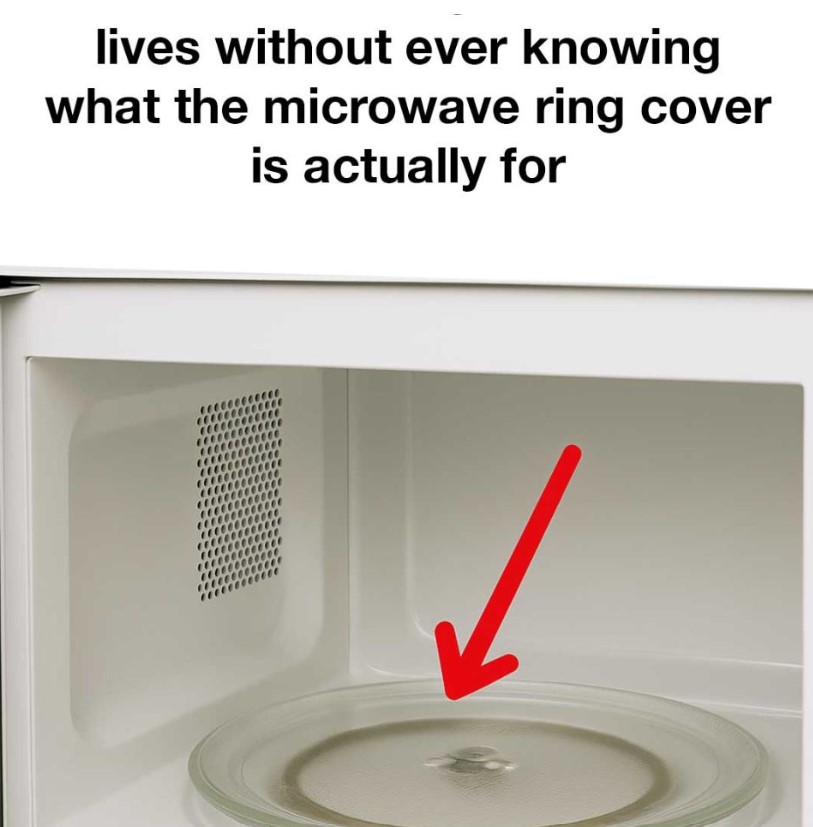
Microwave ovens have become one of the most essential appliances in modern kitchens. Whether you’re reheating leftovers, defrosting frozen ingredients, or preparing a quick snack, the microwave saves time and effort with the push of a button. Yet despite using these appliances almost every day, many people overlook some of their most important features. One of the most commonly misunderstood parts is the circular plastic ring hidden beneath the glass turntable.
Many assume this ring is nothing more than a packaging piece or a simple support for the glass plate. In reality, it plays a vital role in helping your microwave cook food evenly and operate smoothly. Without it, your microwave may struggle to rotate properly, leading to uneven heating and unnecessary wear on its internal components.
Let’s uncover the purpose of this often-overlooked part and explore why keeping it in good condition is more important than most people realize.
What Is the Microwave Ring?
The microwave ring, often called a turntable support ring or roller ring, is the circular plastic frame located beneath the glass tray inside the microwave.
It usually contains several small wheels or rollers that allow the glass turntable to rotate freely while food is being heated.
Why Does the Glass Plate Rotate?
The rotating glass tray isn’t just there for appearance.
Microwave ovens produce electromagnetic waves that bounce around the cooking chamber. These waves naturally create “hot spots” and “cold spots,” where food may heat unevenly.
By slowly rotating the food during cooking, the turntable helps expose every part of the meal to the microwave energy, resulting in:
- More even heating
- Better cooking performance
- Reduced cold spots
- Improved food quality
The Important Job of the Roller Ring
The ring underneath the glass tray performs several essential functions.
It helps:
- Support the weight of the glass plate.
- Keep the tray balanced.
- Allow smooth rotation.
- Reduce friction.
- Prevent unnecessary strain on the drive motor.
Without the ring, the turntable would not rotate properly and could easily become unstable.
What Happens If the Ring Is Missing?
Many people accidentally remove the ring while cleaning and forget to place it back.
Operating the microwave without it may cause:
- The glass plate to wobble.
- Uneven cooking.
- Loud grinding noises.
- Extra stress on the rotating motor.
- Premature wear of internal components.
In some cases, the tray may stop turning altogether.
Why Even Heating Matters
Uneven heating isn’t simply inconvenient—it can also affect food safety.
Certain foods, especially leftovers, poultry, and prepared meals, need to reach safe internal temperatures throughout.
When food isn’t heated evenly:
- Some areas remain cold.
- Harmful bacteria may survive.
- Texture suffers.
- Flavor becomes inconsistent.
The rotating turntable significantly improves heating performance.
How the Ring Works With Other Components
The roller ring is only one part of a larger system.
It works together with:
- The glass turntable.
- The drive coupling in the center.
- The microwave motor beneath the oven floor.
These components operate as a team to rotate the food smoothly during cooking.
Why the Ring Has Small Wheels
The tiny wheels attached to the ring reduce friction between the microwave floor and the heavy glass tray.
These rollers allow the tray to glide effortlessly, even when supporting large dishes or heavy cookware.
Without them, the motor would have to work much harder.
Cleaning the Roller Ring
Food spills often collect underneath the glass tray.
Regular cleaning helps prevent:
- Sticky residue.
- Food buildup.
- Roller obstruction.
- Unpleasant odors.
- Mold growth.
Cleaning is simple:
- Remove the glass plate.
- Lift out the roller ring.
- Wash both with warm water and mild dish soap.
- Dry thoroughly.
- Replace the ring before reinstalling the glass tray.
Signs the Roller Ring Needs Replacing
Like any moving part, the roller ring can wear out over time.
Look for signs such as:
- Broken rollers.
- Cracks in the plastic.
- Flat spots on the wheels.
- Difficulty rotating.
- Excessive noise.
Fortunately, replacement rings are inexpensive and widely available.
Can You Use the Microwave Without the Glass Tray?
Most microwave ovens are designed to operate with both the glass plate and roller ring installed.
Running the appliance without these components may:
- Reduce heating performance.
- Damage the rotating mechanism.
- Cause spills.
- Increase motor wear.
Unless your microwave specifically uses a flatbed design, always keep the turntable assembly in place.
Common Mistakes People Make
Many users unknowingly shorten the life of their microwave by making simple mistakes, including:
- Forgetting to replace the roller ring after cleaning.
- Overloading the turntable with excessive weight.
- Ignoring unusual grinding noises.
- Using damaged or chipped glass trays.
- Allowing food debris to accumulate underneath the ring.
Routine maintenance helps prevent many of these issues.
Modern Microwaves Are Still Based on the Same Principle
Although microwave technology has improved significantly over the years, the rotating turntable remains one of the simplest and most effective ways to distribute microwave energy evenly.
Some premium microwave models now use flatbed technology without rotating trays, but the majority of household microwaves still rely on the dependable combination of:
- Glass turntable
- Roller ring
- Drive motor
This tried-and-tested system continues to deliver reliable cooking performance.
A Small Part With a Big Responsibility
The roller ring may seem like one of the least important components inside your microwave, yet it quietly performs a critical function every time you heat a meal. By supporting the glass tray and allowing it to rotate smoothly, it helps ensure food cooks more evenly while protecting the appliance’s internal motor from unnecessary strain.
It’s one of those everyday parts that often goes unnoticed—until it breaks or disappears.
Conclusion :
The humble microwave roller ring is a perfect example of how a small, inexpensive component can make a big difference in the performance of an everyday appliance. Hidden beneath the glass turntable, it keeps the tray balanced, allows smooth rotation, and helps distribute microwave energy more evenly throughout your food. Without it, meals may heat unevenly, the turntable can become unstable, and the microwave’s motor may experience unnecessary wear over time.
Fortunately, caring for this important part is simple. Regular cleaning, checking for cracks or damaged rollers, and making sure it is properly positioned after washing can help extend the life of both the roller ring and your microwave. These quick maintenance habits take only a few minutes but can prevent frustrating performance issues and costly repairs.
The next time you open your microwave, take a closer look beneath the glass tray. That small plastic ring isn’t just a support—it plays a key role in making sure your appliance works efficiently every day. Understanding the purpose of overlooked household items like this not only satisfies curiosity but also helps you get the best performance from the appliances you rely on most.