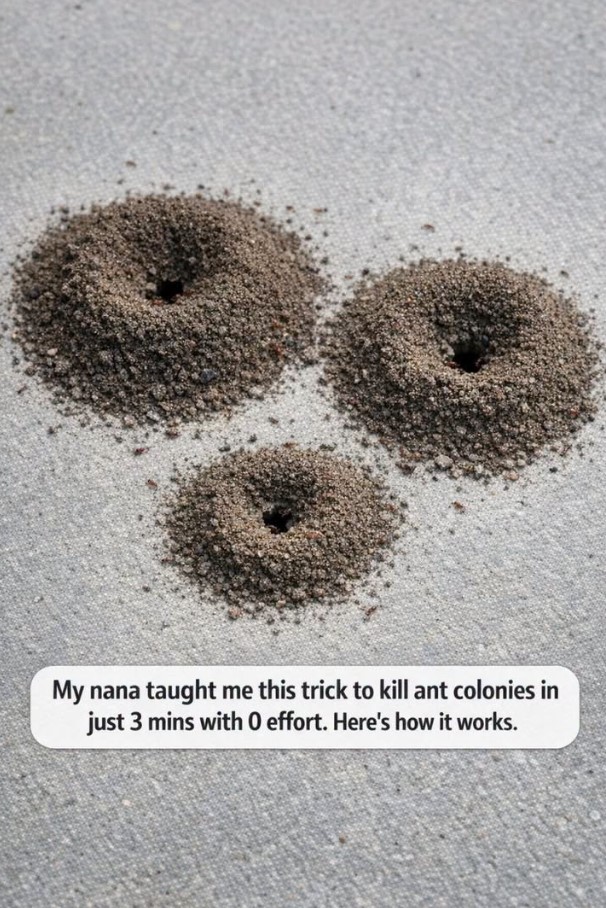
Ants are among the most common household and garden pests, and while a few wandering insects may seem harmless, they often signal a much larger colony hidden beneath the ground or inside your home’s walls. Once ants discover a reliable source of food or water, they leave behind invisible scent trails that guide thousands of other ants to the same location. Before long, what started as a few tiny visitors can become a frustrating infestation.
Over the years, countless home remedies for getting rid of ants have been passed down from one generation to the next. Some work surprisingly well, while others are little more than myths. One traditional trick that many homeowners swear by involves using a simple homemade bait that the ants willingly carry back to their colony. Rather than killing only the ants you can see, this method targets the entire nest, including the queen, making it far more effective than simply spraying individual insects.
Let’s take a closer look at why ants invade homes, how this classic remedy works, and the safest ways to eliminate ant colonies for good.
Why Ants Suddenly Appear
Ants don’t randomly invade homes—they’re usually searching for three basic necessities:
- Food
- Water
- Shelter
Even tiny crumbs, sticky spills, pet food, or moisture around sinks can attract scouting ants. Once they locate a reliable resource, they communicate its location to the rest of the colony through chemical trails called pheromones.
Understanding the Ant Colony
Most people only notice the worker ants traveling across countertops or sidewalks, but these insects are only a small part of a much larger community.
A typical colony contains:
- One or more queens
- Thousands of worker ants
- Developing larvae
- Eggs
- Pupae
The queen is responsible for producing new ants, meaning the colony will continue growing unless she is eliminated.
Why Spraying Ants Often Doesn’t Solve the Problem
Many people reach for insect sprays as soon as they spot ants indoors.
Although sprays kill the visible insects almost instantly, they usually fail to eliminate the colony itself. Since the queen and most worker ants remain hidden underground or inside walls, the infestation often returns within days or weeks.
This is why pest experts often recommend baiting systems instead of relying solely on contact sprays.
The Traditional Homemade Ant Bait
One of the most widely shared home remedies uses a combination of a sweet food source and borax or boric acid.
The sugar attracts the worker ants, while the borax acts as a slow-acting insecticide. Because it doesn’t kill them immediately, the ants have time to carry the bait back to the nest, where it is shared with other workers and, eventually, the queen.
A commonly used recipe includes:
- 2 tablespoons of sugar
- 2 tablespoons of warm water
- 1 teaspoon of borax (or an appropriate amount of boric acid)
The ingredients are mixed until dissolved and soaked into small cotton balls or placed in shallow bottle caps near ant trails.
Important: Borax and boric acid can be harmful if swallowed by children or pets. Always place bait in areas that are inaccessible to them, and follow the product’s safety instructions if using a commercial formulation.
Why Slow-Acting Baits Work Better
Patience is key when using ant bait.
It may seem counterproductive to allow ants to gather around the bait, but this is actually part of the process. Worker ants transport the mixture back to the colony, where it is shared through a process known as trophallaxis—essentially feeding one another.
Within several days, the colony’s population typically begins to decline.
Natural Ways to Discourage Ants
In addition to baiting, several household practices can make your home less attractive to ants.
These include:
- Wiping up spills immediately.
- Storing food in airtight containers.
- Cleaning crumbs from counters and floors.
- Emptying trash regularly.
- Repairing leaky pipes.
- Sealing cracks around doors and windows.
Reducing food and water sources often prevents future infestations.
Outdoor Ant Control
If you locate an outdoor nest, there are several ways to manage it.
Some homeowners choose to:
- Apply commercial ant bait around the mound.
- Pour boiling water directly into accessible nests (with caution, as it can damage nearby plants and may not reach the entire colony).
- Use products specifically labeled for outdoor ant control, following the manufacturer’s instructions.
Because ant colonies can be extensive, no single method guarantees complete elimination.
Common Mistakes People Make
When trying to eliminate ants, avoid these common errors:
- Killing every ant you see before they reach the bait.
- Placing bait too far from active trails.
- Cleaning away the pheromone trail before the bait has been collected.
- Using repellent sprays and bait in the same location, which may discourage ants from taking the bait.
- Leaving food exposed while trying to attract ants to the bait.
Allow the bait to be the easiest food source available.
Keeping Ants Away Long-Term
Once the colony has been controlled, a few preventive measures can help keep ants from returning.
Consider these habits:
- Trim plants that touch your home’s exterior.
- Store firewood away from the foundation.
- Keep gutters clean.
- Sweep patios and entryways regularly.
- Fix moisture problems promptly.
- Inspect your home for small gaps that insects can use to enter.
Consistency is the best defense against recurring infestations.
Are Homemade Remedies Always Effective?
Homemade ant baits can work well for some common household ant species, but they are not a universal solution.
Factors that influence success include:
- The type of ant.
- The size of the colony.
- The location of the nest.
- Seasonal changes.
- Availability of other food sources.
In some situations, professional pest control may be necessary, especially if ants are nesting inside walls or causing structural damage.
When to Call a Professional
If you continue seeing large numbers of ants despite repeated treatment, it may be time to seek expert help.
Professional pest control services can:
- Identify the ant species.
- Locate hidden nests.
- Use targeted treatments.
- Prevent future infestations.
- Address larger structural issues if needed.
Early intervention often saves time and frustration.
A Practical Lesson Passed Through Generations
Traditional household tips are often rooted in years of practical experience, and many families have relied on simple ant bait recipes for decades. While not every home remedy is supported by strong scientific evidence, the concept behind slow-acting bait is consistent with modern pest management principles: allow worker ants to carry the treatment back to the colony instead of focusing only on the insects you can see.
Combining proven baiting techniques with good sanitation and preventive maintenance offers the best chance of keeping your home ant-free.
Conclusion :
Ant infestations can be frustrating, but understanding how ant colonies function is the first step toward solving the problem effectively. Rather than concentrating on the few worker ants that appear in your kitchen or garden, successful control focuses on eliminating the entire colony, including the queen. Slow-acting baits—whether homemade or commercially prepared—can be much more effective than sprays because they allow the treatment to reach the hidden nest where the colony survives.
At the same time, no remedy works in isolation. Keeping your home clean, storing food properly, sealing entry points, and reducing moisture all play important roles in preventing ants from returning. These simple habits, combined with safe and well-placed bait, can dramatically reduce the chances of another infestation.
Finally, remember that while traditional household tips can be useful, they should always be used responsibly. If you choose to use borax or boric acid, keep the bait well out of reach of children and pets, and follow safety guidelines carefully. For persistent or severe infestations, professional pest control may be the safest and most effective solution. With the right approach and a little patience, you can protect your home and enjoy a pest-free environment year-round.