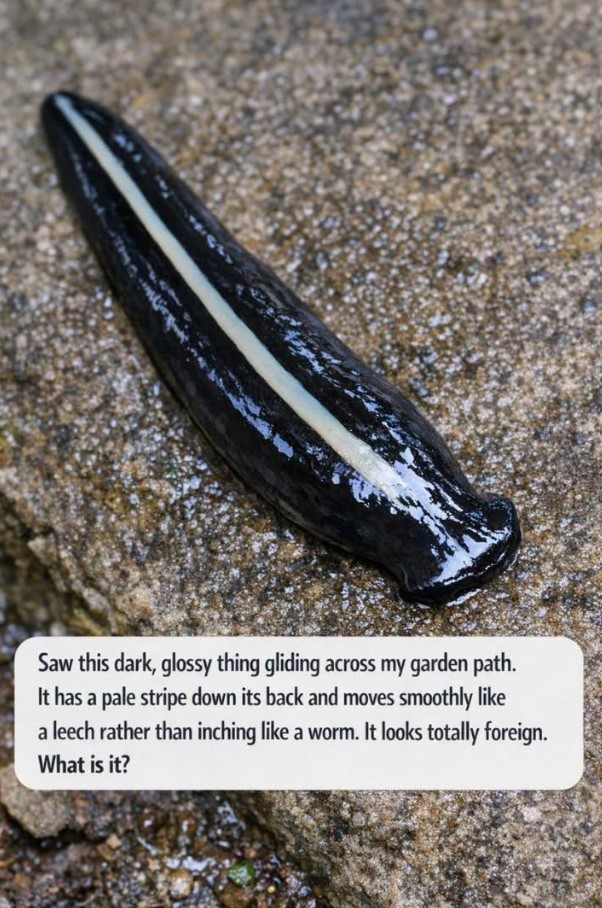
Spotting an unfamiliar creature in your garden can be both fascinating and unsettling. Perhaps you’re walking through your yard after a rainstorm when you notice a long, glossy black creature slowly gliding across the path. It has a smooth body, a distinctive pale stripe running down its back, and moves effortlessly without the familiar wriggling or inching motion of an earthworm. At first glance, it may even resemble a leech, leading many people to wonder whether it’s dangerous or if it belongs in their garden at all.
The good news is that this mysterious visitor is most likely a land planarian, commonly known as a hammerhead flatworm or another species of terrestrial flatworm, depending on your location. These unusual creatures have become increasingly common in many parts of the world and often spark curiosity because of their unique appearance and movement.
Although they may look alarming, understanding what these flatworms are, where they come from, what they eat, and whether they pose a risk can help gardeners make informed decisions. Let’s take a closer look at these fascinating animals and discover why they sometimes appear in gardens after wet weather.
What Is a Land Planarian?
Land planarians are flatworms that belong to a group of invertebrates known for their soft, flattened bodies and remarkable ability to glide across moist surfaces.
Unlike earthworms, which move by contracting their muscles and gripping the soil with tiny bristles, land planarians produce a layer of mucus that allows them to slide smoothly over the ground.
Many species feature:
- Long, flattened bodies
- Glossy or slimy appearance
- Dark coloring with stripes or bands
- Slow, graceful movement
Some species have rounded heads, while others possess the distinctive hammer-shaped head that gives hammerhead flatworms their common name.
Why Does It Move Like a Leech?
One of the first things people notice is its unusual movement.
Rather than stretching and contracting like a worm, the flatworm glides almost effortlessly across rocks, sidewalks, mulch, or garden soil.
This movement is possible because the animal secretes mucus beneath its body while tiny hair-like structures called cilia help propel it forward.
The result is a smooth, continuous motion that often makes people mistake it for a leech.
Where Do These Creatures Come From?
Many land planarian species are native to tropical and subtropical regions, but international trade has helped them spread to many other parts of the world.
They often travel unnoticed in:
- Potted plants
- Nursery stock
- Soil
- Mulch
- Landscaping materials
Once introduced into suitable environments with plenty of moisture, some species establish stable populations.
Why Do They Appear After Rain?
If you’ve only recently noticed one, the weather may be the reason.
Land planarians thrive in damp environments because their bodies lose moisture easily.
They’re most active:
- After rainfall
- During humid weather
- Early in the morning
- Late in the evening
On hot, dry days they usually hide beneath rocks, logs, flowerpots, mulch, or leaf litter where conditions remain cool and moist.
Are They Dangerous to People?
Fortunately, these flatworms are generally not considered dangerous to humans.
They do not bite, sting, or actively attack people.
However, it’s best to avoid handling them with bare hands.
Some species produce defensive chemicals or irritating mucus that may cause mild skin irritation in sensitive individuals.
If you must move one, wear disposable gloves or use a tool instead of direct contact.
Afterward, wash your hands thoroughly.
What Do Land Planarians Eat?
These unusual creatures are predators.
Unlike earthworms that feed on decaying organic matter and help improve soil quality, land planarians hunt other small soil-dwelling animals.
Their diet may include:
- Earthworms
- Slugs
- Snails
- Insect larvae
- Other small invertebrates
Some species use sticky mucus to capture prey before consuming it.
Why Gardeners Sometimes Worry About Them
Because many land planarians feed on earthworms, gardeners often view them with concern.
Earthworms play an important role in healthy soil by:
- Aerating the ground
- Improving drainage
- Recycling organic matter
- Enhancing nutrient availability
Large populations of predatory flatworms could potentially reduce local earthworm numbers over time, although the overall impact varies depending on the species and local conditions.
Are They Invasive?
Some land planarian species are considered invasive in regions where they are not native.
Because they have few natural predators outside their original habitats, they may spread successfully in suitable climates.
Scientists continue studying their ecological impact, particularly in areas where earthworm populations contribute significantly to soil health.
However, not every flatworm found in a garden is necessarily an invasive species, and identification can sometimes require close examination.
How Can You Identify One?
Although species vary, common characteristics include:
- Flat, ribbon-like body
- Smooth, glossy skin
- Moist appearance
- Slow gliding movement
- Pale stripe or multiple stripes
- No visible legs
Some species may grow only a few inches long, while others can exceed 12 inches under favorable conditions.
Should You Remove It?
Whether removal is appropriate depends partly on where you live and the species involved.
If local environmental authorities identify the flatworm as an invasive species, they may recommend removing it rather than releasing it elsewhere.
If you choose to remove one:
- Wear gloves.
- Avoid cutting it into pieces.
- Place it in a sealed container or bag if disposal is recommended by local guidance.
Some flatworms can regenerate from body fragments, meaning cutting them apart may actually create multiple individuals rather than eliminating the problem.
Why Cutting Them Isn’t Recommended
One of the most remarkable features of many flatworms is their regenerative ability.
Certain species can regrow missing body parts after injury.
For this reason:
- Don’t chop them with a shovel.
- Don’t mow over them.
- Don’t attempt to crush them into pieces.
Following local agricultural or environmental recommendations is the safest approach.
Encouraging a Healthy Garden Ecosystem
The presence of one flatworm doesn’t necessarily indicate a serious problem.
Maintaining a balanced garden ecosystem remains the best long-term strategy.
Helpful practices include:
- Improving drainage where possible.
- Avoiding excessive moisture buildup.
- Removing unnecessary debris where pests hide.
- Inspecting new nursery plants before planting.
- Supporting healthy soil biodiversity.
A diverse garden is generally more resilient to unwanted pests.
Other Creatures That May Be Mistaken for Flatworms
Several animals resemble land planarians at first glance.
Earthworms
Earthworms have cylindrical bodies and move by contracting and expanding segments rather than gliding.
Leeches
Leeches are usually found in freshwater habitats and possess suckers at both ends of their bodies.
Slugs
Slugs have visible tentacles and a thicker, softer body with a muscular foot.
Caecilians
These rare amphibians resemble large worms but are found only in certain tropical regions.
Should You Be Concerned If You Find One?
Finding a single flatworm in your garden is usually not a reason for alarm.
Many gardeners encounter them only occasionally, especially after heavy rain.
However, if you begin seeing large numbers or suspect an invasive species, consider contacting your local agricultural extension office or environmental agency for identification and guidance specific to your area.
Appreciating Nature’s Diversity
Although they may appear strange or even unsettling, land planarians are fascinating examples of nature’s diversity. Their smooth movement, remarkable regenerative abilities, and unique hunting behavior have made them subjects of scientific research for many years. Observing unfamiliar wildlife can be an excellent opportunity to learn more about the ecosystems that exist right outside our doors.
Conclusion :
Discovering a dark, glossy flatworm gliding across your garden path can certainly be surprising, especially if you’ve never seen one before. While its unusual appearance and smooth, leech-like movement may seem alarming, these creatures are typically land planarians—a group of flatworms known for their fascinating biology and distinctive way of moving. Most are harmless to people, but because some species prey on beneficial earthworms and are considered invasive in certain regions, it’s worth learning how to identify them correctly before deciding what action, if any, to take.
The best response is to stay informed rather than panic. Observe the creature from a safe distance, avoid handling it with bare hands, and if you’re concerned that it may be an invasive species, consult local gardening resources or environmental authorities for advice. Understanding the wildlife that shares your garden allows you to make thoughtful decisions that protect both your plants and the surrounding ecosystem.
Every garden is home to an incredible variety of insects, worms, fungi, and other organisms that work together to create a healthy environment. While some visitors play a beneficial role and others may require management, each one offers an opportunity to better understand the natural world. By practicing good gardening habits, maintaining healthy soil, and staying curious about the creatures you encounter, you’ll be better prepared to care for your landscape and appreciate the remarkable diversity that exists just beyond your doorstep.