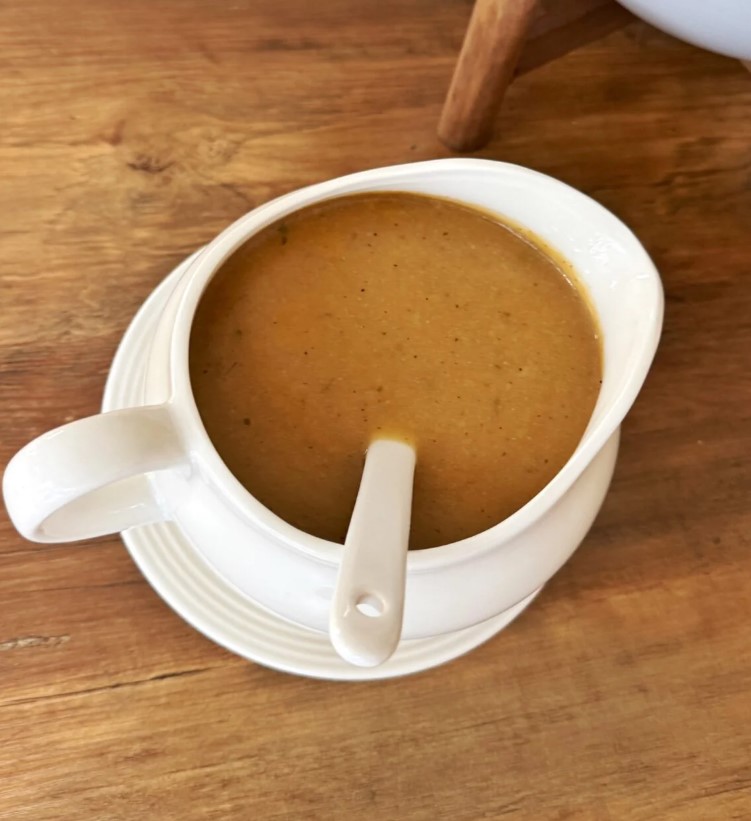
A delicious turkey gravy can make a holiday meal feel complete. Whether it is served over roasted turkey, mashed potatoes, stuffing, or warm biscuits, a rich and flavorful gravy brings everything together.
This Speckled Roaster Turkey Gravy is made with turkey legs, onions, broth, butter, and a blend of traditional herbs and seasonings. The secret is allowing the turkey to roast slowly so the broth develops a deep, homemade flavor that tastes as though it has been cooking all day.
Unlike quick gravy recipes made with pan drippings or packaged mixes, this version starts with seasoned turkey legs and creates a generous amount of flavorful broth. It is especially useful for Thanksgiving, Christmas, or any family gathering when you want plenty of gravy ready before the meal begins.
Why You Will Love This Turkey Gravy
There are several reasons to keep this recipe in your holiday cooking plans.
- Deep, homemade flavor: Slowly roasting turkey legs with butter, onions, herbs, and broth creates a rich base.
- Make-ahead friendly: You can prepare the broth in advance and thicken it shortly before serving.
- Plenty to share: The recipe makes approximately 4 to 6 cups, making it suitable for a family dinner.
- Easy to customize: Keep the gravy smooth or add chopped turkey and onions for a heartier texture.
- Simple ingredients: Most of the ingredients are familiar seasonings and everyday kitchen staples.
Ingredients You Will Need
This recipe uses simple ingredients to build a flavorful turkey broth before thickening it into gravy.
- 3 to 4 large turkey legs
- 3 tablespoons olive oil
- 2 teaspoons poultry seasoning
- 2 teaspoons garlic salt, or to taste
- 1 teaspoon black pepper, or to taste
- 2 teaspoons onion powder
- A light sprinkling of celery seed
- A pinch of dried sage
- 4 tablespoons butter, cut into pieces
- 1 cup water for the first roasting stage
- 8 to 10 cups turkey or chicken broth
- 1 large yellow onion, chopped
- 1 to 2 tablespoons cornstarch or Wondra flour
- 1 to 2 cups water, divided, for preparing the slurry
- 1 tablespoon chicken or turkey bouillon, as needed
How to Make Speckled Roaster Turkey Gravy
Step 1: Prepare the Turkey Legs
Remove the turkey legs from their packaging and pat them dry with paper towels. Drying the surface helps the seasonings stick properly.
Rub the turkey legs with olive oil, then season them generously with poultry seasoning, garlic salt, black pepper, onion powder, dried sage, and a small amount of celery seed.
You can also add some chicken or turkey bouillon to the seasoning mixture for additional savory flavor. Remember that the broth will contain plenty of liquid, so seasoning the turkey generously at this stage helps create a flavorful base.
Step 2: Arrange Everything in the Roaster
Cut the butter into smaller pieces and distribute them across the bottom of a large speckled roasting pan.
Place the seasoned turkey legs on top of the butter. Add one cup of water to the pan, then cover it with the lid.
Preheat the oven to 325°F (approximately 163°C).
Roast the turkey legs, covered, for one hour. Check their color during this first stage. If they are becoming too dark, you can move on to the next step without extending the initial roasting time.
Step 3: Add the Onion and Broth
After the first hour, carefully remove the lid.
Add the chopped yellow onion around the turkey legs. Pour in the turkey or chicken broth until the pan is nearly full, making sure there is enough liquid to create a generous amount of flavorful cooking juices.
Cover the roasting pan again and return it to the oven.
Continue roasting for another three hours. For an even deeper flavor, you can extend the cooking time to four hours.
During this slow roasting process, the turkey legs release their juices, while the onions, butter, broth, and seasonings combine to create a rich gravy base.
Step 4: Strain the Broth
Once the roasting is finished, carefully remove the pan from the oven.
Strain the liquid into a large saucepan. You can discard the onions or reserve them for later, depending on the texture you prefer.
If you want to make a chunky gravy, save some of the cooked turkey meat and onions. You can chop them finely and add them back after thickening the broth.
For a smooth and traditional gravy, simply strain the liquid and leave the solid ingredients out.
Step 5: Prepare the Thickening Slurry
Place the strained broth over medium heat and bring it to a gentle simmer.
In a separate cup, whisk one tablespoon of cornstarch or Wondra flour with one cup of water until the mixture is completely smooth.
This mixture is called a slurry. It helps thicken the broth without adding dry flour directly to the hot liquid.
Slowly pour the slurry into the simmering broth while whisking continuously. Adding it gradually helps prevent lumps from forming.
Step 6: Let the Gravy Thicken
Allow the gravy to simmer for approximately 10 minutes, stirring occasionally.
As it heats, the liquid will gradually become thicker and develop a smooth consistency.
If you prefer a thicker gravy, prepare another slurry using the remaining thickener and water, then add it gradually until you reach the consistency you want.
Taste the gravy before serving. Add chicken or turkey bouillon if it needs more savory flavor or saltiness.
Remember that bouillon can be quite salty, so add it a little at a time.
Step 7: Choose Your Favorite Texture
At this point, the gravy is ready to serve, but you can customize it according to your family’s preferences.
For smooth gravy, leave it as it is after straining.
For a heartier version, remove the skin from the cooked turkey legs, finely chop some of the turkey meat and cooked onions, and stir them into the finished gravy.
Both versions are delicious, so choose whichever style your family enjoys most.
Can You Make This Gravy in a Slow Cooker?
Yes. If you prefer using a slow cooker, there is an alternative method.
Start by seasoning the turkey legs and roasting them in the oven for the first hour, following the original instructions.
After that, transfer the turkey legs, butter, onions, seasonings, and broth into your slow cooker.
Cover and cook on LOW for approximately 6 to 8 hours, allowing the ingredients to develop a rich flavor.
When the cooking is finished, strain the broth and transfer it to a saucepan. Prepare the cornstarch or Wondra slurry and thicken the gravy on the stovetop using the same method described above.
Helpful Tips for the Best Homemade Turkey Gravy
Season generously. Turkey legs need enough seasoning to give the broth a full flavor. Since the recipe uses a large quantity of liquid, a well-seasoned starting point makes a difference.
Use dark turkey meat. Turkey legs contain dark meat, which contributes a deeper, richer flavor to the broth than a lighter meat-based preparation.
Do not rush the roasting process. Slow roasting gives the turkey, onions, and seasonings time to release their flavors into the broth.
Add the thickener gradually. Pour the slurry slowly while whisking to help create a smooth gravy without lumps.
Adjust the consistency to your liking. Some people prefer a thinner gravy that pours easily, while others enjoy a thicker version that coats mashed potatoes and turkey.
Taste before adding extra salt. Garlic salt, broth, and bouillon already contribute saltiness, so always taste the gravy before adding more.
How to Make the Gravy Less Greasy
Turkey legs naturally release fat during roasting, which gives the gravy a rich flavor.
If you enjoy a fuller, richer gravy, you can leave the fat in the broth. However, if you prefer a lighter result, there is an easy way to reduce it.
After straining the broth, allow it to cool and place it in the refrigerator overnight. The fat will rise to the surface and become firm as the broth chills.
The following day, remove the solid layer of fat from the top before reheating and thickening the broth.
This gives you more control over the final texture without changing the basic preparation.
How to Make the Gravy Ahead of Time
One of the biggest advantages of this recipe is that you do not need to prepare everything on the day of your holiday meal.
You can make the roasted turkey broth several days in advance and keep it refrigerated. When you are ready to serve, simply reheat the broth and complete the thickening process.
For longer preparation, the broth can also be frozen.
If freezing, prepare the recipe through the straining stage but do not add the thickening slurry. Allow the broth to cool, transfer it to suitable freezer-safe containers, and freeze.
When needed, thaw it in the refrigerator. Reheat it in a saucepan and prepare the slurry to thicken the gravy shortly before serving.
What to Serve With Turkey Gravy
This homemade gravy is a wonderful addition to many traditional comfort foods.
- Roasted turkey: Pour it over sliced turkey for a classic holiday combination.
- Mashed potatoes: A generous spoonful of gravy makes creamy potatoes even more satisfying.
- Stuffing: The rich broth complements the herbs and savory flavors in traditional stuffing.
- Roasted vegetables: Serve it alongside carrots, potatoes, or other roasted vegetables.
- Biscuits: Warm biscuits are delicious when served with homemade turkey gravy.
You can also save some for leftover turkey sandwiches. Once refrigerated, the gravy becomes thicker, and it can be reheated or used as a flavorful spread with leftover turkey.
Frequently Asked Questions
How much gravy does this recipe make?
The recipe yields approximately 4 to 6 cups, depending on how much liquid remains after roasting and how much the broth is reduced during cooking.
Can I use turkey wings instead of turkey legs?
Yes, turkey wings can also be used to make homemade gravy. However, turkey legs contain dark meat and produce a slightly different flavor profile. They also release plenty of cooking juices during the roasting process.
Can I leave the onions out?
Yes. The onions contribute flavor, but the gravy can still be prepared without them. If you need to avoid onions, leave out both the chopped onion and onion powder.
Can I make the gravy completely smooth?
Absolutely. Simply strain the broth and do not add the cooked turkey meat or onions back into the finished gravy.
Why should I use a slurry?
A slurry combines the thickening ingredient with cold or room-temperature water before it is added to hot liquid. This makes it easier to incorporate the thickener evenly and helps prevent lumps.
Can I freeze the finished gravy?
It is best to freeze the strained broth before adding the thickener. Once thawed, reheat the broth and prepare the slurry to finish the gravy. This makes it easier to adjust the consistency when serving.
Conclusion :
Speckled Roaster Turkey Gravy is a wonderful recipe to have ready for Thanksgiving, Christmas, or any special family dinner. Instead of relying entirely on the drippings from a roasted turkey, this method uses seasoned turkey legs, butter, onions, broth, and traditional herbs to create a generous amount of rich, homemade gravy.
The slow roasting process is what makes this recipe special. Giving the turkey legs several hours in the oven allows their juices to blend with the broth and seasonings, creating a deep flavor that works beautifully with classic holiday dishes.
Another advantage is how easily the recipe fits into a busy holiday schedule. You can prepare the broth ahead of time, refrigerate or freeze it, and take care of the final thickening step when dinner approaches. You can also choose between a smooth gravy or a heartier version with chopped turkey and onions.
Whether you pour it over roasted turkey, mashed potatoes, stuffing, or biscuits, this homemade gravy brings warmth and comfort to the table. It is the kind of simple, traditional recipe that makes a family meal feel even more special, and having extra gravy available is never a bad thing.