
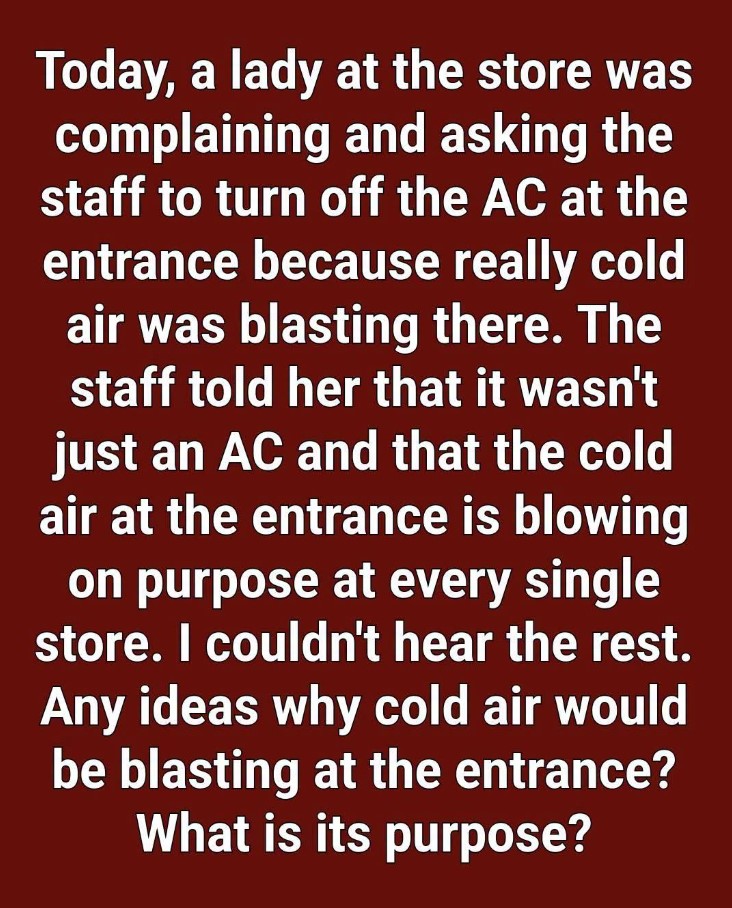
Have you ever walked into a grocery store on a hot day and been greeted by a powerful blast of cold air? It can feel refreshing during the summer, but sometimes it’s so strong that customers instinctively step back or wonder why the entrance feels colder than the rest of the building. While many people assume it’s simply the store’s air conditioning working overtime, there’s actually much more to the story.
The stream of cold air near the entrance serves several important purposes beyond keeping shoppers comfortable. In many supermarkets, big-box retailers, and warehouse stores, the airflow is carefully designed to help regulate indoor temperatures, reduce energy costs, protect food quality, improve sanitation, and even discourage insects from entering the building. What feels like an oversized air conditioner is often part of a specialized system engineered to make the entire store operate more efficiently.
Understanding why stores intentionally direct cold air toward their entrances offers an interesting look at modern building design and energy management. Here’s why that chilly breeze is far more important than it may first appear.
It’s Often an Air Curtain, Not Just an Air Conditioner
One of the biggest misconceptions is that the powerful airflow at the entrance comes directly from the store’s regular air conditioning system.
In many cases, it’s actually produced by an air curtain.
An air curtain is a device installed above or beside an entrance that creates a controlled stream of air across the doorway whenever the doors open. This invisible barrier helps separate indoor and outdoor air without requiring a physical door to remain closed.
How an Air Curtain Works
An air curtain uses high-powered fans to direct a continuous sheet of air downward across the entrance.
Although the air may feel cold, its primary purpose is creating an invisible barrier between two different environments.
This airflow helps:
- Reduce the exchange of indoor and outdoor air.
- Maintain a more consistent indoor temperature.
- Improve energy efficiency.
- Reduce strain on heating and cooling equipment.
Because customers frequently enter and exit grocery stores, this barrier helps stabilize the indoor climate throughout the day.
Keeping the Store Comfortable
Every time the entrance doors open, outside air attempts to rush inside.
During summer this often means:
- Hot air
- Humidity
- Dust
During winter it may bring: - Cold air
- Wind
- Chilly drafts
The air curtain helps reduce these sudden temperature swings, making the shopping experience more comfortable for customers and employees alike.
Protecting Refrigerated Foods
Grocery stores contain large refrigerated sections filled with:
- Milk
- Cheese
- Yogurt
- Fresh meat
- Seafood
- Frozen foods
Warm outdoor air entering the building forces refrigeration systems to work harder to keep these products at safe temperatures.
By limiting warm air infiltration, entrance air curtains help maintain more stable conditions throughout the store, supporting food quality and reducing unnecessary energy use.
Reducing Energy Costs
Heating and cooling large commercial buildings requires significant energy.
Without some type of barrier, every opening of the entrance doors would allow conditioned air to escape while outdoor air entered.
This leads to:
- Increased electricity use.
- Longer HVAC operating times.
- Higher utility costs.
Air curtains help minimize these losses, making them an energy-saving investment for many businesses.
Helping Keep Insects Outside
Flying insects naturally seek opportunities to enter buildings, especially where food is present.
The strong airflow created by an air curtain makes it much more difficult for:
- Flies
- Mosquitoes
- Gnats
- Small flying insects
to cross through the entrance.
While not a perfect solution, the air barrier provides another layer of protection alongside regular pest-control practices.
Limiting Dust and Debris
Busy parking lots often generate:
- Dust
- Dirt
- Leaves
- Pollen
- Small bits of litter
Without a barrier, these particles can easily drift into the store whenever doors open.
The continuous airflow helps reduce the amount of outdoor debris entering the building, making it easier to maintain clean shopping areas.
Improving Indoor Air Quality
Reducing the amount of outdoor contaminants entering the building also supports cleaner indoor air.
Air curtains may help decrease the movement of:
- Dust particles
- Airborne pollutants
- Vehicle exhaust from nearby traffic
- Seasonal pollen
Although HVAC filtration remains the primary method of improving indoor air quality, limiting incoming pollutants provides an additional benefit.
Preventing Excess Moisture
Humidity can create several problems inside grocery stores.
Moist air may contribute to:
- Condensation on refrigerated cases.
- Fogged freezer doors.
- Slippery floors.
- Increased strain on cooling equipment.
During humid weather, reducing outside air infiltration helps minimize these issues and supports more efficient operation.
Supporting Food Safety
Maintaining stable temperatures is an important part of food safety.
Although refrigerated equipment does most of the work, limiting repeated bursts of warm outside air helps stores maintain more consistent conditions for perishable products.
This contributes to better preservation of fresh foods and frozen items.
Why the Air Feels So Cold
Many shoppers notice that the air near the entrance feels colder than elsewhere in the building.
Several factors contribute to this sensation:
- The air is moving quickly.
- Fast-moving air increases evaporative cooling on your skin.
- You may have just come from hot outdoor temperatures.
- The concentrated airflow is directed toward the doorway.
Even if the air isn’t dramatically colder, its speed makes it feel more intense.
Why Some Stores Feel Colder Than Others
Not every grocery store uses identical equipment.
The strength of the airflow depends on several factors:
- Door size
- Ceiling height
- Local climate
- Customer traffic
- Building design
Stores in hotter climates or those with constantly opening automatic doors often rely more heavily on powerful air curtains.
Benefits During Winter
Air curtains aren’t useful only during summer.
In colder months they also:
- Help keep heated indoor air inside.
- Reduce cold drafts.
- Improve customer comfort.
- Lower heating costs.
The same technology works year-round by reducing unwanted air exchange.
Are Air Curtains Environmentally Friendly?
Although they require electricity to operate, air curtains often reduce the overall energy needed to heat or cool a large building.
By helping HVAC systems work more efficiently, they can contribute to lower overall energy consumption over time, particularly in stores with frequent customer traffic.
Common Misconceptions
Myth: The Store Is Trying to Make Customers Shop Faster.
Some people believe cold entrances are designed to hurry customers inside. In reality, the primary purpose is environmental control and energy management, not influencing shopping behavior.
Myth: It’s Simply Extra Air Conditioning.
While the air may be cooled, the powerful airflow usually serves as a protective barrier rather than functioning solely as traditional air conditioning.
Myth: Every Store Uses the Same System.
Different retailers use different entrance designs. Some have sophisticated air curtains, while others rely mainly on vestibules, double-door entryways, or conventional climate-control systems.
Modern Building Design
Air curtains have become common not only in grocery stores but also in:
- Supermarkets
- Warehouses
- Hospitals
- Restaurants
- Hotels
- Airports
- Distribution centers
- Retail stores
Any building with heavy foot traffic can benefit from reducing the exchange of indoor and outdoor air, improving both efficiency and occupant comfort.
The Invisible Technology You Rarely Notice
One of the most interesting aspects of air curtains is that most shoppers rarely think about them. They quietly operate in the background every day, helping stores maintain comfortable temperatures, protect merchandise, reduce maintenance costs, and improve overall efficiency. Despite being largely unnoticed, they play an important role in the daily operation of many commercial buildings around the world.
Conclusion :
That chilly blast of air you experience when entering a grocery store is usually much more than an overactive air conditioner. In many cases, it comes from an air curtain—a specialized system designed to create an invisible barrier between the indoor and outdoor environment. By reducing the exchange of hot or cold air, these systems help stores maintain comfortable temperatures, improve energy efficiency, support refrigeration, limit dust and insects, and contribute to a cleaner shopping environment. What feels like a simple gust of cold air is actually part of a carefully engineered solution that benefits both the business and its customers.
Air curtains also demonstrate how modern building technology often works behind the scenes to solve practical challenges. Grocery stores experience constant traffic throughout the day, with doors opening hundreds or even thousands of times. Without a system to reduce air exchange, heating and cooling costs would rise, refrigerated foods would be harder to keep at consistent temperatures, and indoor comfort could suffer. By maintaining a more stable environment, air curtains help stores operate more efficiently while supporting food quality and reducing energy waste.
The next time you feel that refreshing burst of cold air at the entrance of a supermarket, you’ll know it’s serving a much larger purpose than simply cooling customers down. It’s a smart combination of engineering, energy conservation, environmental control, and customer comfort. Although most people pass through without giving it a second thought, this invisible barrier is one of the many small innovations that help modern grocery stores function smoothly every single day.