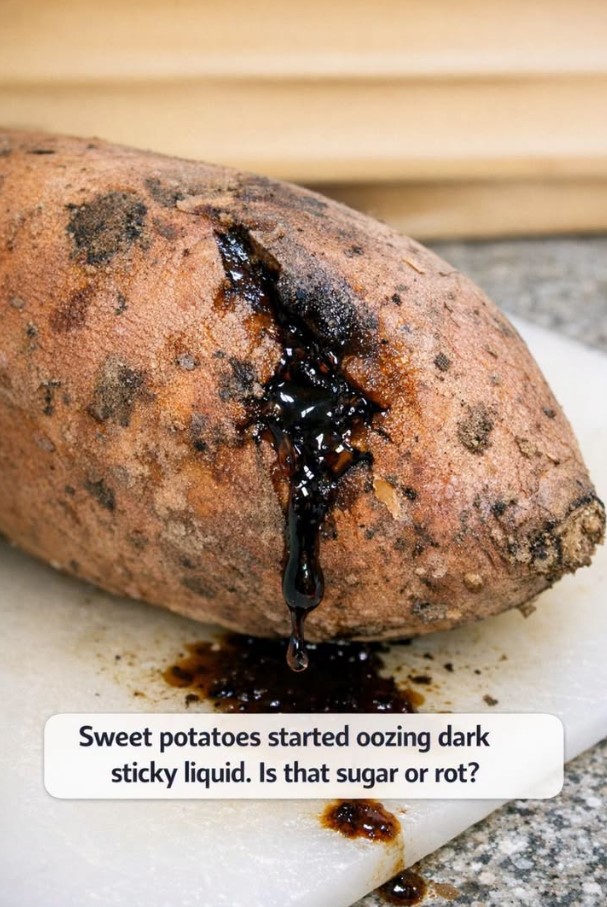
You reach into the pantry to grab a sweet potato for dinner and notice something strange: a dark, sticky liquid is slowly seeping from the skin. It might look like syrup, sap, or even the beginning of rot.
Naturally, the first question is whether the sweet potato is still safe to eat.
The answer isn’t always as alarming as it looks. Sweet potatoes can naturally release a sticky, milky, or syrup-like substance when they have been cut, bruised, scraped, or otherwise damaged. Fresh sweet potatoes are known to exude a natural latex-like material from injuries, particularly around their ends.
However, sticky liquid can also appear alongside genuine spoilage, so you shouldn’t judge the sweet potato by the liquid alone.
The key is to look at the entire vegetable—its firmness, smell, skin, flesh, and any signs of mold or decay.
Why Do Sweet Potatoes Sometimes Ooze?
Sweet potatoes are living storage roots. Even after they’re harvested, they continue undergoing natural chemical changes.
One of the most important processes involves carbohydrates and sugars. During curing and storage, starches are converted into sugars, which contributes to the sweet flavor we associate with properly prepared sweet potatoes. Extension guidance confirms that curing helps convert starches to sugars while improving flavor and texture.
Sweet potatoes can also release a natural sticky substance called latex when the skin or tissue is injured.
According to North Carolina State University Extension, sweet potatoes naturally exude sticky latex from injuries, especially at the ends of the root. This material can dry relatively quickly and may look as though the wound has sealed itself, although it doesn’t provide reliable protection against decay.
So if you’ve noticed a sticky substance around a small scratch, bruise, cut, or damaged end, the appearance alone doesn’t automatically mean the sweet potato has gone bad.
Is the Dark Liquid Actually Sugar?
Sometimes the sticky material can be associated with the sweet potato’s natural sugars and other plant fluids, but it is a little too simplistic to assume that every dark, sticky substance is simply “sugar.”
Fresh-cut sweet potatoes, for example, can release a naturally occurring white, milky material that has been described as sap or latex. The University of California’s Postharvest Research and Extension Center notes that this type of exudate is a known phenomenon in fresh-cut sweet potatoes.
Meanwhile, sugars develop naturally during curing and storage.
The appearance of the liquid can change as it mixes with moisture, oxidizes, dries, or becomes contaminated by material on the surface.
That’s why color alone isn’t enough to determine whether you’re looking at harmless natural exudate or spoilage.
The Most Important Clue: How Does the Sweet Potato Feel?
When deciding whether a sweet potato is still usable, texture is one of the most helpful clues.
A healthy raw sweet potato should generally feel firm and solid.
If you pick it up and it feels reasonably firm despite a small amount of sticky residue, that’s a very different situation from finding a root that has become:
- Extremely soft
- Squishy
- Wet inside
- Collapsed in areas
- Leaking large amounts of liquid
- Covered in obvious decay
Soft, wet tissue can be a sign that microorganisms have begun breaking down the root.
University of Maryland Extension specifically notes that sweet potatoes becoming watery during storage may indicate the development of soft rot, making them inedible.
So don’t focus exclusively on the sticky substance. Press gently on the surrounding flesh and examine the whole root.
What Does Healthy Exudate Look Like?
Natural exudate can vary in appearance depending on the condition of the sweet potato and where the injury occurred.
A small amount of sticky material around a cut, scrape, or bruised area isn’t necessarily concerning.
Fresh sweet potatoes can naturally exude sticky latex from damaged areas, and that material may dry over time.
If the sweet potato remains firm, has a normal smell, and doesn’t show signs of mold or extensive decay, the sticky substance may simply be related to natural plant fluids and storage changes.
But don’t use “it looks like sugar” as the only safety test.
When the Liquid Could Mean Rot
The situation changes when the ooze is accompanied by other signs of deterioration.
Rot can cause sweet potatoes to become soft, wet, discolored, and unpleasant-smelling. Different organisms can produce different types of decay.
For example, NC State Extension describes Rhizopus soft rot as a rapid, soft, wet decay that commonly enters through wounds.
Another condition, Geotrichum sour rot, produces wet, soft decay along with a distinct sour odor. White fungal growth can also appear on affected areas.
These are very different from a firm sweet potato with a little harmless-looking residue around a small injury.
Watch for Mold
Visible mold is another major warning sign.
If you see fuzzy growth, extensive fungal material, or unusual patches spreading across the surface, don’t assume that the problem is simply sugar.
Sweet potatoes can develop several fungal diseases during storage. NC State notes that postharvest diseases are a major source of losses in stored sweet potatoes, particularly when roots have been damaged.
Rhizopus soft rot, for example, can produce white, whiskery fungal growth and black spores as the infection progresses.
If a sweet potato is clearly moldy or extensively decayed, the safest choice is to discard it rather than trying to rescue questionable portions.
Smell Can Tell You a Lot
Give the sweet potato a careful sniff.
A normal sweet potato should not have a strong rotten, fermented, sour, or otherwise unpleasant odor.
A strange smell becomes especially concerning when it appears together with soft texture, wet decay, mold, or darkened flesh.
NC State’s description of Geotrichum sour rot specifically identifies a distinct sour odor alongside wet, soft decay.
So if you open the storage container and immediately notice an unpleasant smell coming from one particular sweet potato, don’t ignore it simply because the vegetable still looks somewhat normal.
What About Black Spots?
Not every dark spot automatically means the sweet potato must be discarded, but extensive or suspicious discoloration deserves attention.
Some storage diseases cause characteristic dark lesions.
For example, black rot can produce dark, sunken areas on sweet potato roots. NC State Extension notes that black rot typically produces a dry, firm, dark-colored rot that can expand during storage.
Other forms of decay can cause brown, black, wet, or collapsed areas.
This is why it’s important to distinguish between:
A small superficial blemish
and
a spreading area of discolored, damaged tissue.
If the discoloration is extensive or the surrounding flesh is deteriorating, don’t take chances.
Why Do Damaged Sweet Potatoes Spoil More Easily?
A healthy sweet potato has a protective outer skin.
Once that skin is scraped, cut, bruised, or punctured, the damaged area can become an entry point for microorganisms.
That’s one reason careful handling after harvest is so important.
North Carolina State University explains that sweet potatoes are susceptible to decay when wounds occur and that proper curing helps heal damage and reduce susceptibility to decay.
In other words, a small injury doesn’t necessarily mean the sweet potato is already spoiled—but it can increase the risk of spoilage later.
Does Curing Affect Sweetness?
Absolutely.
Curing isn’t simply a way of drying the vegetable.
It is an important postharvest process that helps sweet potatoes heal minor injuries, set their skin, reduce moisture loss, and improve flavor.
Washington State University explains that curing helps create a protective cork layer over the root and contributes to longer storage life.
Penn State Extension also notes that curing encourages roots to heal wounds, set their skins, and convert starches to sugars.
This explains why properly cured sweet potatoes often taste sweeter and store better than freshly harvested, untreated roots.
Could Warm Storage Cause Problems?
Yes.
Temperature has a major influence on sweet potato storage.
Sweet potatoes are tropical-origin crops and are sensitive to cold temperatures. The University of California recommends commercial storage around 55°F to 59°F (13°C to 15°C), while other extension guidance similarly recommends roughly 55°F to 60°F for home storage.
Temperatures that are too cold can cause chilling injury.
Temperatures that are too warm can accelerate sprouting, weight loss, and other quality problems.
So simply putting sweet potatoes wherever there happens to be room in the kitchen isn’t always the best strategy.
Should You Put Raw Sweet Potatoes in the Refrigerator?
Generally, no.
Sweet potatoes are sensitive to chilling, and extension recommendations advise against refrigerating raw sweet potatoes for normal storage. Mississippi State University recommends storing them in a dark, cool location and warns that prolonged temperatures below 55°F can cause chilling injury and affect cooking quality.
Instead, look for a place that is:
- Cool but not cold
- Dark
- Dry enough to prevent surface moisture
- Well ventilated
- Away from excessive heat
Avoid sealed plastic bags that trap moisture around the roots.
What Should You Do If Only One Sweet Potato Is Oozing?
First, separate it from the others.
Then examine it carefully.
Look at the skin, check for mold, gently assess firmness, and smell it.
If it has only a small amount of sticky residue around a minor injury and otherwise appears firm and healthy, the residue itself may not indicate spoilage.
If, however, it is soft, wet, badly discolored, moldy, or foul-smelling, don’t try to convince yourself that the liquid is merely sugar.
When several spoilage signs appear together, throw it away.
It’s also wise to inspect the sweet potatoes stored beside it, especially if they were touching or sharing a container.
Can You Cut Away a Bad Spot?
This depends on what you’re dealing with.
A small, superficial area of damage is not automatically the same thing as advanced rot. However, once a root has obvious soft rot, extensive mold, or significant decay, cutting away one visible section isn’t a reliable way to make the entire vegetable safe.
Some postharvest diseases can extend into the flesh, and certain forms of decay can progress rapidly.
If you’re unsure whether you’re dealing with a harmless injury or genuine decay, the safer choice is to discard the questionable root.
How to Store Sweet Potatoes Properly
Good storage can prevent many of these problems before they begin.
For home storage, keep sweet potatoes in a cool, dark, well-ventilated place rather than the refrigerator.
Avoid repeatedly moving them between very different temperatures.
Don’t wash them immediately before long-term storage unless your particular storage method calls for it. Excess surface moisture can contribute to problems.
And handle them gently.
Bruises and cuts aren’t just cosmetic. They can create opportunities for decay organisms to enter the root.
Don’t Wash Away the Warning Signs
One common mistake is to see sticky liquid and immediately rinse the sweet potato under the faucet.
Cleaning the surface may remove the residue, but it doesn’t answer the more important question: Why was the liquid there in the first place?
Before washing it, inspect the vegetable.
If there’s a small injury and the root is otherwise firm, that’s useful information.
If there’s soft tissue, mold, an unpleasant odor, or spreading discoloration, washing the surface won’t make the underlying problem disappear.
A Simple Checklist Before Cooking
When you discover a sweet potato with dark or sticky liquid, run through this checklist:
1. Is it firm?
Firm is generally reassuring; severe softness is not.
2. Where is the liquid coming from?
A small injured area is different from widespread leaking.
3. Is there visible mold?
Fuzzy growth or extensive fungal material is a warning sign.
4. Does it smell normal?
Sour, fermented, rotten, or otherwise unpleasant odors are concerning.
5. Is the flesh discolored?
Small superficial marks aren’t necessarily the same as spreading dark or wet decay.
6. Is the root leaking because it is becoming mushy?
If so, treat it as possible spoilage.
7. Are neighboring sweet potatoes affected?
Inspect the entire batch.
This simple inspection can help you distinguish an unusual but harmless storage phenomenon from a genuinely spoiled vegetable.
Final Thoughts
Finding a sweet potato with dark, sticky liquid oozing from its skin can certainly look alarming, but the liquid itself doesn’t automatically mean the vegetable is rotten.
Sweet potatoes naturally produce sticky latex when their skin or tissue is injured, and they also undergo significant changes in starches and sugars during curing and storage.
The real question is what the rest of the sweet potato looks, feels, and smells like.
If the root remains firm, smells normal, and has no obvious mold or extensive decay, a small amount of sticky residue around a damaged area may simply be part of the sweet potato’s natural response to injury. But if the vegetable has become soft, watery, moldy, foul-smelling, or extensively discolored, those are much stronger indications of spoilage.
And if you’re storing sweet potatoes for more than a few days, remember that proper storage matters just as much as careful inspection. Keep them cool but not refrigerated, protect them from excessive moisture and temperature extremes, and handle them gently to minimize wounds. Recommended storage temperatures are generally around 55°F to 60°F (13°C to 16°C).
So the next time you discover that mysterious sticky ooze, don’t immediately assume your sweet potatoes are ruined. Take a closer look first—but when the signs point toward genuine decay, it’s always better to discard a questionable root than risk eating spoiled food.