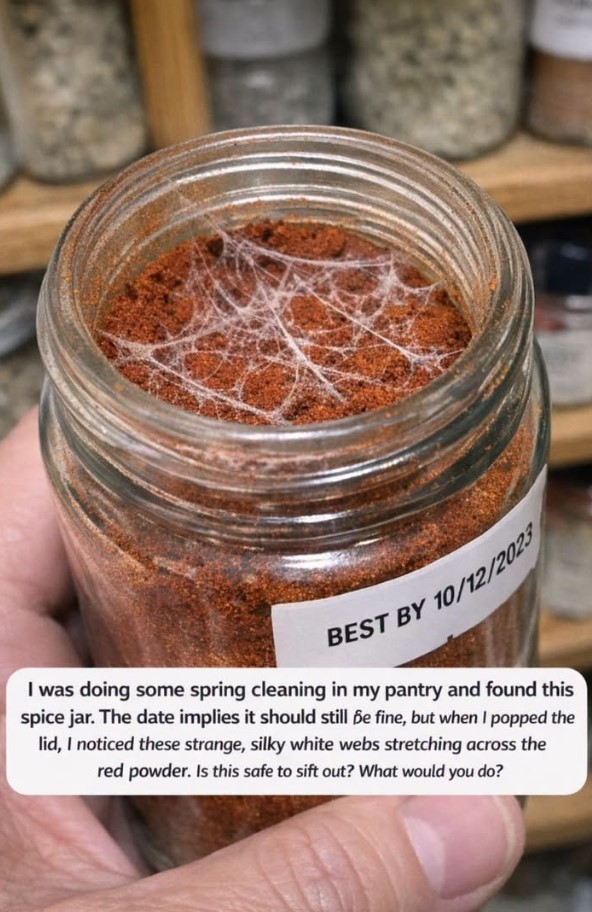
Spring cleaning often means opening cabinets and rediscovering ingredients that have been sitting quietly in the back of the pantry for months—or even years. Usually, these forgotten jars are nothing more than reminders of recipes you haven’t made in a while. But every once in a while, you open a container expecting to find an ordinary spice and discover something completely unexpected.
That is exactly what happened with this forgotten spice jar.
The date printed on the container suggested that the spice should still be within its recommended period. There was no obvious reason to suspect anything was wrong. But the moment the lid came off, something immediately stood out: strange, silky white strands stretched across the surface of the spice.
At first glance, they could easily be mistaken for harmless clumping or a little moisture. But the unusual web-like appearance raises another possibility—pantry pests.
If you’ve ever encountered something similar, don’t panic. These discoveries are unpleasant, but they’re not unusual. Here’s what those mysterious strands can mean, what may have caused them, and what you should do before putting that spice back into your cabinet.
What Are Those Strange White Webs?
Thin, silky strands inside a dry food container can be a sign of an infestation by stored-food pests.
One of the most common culprits associated with webbing in pantry products is the Indian meal moth. The larvae of these small moths can feed on a wide range of dry foods and may leave silk-like material behind as they move through the product.
The webbing may appear:
- Across the surface of the spice
- Around the inside edges of the container
- Between clumps of powder
- Around bits of food
- As fine strands connecting different areas
- As thicker tangled patches
Sometimes the infestation is obvious because you can see larvae or adult moths. Other times, the webbing is the first clue that something has been living inside the pantry product.
Why Would a Spice Have Webbing If the Date Is Still Good?
This is one of the most confusing parts of the discovery.
Many people assume that if a food hasn’t reached the date printed on its package, it must still be perfectly fine. But a printed date doesn’t protect food from insects.
Food dating and food contamination are two separate issues.
A spice could still be within its recommended quality period while simultaneously having been exposed to pantry pests. The date generally tells you something about quality and freshness, not whether insects have entered the container.
That means the date shouldn’t override what you’re actually seeing.
If the spice looks normal, smells normal, and has been stored properly, the date can be useful information. But if you open the container and discover obvious webbing or insects, that’s a much more important warning sign.
Could It Simply Be Moisture?
Sometimes dry spices develop clumps because they’ve absorbed moisture.
Humidity can cause powdered ingredients to stick together, particularly when a container is frequently opened near a stove, sink, dishwasher, or other humid area.
Moisture-related clumping usually looks different from insect webbing, though.
A hard lump or compacted powder isn’t necessarily cause for alarm. Fine strands that look like silk or spiderwebs are much more suspicious.
If you’re unsure, look closely. True webbing may have a delicate, thread-like structure rather than simply appearing as hardened or damp spice.
Pantry Moths Can Be Surprisingly Easy to Miss
Pantry moth infestations don’t always announce themselves immediately.
You might never notice an adult moth when the problem begins. An infestation can start with a contaminated package brought home from the store, and the insects may remain unnoticed while larvae develop inside dry food.
By the time you discover webbing, the infestation may have already been present for some time.
That’s why an unexpected discovery inside one spice jar is a good reason to check the surrounding pantry rather than simply throwing away that single container and forgetting about it.
What Other Foods Should You Check?
If you discover suspicious webbing in one product, inspect other dry goods stored nearby.
Pay particular attention to:
- Flour
- Rice
- Pasta
- Cereal
- Baking mixes
- Nuts
- Seeds
- Dried fruit
- Pet food
- Crackers
- Grains
- Other spices
- Seasoning mixes
Look for tiny larvae, unusual clumping, holes in packaging, webbing, insects, or anything else that doesn’t look normal.
Even packages that appear closed deserve a quick inspection, especially if they’re made from thin cardboard or plastic.
What Should You Do With the Spice?
If you can clearly see webbing, larvae, or other evidence of insect activity, the simplest solution is to discard the spice.
Trying to scoop away the visible webbing isn’t a reliable way to make the product suitable for use. There could be eggs, larvae, or other contamination that you can’t see.
Considering how inexpensive most spices are, it’s generally not worth taking chances with a visibly infested product.
Seal the unwanted spice in a bag before putting it into the garbage so that any insects inside don’t have an opportunity to spread elsewhere.
Don’t Forget the Pantry Shelf
After removing the suspicious jar, inspect the location where it was stored.
Pantry pests can hide in cracks, corners, shelf joints, and areas where small crumbs or food particles accumulate.
A thorough cleanup should include:
- Removing everything from the affected shelf.
- Inspecting nearby food packages.
- Discarding products showing signs of infestation.
- Vacuuming crumbs and food debris.
- Cleaning the shelf surfaces.
- Checking corners and cracks.
- Allowing the area to dry completely.
- Returning only clean, inspected food to the pantry.
This is especially important if you discover more than one suspicious package.
What If You Find Moths Elsewhere?
Seeing an occasional moth near your pantry can be a useful warning.
Don’t automatically assume every small moth is a pantry pest, but if you repeatedly see moths around cupboards containing dry foods, investigate further.
Look for the source rather than simply killing individual adult insects.
Adult moths may be the most visible part of the problem, while the actual source can be hidden inside a forgotten package of food.
Removing contaminated products is therefore usually more important than simply dealing with the adult insects you happen to see.
How to Prevent Pantry Pest Problems
There are several simple habits that can make pantry infestations less likely to become a major problem.
Store Dry Foods in Airtight Containers
Once opened, flour, rice, cereal, grains, and similar foods can be transferred into airtight containers.
This helps keep food fresh and makes it much easier to notice anything unusual.
Keep Your Pantry Dry
Moisture isn’t good for spices or many other dry foods.
Avoid storing spices directly beside the sink or above a steaming appliance.
Keep Spices Away From Heat
Heat can gradually damage the flavor and aroma of spices.
A cool, dark cabinet is generally preferable to a shelf directly above a stove or oven.
Rotate Older Ingredients
When buying new spices or pantry staples, place newer items toward the back and older ones toward the front.
That simple habit encourages you to use older products first.
Inspect Forgotten Containers
Spring cleaning is actually an excellent opportunity to check those forgotten jars.
If something has been sitting untouched for a long time, look at it before using it.
Check the appearance, smell, texture, packaging, and—most importantly—whether there are any signs of insects.
How Can You Tell If an Old Spice Has Lost Its Quality?
Not every old spice needs to be thrown away simply because it has been sitting in the pantry.
Spices generally lose their flavor and aroma gradually.
If you open a jar and the smell is faint, the spice may simply have become stale.
For example, an old jar of ground cumin may still look perfectly normal but have very little aroma. In that case, the primary issue is quality rather than an infestation.
Webbing, insects, larvae, mold, or other unusual contamination is a different matter.
A spice that has lost its flavor isn’t necessarily the same thing as a spice that has been infested.
A Quick Smell Test Can Help
If the spice looks normal, you can smell it to evaluate its freshness.
Fresh spices usually have a recognizable aroma. If the smell has become extremely weak, the spice may be past its prime.
This is especially useful for spices that have been sitting in the cabinet for a long time.
However, don’t use smelling as a reason to ignore visible contamination. If you see insects or webbing, the appearance itself is enough reason to discard the product.
The Printed Date Isn’t the Whole Story
One of the biggest lessons from this pantry discovery is that food dates aren’t the only thing you should consider.
A date can tell you when a manufacturer expects the product to retain its best quality, but it can’t tell you whether the container has been exposed to moisture, heat, insects, or improper storage.
That’s why inspecting food before using it is always worthwhile.
A jar can technically be within its date range and still have something obviously wrong with it.
When Should You Be Concerned?
Finding a single questionable spice doesn’t necessarily mean you have a serious infestation.
But you should take the discovery more seriously if you notice:
- Multiple contaminated products
- Several pantry moths
- Larvae
- Repeated webbing
- Insects in unopened packages
- Contamination appearing in different cupboards
- A rapidly spreading problem
In those circumstances, carefully inspect the entire pantry and consider professional pest-control advice if the problem persists.
Final Thoughts :
Finding mysterious silky white webs inside a spice jar can turn an ordinary spring-cleaning project into a surprisingly unsettling discovery. The fact that the jar’s date suggests the spice should still be fine makes the situation even more confusing.
But a printed date doesn’t guarantee that a product has remained completely untouched by insects or other storage problems.
If the strands genuinely resemble delicate webbing, especially when accompanied by larvae, tiny insects, or unusual clumps, treat it as a possible pantry-pest problem rather than simply assuming it’s harmless moisture.
The best response is straightforward: discard the suspicious spice, inspect neighboring dry goods, clean the affected shelf thoroughly, and store future pantry staples in tightly sealed containers.
Most importantly, don’t let one strange discovery make you panic. Pantry pests can happen even in clean, well-maintained kitchens, and catching the signs early gives you a much better chance of keeping the problem small.
So the next time you open an old spice jar during spring cleaning, don’t just check the date. Take a moment to look inside. If everything looks and smells normal, you can make an informed decision about its freshness. But if you discover those strange, silky white webs stretching across the spice, that’s a sign to stop, investigate the pantry, and replace the questionable jar rather than taking a chance.