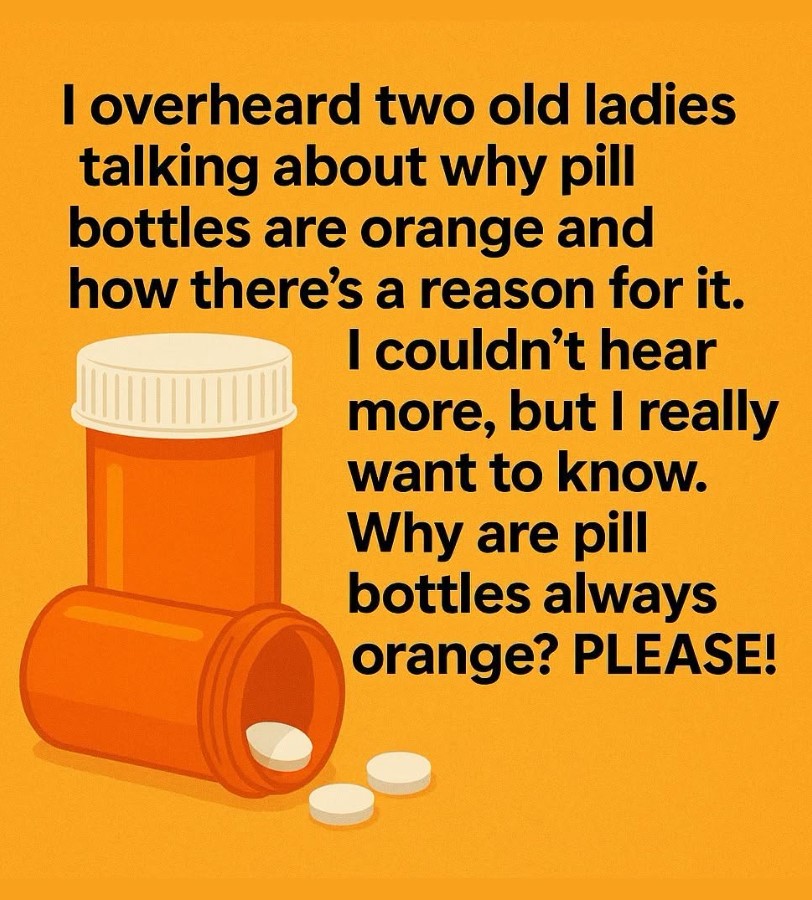
Have you ever opened your medicine cabinet and noticed how many prescription bottles seem to have the same familiar orange or amber color? It is such an ordinary sight that most people probably never stop to question it. Yet that distinctive color is not simply a matter of tradition, appearance, or a pharmaceutical company’s preference.
There is actually a practical reason behind the color—and it has to do with protecting the medicine inside.
The bottles commonly used for prescriptions are usually made from amber-tinted plastic. That color helps filter certain wavelengths of light, particularly ultraviolet (UV) radiation, that can damage some medications over time. At the same time, the bottle remains translucent enough for pharmacists and patients to see the contents without having to open it.
So, that familiar orange bottle is really a small example of thoughtful packaging design. It has to balance several needs at once: protecting medication, allowing the contents to be inspected, providing a convenient container for pharmacies, and helping people immediately recognize that the bottle contains medicine.
The Orange Color Has a Purpose
The color of prescription bottles is more accurately described as amber rather than bright orange. The warm brownish-orange appearance comes from the material used to make the container.
The most important reason for this tint is light protection. Certain medications are sensitive to light, and prolonged exposure can contribute to chemical changes that may reduce their stability or effectiveness. UV radiation is especially important because it carries enough energy to trigger reactions in light-sensitive substances.
An amber container acts as a filter. Instead of allowing as much UV radiation to reach the medication as a clear container would, the tinted plastic blocks or reduces much of that unwanted light.
This is why the color is much more than decoration.
Think about the difference between leaving a light-sensitive product in a clear container on a sunny windowsill and keeping it inside a darker, protective container. The goal of the amber bottle is to reduce unnecessary light exposure so the medication has a better chance of remaining stable under normal storage conditions.
Of course, the bottle is not a magical shield. Medication should still be stored according to the instructions on its label. If a prescription says to keep the medicine away from sunlight, heat, moisture, or excessive temperatures, following those instructions remains important.
Why Not Just Make Every Bottle Completely Opaque?
At first, a completely opaque bottle might seem like an even better solution.
If light can affect medication, why not simply use a container that lets no light through at all?
For some medicines, manufacturers do exactly that. Certain medications may arrive in opaque containers, blister packs, or other specialized packaging when they require greater protection from light or other environmental conditions.
But prescription bottles used by pharmacies have another important job: they need to be practical for the people using them.
A translucent amber bottle allows someone to look inside and see that there are tablets or capsules present. It can also make it easier to estimate how much medication remains without immediately opening the container.
That creates a useful compromise.
A completely clear bottle would make the contents very easy to see, but it would provide less protection from harmful light. A completely opaque bottle would provide greater visual protection but would make it impossible to see the contents without opening it.
Amber sits somewhere in between.
It offers protection while retaining enough transparency for practical use. That combination is one of the reasons the familiar color became so common in prescription packaging.
Not Every Medication Needs an Orange Bottle
There is another interesting detail that is easy to miss: not all medications come in orange bottles.
The amber prescription vial is common, particularly in pharmacies that dispense medications from larger stock containers, but it is not a universal requirement for every drug.
Some medications are packaged by their manufacturers in opaque containers or other specialized packaging because their storage requirements are different. The appropriate packaging depends on the characteristics of the medication and the protection it needs.
That is why you may occasionally receive a prescription in a white, opaque container or a blister package rather than the familiar amber vial.
The packaging is selected based on what helps preserve the product, not simply because every medicine has to follow one color rule.
Why Pharmacies Use These Bottles
There is also a practical reason pharmacies use standardized prescription containers.
Medication manufacturers frequently supply drugs in larger quantities and in packaging designed for distribution and storage. Pharmacies then dispense the appropriate amount for an individual prescription.
For example, a manufacturer may provide a pharmacy with a large quantity of tablets, while a particular patient may need only a smaller number. The pharmacy can count the prescribed amount and place it into an appropriately sized dispensing container with the patient’s label.
This system makes the familiar amber vial extremely useful.
The bottle can be selected in different sizes depending on the quantity of medication being dispensed, while the label provides the important information about the prescription.
The result is a simple, standardized system that works for pharmacists and patients alike.
The Color Also Became a Visual Signal
Over time, the amber bottle became much more than functional packaging. It also became instantly recognizable.
When people see a small orange prescription bottle, they generally understand what it represents before they even read the label. That visual association can be useful because prescription medication is something that needs to be handled carefully.
The distinctive color separates the container from many ordinary household products. It has become a visual shorthand for medicine.
This does not mean every orange bottle necessarily contains prescription medication, nor does it mean every prescription must be packaged in orange. Instead, the widespread use of amber containers has created a familiar association that people recognize almost automatically.
In other words, the color has become part science and part everyday design language.
The Bottle and the Cap Have Different Jobs
Another detail people often overlook is that the orange bottle and its white cap serve different purposes.
The amber body is primarily associated with protecting the contents from light. The cap, meanwhile, can provide a barrier against contamination and may be designed to reduce the risk of accidental access by children.
Many prescription containers use child-resistant closures. These caps are designed so that opening them requires a particular combination of movements rather than simply twisting the lid like an ordinary container.
The development of child-resistant medication packaging was an important safety milestone. In the United States, federal requirements for special packaging were introduced through the Poison Prevention Packaging Act of 1970, following efforts to reduce accidental poisonings among young children.
So when you look at a familiar prescription bottle, there are actually several different safety considerations built into one simple object.
The amber color addresses light exposure.
The closure addresses access and handling.
The label provides identification and instructions.
Together, these features turn an otherwise ordinary plastic container into an important part of medication safety.
Why Light Can Matter to Medicine
It may seem surprising that something as ordinary as sunlight could affect a medication, but light can cause chemical reactions in certain substances.
UV radiation is invisible to the human eye, yet it can have enough energy to alter molecules. Some medications are particularly sensitive to this type of exposure. If a light-sensitive drug undergoes unwanted chemical changes, its stability or potency can potentially be affected.
That is why pharmaceutical packaging is designed with environmental protection in mind.
The same general principle can be seen in other products. Some foods and beverages are stored in darker containers because the packaging helps limit light exposure. Certain laboratory chemicals are also kept in dark or amber containers when light could affect them.
The amber prescription bottle follows the same basic idea: control the environment around the product to help preserve its quality.
Why You Should Still Follow the Storage Instructions
It would be easy to look at an amber bottle and assume that it means you can store your medication anywhere.
That would be a mistake.
The bottle provides a degree of protection, but it does not replace proper storage. A prescription may have specific instructions about temperature, moisture, light, or other conditions.
For example, keeping medication in a hot car or a humid location may expose it to conditions that the bottle was never designed to completely prevent.
The safest approach is always to follow the storage instructions that came with the medication. If you are uncertain about how a particular medicine should be stored, a pharmacist can provide guidance.
The orange bottle is one layer of protection—not a substitute for proper handling.
Why Some Medicines Come Directly in Manufacturer Packaging
You may have noticed that certain prescriptions look completely different from the typical pharmacy vial.
Some medications arrive from the manufacturer in their own packaging. This can include bottles with specialized designs, foil-sealed containers, blister packs, or opaque packaging.
There can be several reasons for this.
A manufacturer may have conducted stability testing using a particular package. The medication might require stronger protection from moisture or light. Some products may also have specialized dispensing requirements.
For especially light-sensitive medicines, an opaque package can provide more protection than a translucent amber vial. Similarly, medications that are highly sensitive to moisture may require packaging with stronger moisture barriers.
This explains why the orange bottle is common but not universal.
The History Behind the Familiar Amber Look
The modern prescription bottle also reflects the evolution of pharmaceutical packaging.
Amber-colored glass has long been used for products that benefit from protection against light. As plastic became increasingly common for medicine containers, manufacturers and pharmacies were able to combine the protective advantages of tinted packaging with the durability and convenience of plastic.
The familiar amber plastic prescription vial eventually became a standard sight in many pharmacies.
The result is something most people now recognize instantly.
What looks like a simple orange bottle is actually the product of decades of packaging choices designed around protection, convenience, safety, and practicality.
A Small Design Choice With a Big Job
The next time you pick up an orange prescription bottle, it may look a little different to you.
Instead of seeing a generic plastic container, you can think about what the color is accomplishing.
The amber tint helps limit exposure to potentially damaging light. The translucent design allows the contents to remain visible. The standardized shape makes dispensing convenient. The cap can provide an additional safety barrier. And the familiar appearance helps people immediately recognize the container as something that deserves careful handling.
It is a surprisingly thoughtful piece of everyday design.
We often pay attention to the medicine itself—the tablet, capsule, liquid, or cream—but the packaging plays an important supporting role. Keeping medication stable from the pharmacy to the medicine cabinet is part of making sure the product remains suitable for use.
What About Storing Your Bottle in a Bathroom?
One final point is worth remembering.
Many people naturally keep medications in a bathroom cabinet because that seems like the obvious place for a medicine cabinet. However, bathrooms can be warm and humid, particularly after showers.
Depending on the medication, moisture and temperature can be just as important as light. The appropriate storage location depends on the instructions for the specific medicine.
The amber color protects against certain light exposure, but it does not mean the medication is protected from every environmental condition.
So rather than relying on the bottle’s appearance, read the storage instructions on the label and follow them carefully.
The Bottom Line
The familiar orange prescription bottle is not orange simply because that color became fashionable or because pharmacies wanted their containers to look distinctive. Its amber tint serves a practical purpose: helping reduce the amount of potentially damaging light, particularly UV radiation, that reaches medications that may be sensitive to it.
At the same time, the bottle remains translucent enough for pharmacists and patients to see the medication inside. That balance between protection and visibility makes amber an especially practical choice for many prescriptions.
And while the orange bottle is extremely common, it is not the only type of medication packaging. Some medicines need additional protection and may come in opaque bottles, blister packs, or other specialized containers.
So the next time you see that familiar amber vial sitting in a medicine cabinet, remember that its color has a purpose. What looks like a simple everyday design choice is actually part of a larger system created to protect medication, make dispensing easier, and help keep patients safe.
Sometimes, the most ordinary objects have the most interesting explanations—and the humble orange pill bottle is a perfect example.