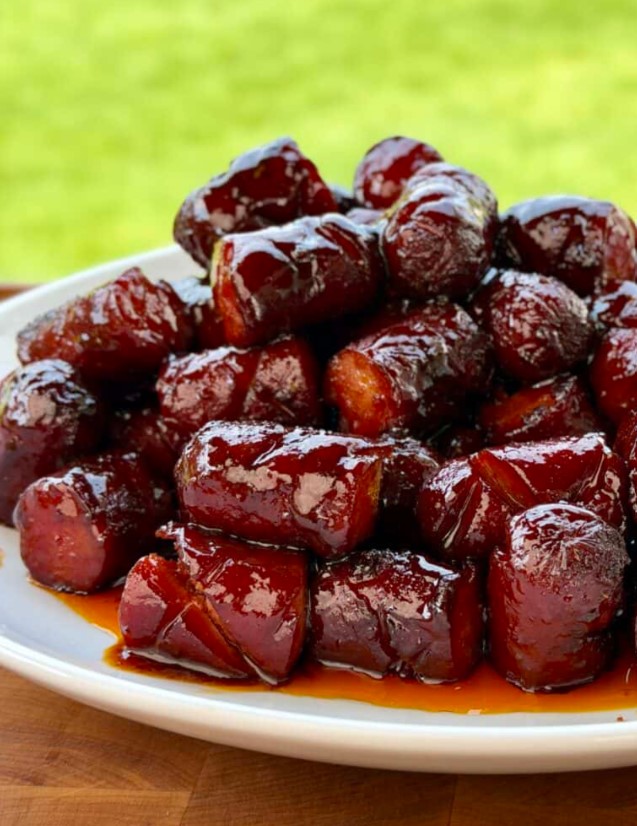
If you love smoky barbecue flavors but want something much easier than traditional brisket burnt ends, these Hot Dog Burnt Ends are the perfect recipe to try. They take an inexpensive and familiar ingredient—hot dogs—and transform it into something smoky, caramelized, sticky, and incredibly flavorful.
Instead of spending hours preparing a large cut of meat, you can turn ordinary hot dogs into bite-sized BBQ treats with just a handful of ingredients. The hot dogs are first seasoned and smoked to develop a deeper flavor, then cut into smaller pieces and tossed with butter, brown sugar, and barbecue sauce. They return to the smoker until the sauce becomes thick, glossy, and caramelized.
The result is a fun appetizer with crispy, slightly charred edges and a sweet-and-savory glaze that clings to every bite. They are especially good for game-day gatherings, backyard cookouts, family parties, tailgating, or any occasion where you need an easy appetizer that feeds a crowd.
Traditional burnt ends are usually associated with smoked brisket, but this recipe takes inspiration from that technique and gives it a much simpler twist. The combination of smoke, seasoning, butter, brown sugar, and BBQ sauce creates plenty of flavor without requiring complicated preparation.
Why You’ll Love These Hot Dog Burnt Ends
There are plenty of reasons to keep this recipe in your BBQ rotation.
They’re incredibly easy. You only need a few basic ingredients and a smoker.
They’re budget-friendly. Hot dogs are much less expensive than brisket or pork belly, making this a great option when you’re feeding a group.
They’re packed with flavor. Smoking adds depth, while the BBQ sauce and brown sugar create a sweet, sticky coating.
They’re perfect for sharing. Once cut into bite-sized pieces, they’re easy to grab from a serving platter.
They’re customizable. You can make them sweeter, smokier, spicier, or tangier simply by changing the BBQ sauce, rub, or additional seasonings.
What Are Burnt Ends?
Traditional burnt ends are small, flavorful pieces of smoked brisket that are cooked until their exterior becomes dark, caramelized, and intensely flavorful. Because brisket requires a long cooking process, burnt ends have become closely associated with low-and-slow barbecue.
Over time, cooks have created different versions using other meats. Pork belly burnt ends and chuck roast burnt ends are two popular examples.
Hot Dog Burnt Ends take the same general idea and make it much more approachable. Instead of smoking a large piece of meat for many hours, you start with hot dogs, smoke them to add barbecue flavor, cut them into smaller pieces, and then cook them again in a sweet BBQ glaze.
They aren’t traditional brisket burnt ends, but they capture the same appeal: smoky meat, caramelized edges, and a rich, sticky coating.
Ingredients You’ll Need
Hot Dogs
You will need about 15 hot dogs. You can use your favorite brand or variety. Regular beef, pork, chicken, turkey, or mixed-meat hot dogs can all work depending on what you prefer.
Yellow Mustard
Yellow mustard acts as a simple binder for the BBQ rub. You don’t need a thick layer; just enough to lightly coat the hot dogs so the seasoning adheres properly.
Don’t worry about the finished bites tasting strongly of mustard. Much of its sharpness mellows during cooking.
BBQ Rub
A good barbecue rub gives the hot dogs another layer of seasoning. A smoky, savory rub works particularly well, although you can use your favorite homemade or store-bought blend.
Butter
Butter adds richness to the glaze and helps create a smooth, flavorful coating as everything cooks together.
Brown Sugar
Brown sugar provides sweetness and helps the exterior caramelize. It also balances the salty and smoky flavors of the hot dogs and BBQ rub.
BBQ Sauce
Choose your favorite barbecue sauce. A sweet sauce will produce a sweeter finished dish, while a vinegar-based or tangy sauce will give the burnt ends a sharper flavor.
How to Make Hot Dog Burnt Ends
Step 1: Prepare the Hot Dogs
Begin by placing the hot dogs on a clean cutting board.
Using a sharp knife, carefully make shallow crosshatch cuts along the surface of each hot dog. You don’t need to cut deeply into them. The goal is simply to create additional texture on the outside.
These small cuts give the seasoning and smoke more surface area to work with. They also help the BBQ glaze cling to the hot dogs later in the cooking process.
Step 2: Add the Mustard and BBQ Rub
Place the prepared hot dogs in a large bowl or on a tray.
Lightly coat them with yellow mustard. Use your hands or a brush to spread it evenly over the surface.
Next, sprinkle the BBQ rub generously over the hot dogs, turning them as needed so the seasoning covers all sides.
Try to season evenly rather than creating large piles of rub in certain areas.
Step 3: Smoke the Hot Dogs
Preheat your smoker to approximately 250°F.
Arrange the seasoned hot dogs on the smoker grates, leaving enough space between them for the smoke to circulate.
Smoke them for about one hour.
During this first stage, the goal isn’t to completely transform the hot dogs. Instead, you’re building a smoky foundation and allowing the seasoning to develop.
The hot dogs should take on a deeper color and a noticeable smoky aroma.
Step 4: Cut the Smoked Hot Dogs
After the first smoking stage, carefully remove the hot dogs from the smoker.
Allow them to cool just enough to handle safely, then cut each one into bite-sized pieces. Cutting them into quarters is a simple option.
The smaller pieces provide plenty of surface area for the BBQ glaze and allow the edges to caramelize beautifully during the second cooking stage.
Step 5: Build the BBQ Glaze
Transfer the cut hot dog pieces into a disposable aluminum pan or another smoker-safe baking dish.
Add the butter, brown sugar, and BBQ sauce.
Gently stir everything together so the hot dog pieces are coated with the sauce mixture.
As the butter melts and the brown sugar dissolves, the ingredients will combine with the BBQ sauce to create a rich glaze.
Step 6: Return Everything to the Smoker
Cover the pan tightly with aluminum foil and return it to the smoker at approximately 250°F.
Cook for another hour.
Covering the pan during the initial portion of this stage allows the hot dogs to absorb the flavors of the buttery BBQ mixture while the sauce begins to develop.
Step 7: Uncover and Caramelize
About halfway through the second cooking stage, carefully remove the foil.
Leave the pan uncovered so excess moisture can evaporate and the sauce can thicken.
This is where the recipe really starts to resemble the sticky, caramelized texture associated with burnt ends.
Give the pieces a gentle stir if necessary, making sure the glaze continues coating them evenly.
Continue cooking until the sauce becomes thick and glossy and the edges begin to caramelize.
Step 8: Serve Hot
Once the glaze has reached your desired consistency, remove the pan from the smoker.
Let the hot dog burnt ends rest for a few minutes before serving.
Transfer them to a serving platter and serve while they’re warm.
The best pieces will have slightly caramelized edges, a smoky exterior, and a sticky BBQ coating.
Tips for the Best Hot Dog Burnt Ends
Don’t Skip the Crosshatch Cuts
Those shallow cuts aren’t just for appearance. They create more surface area for the seasoning, smoke, and sauce.
Just remember not to cut so deeply that the hot dogs fall apart.
Choose a BBQ Sauce You Already Love
Because the BBQ sauce plays such an important role in the final flavor, use one you genuinely enjoy.
If you prefer sweeter BBQ, choose a sweeter sauce. For more contrast, try a tangy or vinegar-forward sauce.
Don’t Rush the Second Cooking Stage
The second stage is what gives these bites their sticky, caramelized finish.
If the sauce is still thin, give the hot dogs additional time uncovered so moisture can evaporate.
Watch the Sugar
Brown sugar can caramelize quickly. Keep an eye on the pan during the final stage, particularly if your smoker runs hotter than expected.
You want a thick glaze and browned edges, not burnt sugar.
Give the Pieces Room
If you’re making a larger batch, avoid overcrowding the pan. Too many pieces packed tightly together can make it harder for the sauce to thicken and caramelize evenly.
Easy Variations
Spicy Hot Dog Burnt Ends
For a little heat, add cayenne pepper, crushed red pepper flakes, hot BBQ sauce, or a drizzle of hot honey.
A combination of sweet brown sugar and spicy sauce creates a delicious sweet-and-hot flavor.
Sweet BBQ Version
If you love sweeter barbecue, use a sweet BBQ sauce and slightly increase the brown sugar.
You can also add a small drizzle of honey during the final cooking stage.
Smoky Version
Choose a BBQ rub containing smoked paprika or other smoky seasonings.
You can also experiment with different types of smoking wood to change the overall character of the dish.
Tangy BBQ Version
For a sharper flavor, use a vinegar-based BBQ sauce. The acidity helps balance the richness of the butter and sweetness of the brown sugar.
Extra-Caramelized Finish
If you prefer darker, stickier edges, leave the pan uncovered a little longer during the final stage. Just monitor it closely so the glaze doesn’t burn.
What to Serve With Hot Dog Burnt Ends
These smoky bites work well as an appetizer on their own, but they’re even better as part of a larger BBQ spread.
Serve them alongside:
- Coleslaw
- Potato salad
- Macaroni and cheese
- Baked beans
- Corn on the cob
- French fries
- Sweet potato fries
- Pickles
- Jalapeño poppers
- Cornbread
- Fresh vegetable trays
For a party, place toothpicks beside the serving platter so guests can easily grab individual pieces.
Can You Make Them Without a Smoker?
Yes. A smoker gives the hot dogs their characteristic BBQ flavor, but you can adapt the recipe for an oven or grill.
An oven will still allow the sauce to caramelize, although you won’t get the same level of wood-smoked flavor.
If you’re using a grill, indirect heat is preferable so the sugary glaze doesn’t burn before the hot dogs are heated through and caramelized.
For the closest smoker-style result without an actual smoker, you can use a grill with a suitable smoking setup if you already have one.
How to Store Leftovers
If you happen to have leftovers, allow them to cool before transferring them to an airtight container.
Store them in the refrigerator and use them within about 3 days.
The BBQ glaze may thicken considerably once chilled, which is completely normal.
How to Reheat Hot Dog Burnt Ends
The easiest method is to warm them gently in the microwave in short intervals.
For a better texture, place them in a small baking dish and warm them in the oven until heated through.
You can add a small splash of BBQ sauce if the glaze has become too thick during refrigeration.
Avoid overheating them, because hot dogs can become dry or chewy if reheated for too long.
Frequently Asked Questions
Can I use different types of hot dogs?
Absolutely. Beef, pork, chicken, turkey, or other favorite varieties can be used. The important thing is choosing a hot dog you already enjoy.
Do I have to use yellow mustard?
No. Yellow mustard is used primarily as a binder for the seasoning. You can experiment with Dijon mustard, spicy brown mustard, or another variety.
Keep in mind that stronger mustards will slightly change the flavor.
What temperature should I use?
The original method uses a smoker temperature of approximately 250°F for both cooking stages.
Why do I cut the hot dogs after smoking instead of before?
Smoking the hot dogs whole keeps the preparation simple during the first stage. Cutting them afterward creates fresh surfaces that can become coated with the buttery BBQ glaze during the second stage.
Can I make these ahead of time?
Yes. You can prepare them ahead and refrigerate them after cooking. Reheat gently before serving.
For the best texture, however, they’re especially enjoyable when served fresh from the smoker.
Are Hot Dog Burnt Ends good for parties?
Definitely. They’re inexpensive, easy to portion, and don’t require guests to use a knife and fork. Serve them with toothpicks for an easy appetizer.
Final Thoughts
Hot Dog Burnt Ends are proof that great barbecue doesn’t always require an expensive cut of meat or an all-day cooking project. With a package of hot dogs, some BBQ seasoning, butter, brown sugar, and your favorite sauce, you can create an appetizer that tastes much more impressive than the ingredient list suggests.
The first stage of smoking gives the hot dogs a deep barbecue character, while the second stage transforms them into sticky, caramelized bites coated in a rich sweet-and-savory glaze. The combination of smoky meat, buttery richness, brown sugar, and tangy BBQ sauce makes every bite incredibly satisfying.
What makes this recipe especially appealing is how easy it is to customize. You can make the burnt ends spicy with hot sauce or peppers, sweeter with additional honey or brown sugar, or more savory with a smoky BBQ rub. You can even experiment with different sauces to create a completely different flavor profile each time.
They’re ideal for game day, summer cookouts, family gatherings, tailgating, or simply whenever you’re craving something smoky and satisfying. And because the recipe uses an affordable ingredient and requires relatively little preparation, it’s an easy one to keep in your back pocket.
So the next time you’re firing up the smoker, don’t overlook the humble hot dog. Turn it into these delicious Hot Dog Burnt Ends, give them plenty of time to absorb that smoky flavor and caramelized BBQ glaze, and you’ll have a crowd-pleasing appetizer that’s easy to make and even easier to eat.