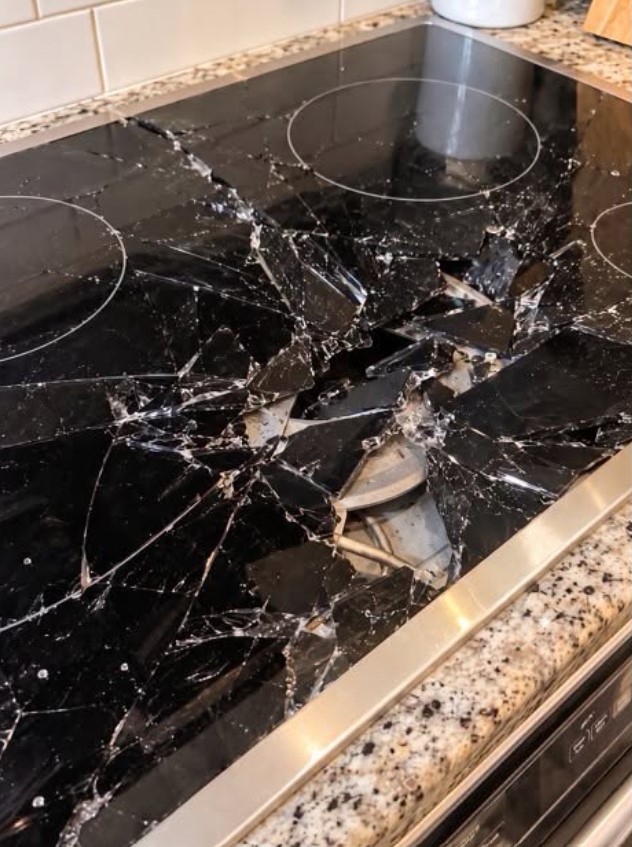
A glass-top stove can make a kitchen look clean, modern, and beautifully organized. Unlike traditional burners, its smooth surface is easy to wipe down, and when it is clean, it can give the entire kitchen a polished appearance.
But that sleek surface also requires a little more care than many people realize.
One simple habit that seems completely harmless can put unnecessary stress on a glass cooktop: placing a hot pan, lid, or other heat-retaining object directly onto a cooler section of the glass surface.
It might only be for a few seconds.
You may finish cooking, lift the lid from a pot, and instinctively set it beside the burner. Or perhaps you move a heavy Dutch oven or cast-iron skillet away from the heat and place it directly on the cooktop because there is nowhere else convenient to put it.
That small shortcut can create a sudden temperature difference across the glass.
And while a glass cooktop is designed to handle the heat generated during normal cooking, it isn’t indestructible.
Why Glass-Top Stoves Require Extra Care
Glass cooktops are generally made from a specialized ceramic-glass material designed to tolerate high temperatures during ordinary cooking.
That doesn’t mean the surface can handle every type of heat exposure or physical impact.
The important thing to understand is that the surface can experience thermal stress when different areas heat up or cool down at very different rates.
When one portion of the cooktop becomes extremely hot while a nearby area remains considerably cooler, the material expands and contracts unevenly.
Most normal cooking doesn’t cause a problem because the cooktop is designed to cope with gradual and expected temperature changes.
The risk increases when you introduce an unexpected combination of extreme heat, weight, pressure, or sudden temperature change.
A heavy, very hot object placed on a relatively cool section can create precisely that kind of stress.
In some situations, the result may not be immediately obvious. Instead of shattering instantly, the glass could develop a small crack or damaged area that becomes more noticeable later.
That’s why treating the surface carefully is much better than assuming it will always withstand whatever you place on it.
The Mistake That Can Damage Your Cooktop
The biggest mistake is simple:
Don’t place extremely hot cookware or heat-retaining objects directly onto a cooler section of your glass cooktop.
That includes more than just frying pans.
Potentially risky objects can include:
- Hot saucepan lids
- Dutch ovens
- Cast-iron skillets
- Baking dishes
- Kettles
- Roasting pans
- Griddles
- Heavy pots
- Hot trivets or cookware accessories
- Other objects that retain significant heat
The issue isn’t merely that the object is hot.
It’s the combination of heat, weight, contact area, and the temperature difference between the object and the cooktop.
A cookware item that has been sitting over a burner can retain a surprising amount of heat even after you remove it.
Placing it on a much cooler part of the cooktop suddenly transfers that heat to one concentrated area.
That’s an unnecessary risk when a heat-safe counter, trivet, or other suitable surface is available.
Why a Hot Pan Lid Can Be Especially Easy to Overlook
One of the most common examples happens when you’re cooking with a covered pot.
Dinner is nearly finished. You lift the lid and realize it’s extremely hot.
Instead of carrying it to a designated heat-resistant surface, you flip it over and place it directly on the glass cooktop.
It feels like the easiest solution.
After all, the cooktop is already designed for cooking. Why should placing a hot lid on it be a problem?
The problem is that the lid can concentrate heat in a relatively small area.
If that area of the cooktop is significantly cooler than the rest of the surface, the sudden heat transfer creates additional thermal stress.
You may not see anything happen immediately.
There may be no dramatic sound.
There may be no visible crack.
That doesn’t necessarily mean the habit is harmless.
The safest approach is simply to place hot cookware on a properly rated heat-resistant surface rather than directly onto the glass.
Heavy Cookware Creates Another Risk
Temperature isn’t the only concern.
Weight matters too.
Cast iron, Dutch ovens, large roasting pans, and other heavy cookware should be handled carefully around a glass cooktop.
A glass surface may tolerate the weight during normal use when the cookware is positioned correctly on an appropriate burner.
But dropping or forcefully placing a heavy object onto the surface is a completely different situation.
Even cookware that isn’t particularly hot can potentially damage a glass cooktop if it is dropped or slammed down.
For that reason, don’t slide heavy cookware aggressively across the surface, and don’t drop it onto the cooktop.
Lower heavy items gently and deliberately.
Don’t Treat the Cooktop Like Extra Counter Space
Another common habit is using the glass surface as a temporary place to put things.
Because the cooktop looks flat and spacious when the burners are off, it’s tempting to use it as an extension of the countertop.
A grocery bag goes there.
A cutting board goes there.
A baking dish gets placed there.
Someone puts a plate on the surface while preparing dinner.
The problem is that you may forget that one of the cooking zones was recently in use and remains hot.
An object that appears harmless can become damaged by residual heat.
Even worse, someone may later grab the object without realizing how hot it has become.
A better habit is to keep the cooktop clear whenever possible.
Wait Before Placing Anything on the Surface
After cooking, give the cooktop time to cool naturally.
Don’t assume that because the burner has been turned off, the surrounding surface is immediately safe to touch.
Glass cooktops can remain hot after cooking has stopped.
Many models have indicator lights specifically designed to warn you that a cooking zone is still hot.
Pay attention to those indicators.
If you need somewhere to put a hot lid or pan, use a heat-resistant surface designed for that purpose.
A properly rated trivet or countertop area is usually a much better choice than a cooler section of glass.
Watch for Existing Damage
If you already have a glass-top stove, occasionally inspect the surface carefully.
Look for:
- Hairline cracks
- Chips
- Scratches that appear unusually deep
- Discolored areas
- Visible fractures
- Damage around the edges
- Any unusual change in the surface
A small crack shouldn’t simply be ignored because the stove still appears to work.
A damaged glass cooktop can become a safety concern, particularly if heat continues to be applied to the affected area.
If you discover a crack or significant damage, stop using the affected appliance and consult the manufacturer’s instructions or a qualified appliance professional before using it again.
Be Careful With Sudden Temperature Changes
The basic principle is easy to remember:
Glass cooktops don’t like unnecessary thermal shock.
That means avoiding situations where something extremely hot comes into sudden contact with a much cooler portion of the surface.
The same principle is one reason you should avoid experimenting with unusual cooling methods.
Don’t deliberately pour cold water over a hot cooktop.
Don’t place frozen items directly onto a very hot surface.
Don’t put cookware that has just come out of an extremely hot oven onto a cool glass cooking area unless the manufacturer’s instructions specifically say that it is appropriate.
Instead, allow cookware and the cooktop to cool in a controlled way.
Follow Your Stove Manufacturer’s Instructions
Every appliance is slightly different.
The manufacturer’s manual is the best source for information about what types of cookware are recommended, how the surface should be cleaned, and what precautions apply to your particular model.
Some manufacturers have specific warnings about cookware materials, maximum weights, cleaning products, and temperature changes.
If you’ve misplaced the manual, look up the exact model number and consult the manufacturer’s official documentation.
That information is much more reliable than assuming every glass cooktop behaves exactly the same way.
Cleaning Matters Too
A glass cooktop should also be cleaned appropriately.
Don’t use harsh tools or abrasive materials that can scratch the surface.
Avoid scraping aggressively with objects that aren’t designed for cooktop cleaning.
And don’t attempt to clean a very hot surface with products or materials that aren’t intended for high-temperature use.
Allow the surface to cool according to the manufacturer’s recommendations, then use a cleaner specifically designed for the type of cooktop you have.
Keeping the surface clean isn’t only about appearance.
A clean cooktop also makes it easier to notice small cracks, chips, or other changes before they become more serious.
What If You Hear a Crack?
If you ever hear a sharp cracking sound from your glass cooktop or suddenly notice a visible fracture, don’t ignore it.
Turn off the appliance if it is safe to do so.
If the surface is cracked, follow the manufacturer’s safety instructions and avoid continuing to cook on the damaged area until it has been inspected or repaired.
Don’t try to repair structural cracks yourself with household glue, tape, or other improvised materials.
A glass cooktop is an electrical appliance as well as a heated surface, so damage should be taken seriously.
A Simple Habit Can Prevent an Expensive Problem
The good news is that protecting your glass cooktop doesn’t require complicated maintenance.
In many cases, it comes down to changing a few everyday habits.
When you’re finished cooking, don’t automatically put hot cookware on the glass.
Instead:
- Move hot cookware to an appropriate heat-resistant surface.
- Keep heavy objects from being dropped or slammed onto the cooktop.
- Avoid sudden temperature changes.
- Don’t use the cooktop as a storage area.
- Pay attention to hot-surface indicator lights.
- Clean the surface using products and methods recommended for your model.
- Inspect the glass regularly for cracks or chips.
- Stop using a visibly damaged cooktop until you receive appropriate guidance.
These steps are simple, but they can help reduce unnecessary stress on the glass surface.
The Bottom Line
A glass-top stove is designed to handle the high temperatures involved in everyday cooking, but that doesn’t mean it can withstand every kind of heat exposure or impact.
One of the easiest mistakes to avoid is placing a very hot pan, lid, or heavy heat-retaining object directly onto a cooler part of the cooktop.
The danger comes from the combination of heat and temperature difference, along with the weight or pressure of the object. In some circumstances, that stress can contribute to cracking or other damage.
So next time you finish cooking and instinctively reach for the nearest flat surface to place that steaming-hot lid or pan, stop for a second.
Use a suitable heat-resistant surface instead.
That extra moment of caution could save you from a cracked cooktop, an expensive repair, and a very unpleasant surprise the next time you turn on your stove.