
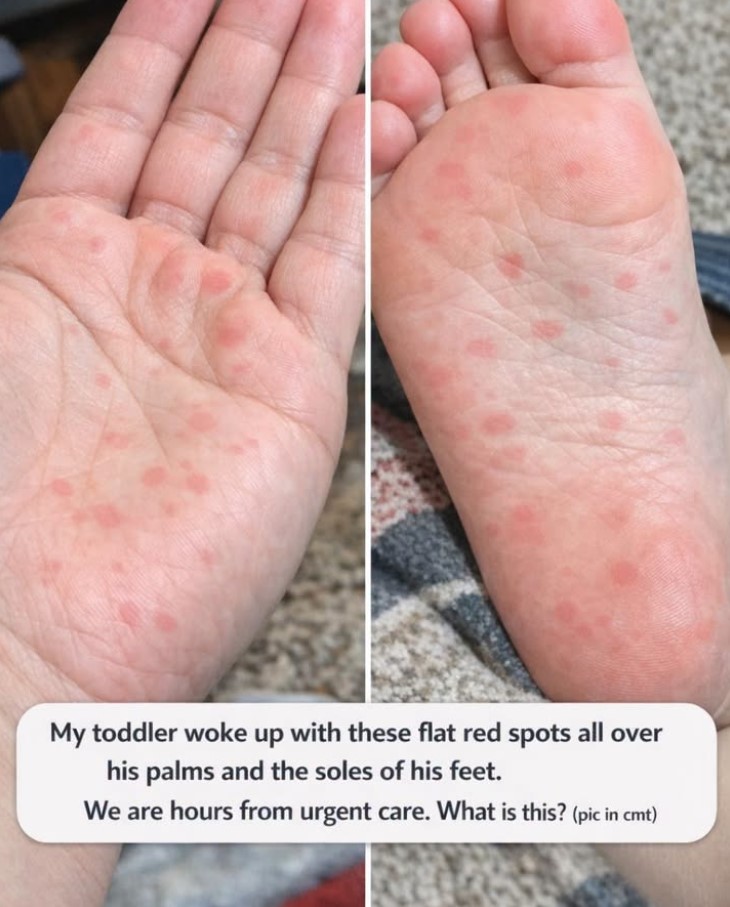
Waking up to find unusual red spots covering your toddler’s hands and feet can be frightening, especially when the nearest urgent care center is hours away. Your first thought may be to wonder whether it is a harmless childhood rash or a sign of something that needs immediate medical attention.
One possible explanation is hand, foot, and mouth disease (HFMD), a common viral infection that frequently affects babies and children under five. Despite its alarming name, most cases are mild and improve on their own within 7 to 10 days.
However, it is important not to assume that every rash on the palms and soles is hand, foot, and mouth disease. Other infections and skin conditions can produce similar symptoms. The child’s overall condition, temperature, hydration, and other symptoms are just as important as the appearance of the spots.
If you are far from medical care, knowing what to look for can help you decide what to do next. Here is what parents should understand about this type of rash, how to keep a child comfortable, and which warning signs should never be ignored.
1. What Could Cause Red Spots on the Palms and Soles?
One of the most common explanations in young children is hand, foot, and mouth disease, often abbreviated as HFMD.
This contagious illness is caused by viruses belonging to the enterovirus group, including coxsackieviruses. It is especially common among children younger than five and can spread quickly in daycare centers, schools, and households.
The characteristic rash often appears on the palms of the hands and the soles of the feet. It may begin as small, flat pink or red spots before developing into slightly raised bumps or tiny fluid-filled blisters.
Some children also develop painful sores inside the mouth. These may appear on the tongue, gums, inner cheeks, or back of the throat.
The illness usually resolves without specific medical treatment, although symptoms can make young children uncomfortable for several days.
It is important to remember that the rash alone cannot confirm HFMD. A healthcare professional should consider the child’s age, other symptoms, and general appearance before reaching a diagnosis.
2. Why Do the Palms and Soles Matter?
Many childhood rashes appear on the face, chest, back, or diaper area. A rash that specifically involves the palms and soles is an important clue because hand, foot, and mouth disease commonly affects these areas.
The spots can look different from one child to another. Some children develop only a few small marks, while others have many scattered spots across their hands and feet.
The rash may be:
- Flat and pink or red.
- Slightly raised above the surrounding skin.
- Round or oval in shape.
- Tender or occasionally itchy.
- Filled with small amounts of fluid as blisters develop.
In some children, the rash also appears on the buttocks, legs, arms, or around the mouth.
A child may not complain about the spots themselves, but tender areas on the soles can make walking uncomfortable. Spots on the palms may also make holding toys or cups unpleasant.
3. Other Symptoms Parents Should Watch For
The rash is only one possible sign of hand, foot, and mouth disease. Other symptoms may appear before it, at the same time, or over the following days.
Common symptoms include:
Fever: A child may develop a mild or sometimes higher fever. Checking the temperature with a thermometer is more reliable than simply touching the forehead.
Mouth sores: Small, painful sores can develop on the tongue, gums, inner cheeks, and throat. These may make eating and drinking uncomfortable.
Reduced appetite: A toddler who normally enjoys meals may suddenly refuse food because swallowing hurts.
Increased drooling: Some children drool more than usual because mouth sores make swallowing uncomfortable.
Irritability: Young children may become clingy, fussy, or unusually difficult to settle.
Poor sleep: Discomfort from fever, mouth sores, or tender skin can disturb normal sleep.
Not every child experiences all these symptoms. Some have a noticeable rash with only mild illness, while others feel unwell before the skin changes become obvious.
4. What Parents Can Check at Home
When medical care is far away, a calm assessment can help you understand how your child is doing. The goal is not to diagnose the illness yourself but to identify signs that may require medical attention.
Start by checking the following:
- Temperature: Use a digital thermometer and write down the reading.
- Drinking: Notice whether your toddler is accepting water, milk, or other appropriate fluids.
- Mouth: Look gently for sores on the tongue, gums, and inside the cheeks.
- Urination: Pay attention to wet diapers or bathroom visits.
- Hydration: Look for a dry mouth, fewer tears when crying, or sunken-looking eyes.
- Energy: Notice whether your child is alert and responsive between periods of discomfort.
- Breathing: Check whether breathing appears normal or unusually fast or difficult.
- Rash changes: Observe whether the spots are spreading, becoming blister-like, or changing to a purple or bruise-like color.
You can take photographs of the rash in good lighting to show a healthcare professional during a phone or video consultation. This may help them understand how the spots have changed.
Do not rely on the appearance of the rash alone to decide that your child is safe. A child can have a serious illness even when the skin changes initially seem mild.
5. How to Keep Your Toddler Comfortable
If hand, foot, and mouth disease is suspected and your child is otherwise stable, supportive care can help make the illness easier to manage.
The most important priority is keeping your toddler hydrated.
Offer small amounts of fluid frequently rather than expecting your child to drink a large cup at once. Water, milk, and an age-appropriate oral rehydration solution may be suitable choices.
Cold drinks and ice pops can sometimes soothe an uncomfortable mouth. If your child has mouth sores, soft foods may be easier to swallow than crunchy or rough foods.
Try options such as:
- Plain yogurt.
- Applesauce.
- Mashed bananas.
- Soft oatmeal.
- Mashed potatoes.
- Cool, soft foods that your child normally tolerates.
Avoid acidic foods and drinks, such as orange juice and lemonade, because they may sting mouth sores. Very salty, spicy, or crunchy foods can also make eating more uncomfortable.
If your toddler has a fever or pain, ask a pediatrician or pharmacist about an appropriate medicine and dose based on the child’s age and weight. Never guess the dose or give aspirin to a child.
6. Why Dehydration Is an Important Concern
One of the main complications parents should watch for during hand, foot, and mouth disease is dehydration.
The illness can cause painful mouth sores, making a toddler reluctant to drink. When a young child refuses fluids for an extended period, they can lose more water than they take in.
Possible warning signs include:
- Fewer wet diapers or noticeably less urination.
- A very dry mouth or tongue.
- Crying with few or no tears.
- Sunken-looking eyes.
- Unusual sleepiness or weakness.
- Difficulty drinking or swallowing.
If your child is refusing fluids, urinating much less than usual, or showing signs of dehydration, contact a healthcare professional promptly. Severe dehydration needs urgent medical assessment.
Do not wait for several symptoms to appear before asking for help.
7. Could It Be Something Other Than Hand, Foot, and Mouth Disease?
Although HFMD is a common explanation for a rash on a toddler’s palms and soles, it is not the only possibility.
Other conditions can cause skin changes in these areas, including different viral infections, skin irritation, allergic reactions, and certain bacterial infections.
For example, contact dermatitis may develop after the skin comes into contact with an irritating substance. It often causes redness, itching, or inflammation in the affected area.
Some other viral illnesses can also cause widespread rashes. Certain infections may produce spots that look different from the typical HFMD rash.
The most important distinction is that not every rash is harmless. A child who appears very unwell, develops a purple or bruise-like rash, or has serious symptoms needs prompt medical evaluation.
A medical professional can examine the rash and consider the child’s other symptoms to determine the most likely cause.
8. Warning Signs That Require Urgent Medical Attention
Most cases of hand, foot, and mouth disease are mild. Nevertheless, parents should know which symptoms could indicate a more serious problem.
Seek emergency medical help immediately if your toddler has:
- Difficulty breathing or unusually fast breathing.
- Blue, gray, or unusually pale lips or skin.
- A stiff neck, severe headache, or sensitivity to light.
- Confusion, a seizure, or difficulty waking up.
- Unusual limpness or a lack of normal responsiveness.
- A purple, dark red, or bruise-like rash that does not fade when pressed.
- Severe dehydration or an inability to drink.
- Sudden swelling of the lips, tongue, or throat.
A non-fading rash can be a sign of bleeding under the skin and may indicate a serious infection. Do not wait for additional symptoms or assume it is HFMD.
If you are concerned about your child’s condition, contact emergency services or seek urgent medical advice even if the nearest urgent care center is far away. Do not delay emergency help while trying home remedies or waiting to see whether the rash improves.
9. What to Expect Over the Next Several Days
If the illness is hand, foot, and mouth disease, symptoms often develop over a period of several days.
A child may first experience a fever, sore throat, reduced appetite, or general discomfort. The rash and painful mouth sores may appear afterward or become more noticeable as the illness progresses.
Some spots may remain flat, while others develop into small blisters. The number and appearance of spots can vary considerably.
Most children begin to feel better within 7 to 10 days. The rash usually fades as the infection resolves.
Occasionally, a child may experience peeling skin on the fingers or toes after recovering. Temporary changes to fingernails or toenails have also been reported several weeks after HFMD.
If symptoms become severe, the fever lasts longer than three days, or your child is not improving after ten days, contact a healthcare professional.
10. How Contagious Is Hand, Foot, and Mouth Disease?
HFMD spreads easily, particularly among young children who spend time together.
The virus can spread through:
- Saliva and respiratory droplets.
- Fluid from blisters.
- Nasal secretions.
- Stool, especially during diaper changes.
Children are generally most contagious during the first week of illness, although the virus can continue to be present in stool for several weeks.
Good hygiene is therefore important, even after the child starts feeling better.
Wash your hands regularly with soap and water, especially after changing diapers, helping your child use the bathroom, or cleaning their nose.
Clean frequently touched surfaces and shared toys. Avoid sharing cups, utensils, towels, and toothbrushes.
If your toddler attends daycare, follow the facility’s illness policy and local public health guidance before sending them back.
11. When Should You Contact a Doctor?
Even if your child seems relatively comfortable, a new unexplained rash deserves attention.
Contact a pediatrician or healthcare professional if:
- You are unsure what is causing the rash.
- Your child is drinking less than usual.
- Mouth sores are making swallowing painful.
- Your toddler has a fever lasting more than three days.
- The rash is changing rapidly or becoming unusually painful.
- Your child has a weakened immune system.
- Symptoms are severe or are not improving after ten days.
Children younger than six months and children with underlying health concerns may need more careful assessment.
If you live far from a clinic, a telephone or video consultation may help you decide how quickly your child needs to be examined. However, remote advice should never replace emergency care when serious warning signs are present.
12. How Doctors Usually Identify Hand, Foot, and Mouth Disease
In many cases, a doctor can recognize HFMD by examining the rash and considering the child’s age and other symptoms.
The combination of a hand-and-foot rash, fever, and mouth sores often provides useful clues.
Routine laboratory testing is not usually necessary for typical cases. However, a healthcare professional may recommend additional tests if the symptoms are unusual or another illness needs to be ruled out.
When speaking with a doctor, it helps to provide clear information about:
- When the rash first appeared.
- Whether your child has had a fever.
- Whether there are sores inside the mouth.
- How much your child has been drinking.
- How frequently your child has been urinating.
- Whether the spots are spreading or changing.
- Whether your child has been around anyone who was recently sick.
These details can make a medical consultation more useful, especially when an in-person visit is difficult.
Conclusion :
Finding flat red spots across your toddler’s palms and the soles of their feet can be worrying, particularly when you live far from urgent care. One possible explanation is hand, foot, and mouth disease, a common childhood viral infection that often begins with fever or discomfort before producing a rash on the hands and feet.
The good news is that most children recover within 7 to 10 days without needing specific treatment. However, recognizing the possible illness is only part of the picture. Parents should pay close attention to drinking, urination, mouth sores, energy levels, and changes in the rash.
Keeping your child comfortable, offering frequent fluids, choosing soft foods, and practicing good hygiene can help during recovery. At the same time, it is essential to know when home monitoring is not enough. Difficulty breathing, unusual drowsiness, a stiff neck, severe dehydration, or a purple rash that does not fade under pressure requires urgent medical attention.
Most importantly, never assume that a rash is harmless simply because it resembles hand, foot, and mouth disease. A healthcare professional can help determine the cause and advise you on the safest next steps.
When it comes to a young child’s health, careful observation is valuable, but seeking medical advice when something does not seem right is always the safer choice.