Optical illusions have fascinated people for centuries because they challenge the way our brains interpret what we see. A single image can hide multiple objects, trick our eyes into focusing on one detail while overlooking another, or even reveal entirely different pictures depending on how we observe it. These visual puzzles are more than just entertaining—they encourage us to slow down, pay closer attention, and think differently.
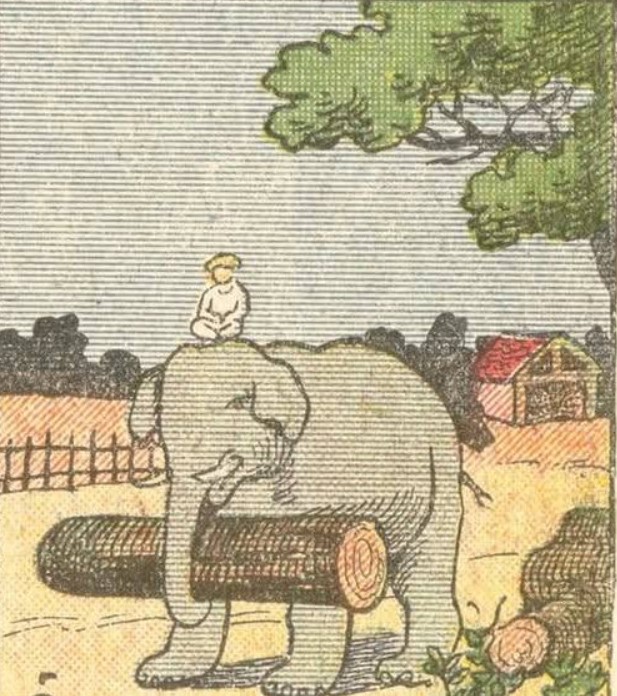
One illusion that has captured the curiosity of thousands of people features a large elephant standing in a peaceful countryside setting. At first glance, the elephant is impossible to miss. However, the real challenge lies in spotting a cleverly hidden horse within the illustration. Many viewers stare at the picture for several minutes before finally discovering the hidden animal, while others need a helpful hint to find it.
Are you ready to put your observation skills to the test? Take a careful look at the image before reading further. You might be surprised by what your eyes have overlooked.
Why Optical Illusions Are So Fascinating
Our brains process visual information incredibly quickly, allowing us to recognize familiar objects almost instantly. However, this speed sometimes causes us to miss smaller details or unusual patterns hidden within a picture.
Optical illusions work by taking advantage of the brain’s tendency to simplify complex scenes. Instead of analyzing every line individually, our minds combine shapes, shadows, and colors into recognizable objects.
That’s why many people immediately notice the elephant but completely overlook the hidden horse.
The Challenge
The puzzle seems simple:
Find the hidden horse.
There’s no time limit, but try not to scroll too quickly for hints. Give yourself a chance to study every part of the illustration carefully.
Many people instinctively focus only on the elephant because it dominates the image. The secret is to stop looking at the entire picture and instead examine each section individually.
Sometimes changing your perspective makes all the difference.
Helpful Hints
If you’re having trouble locating the horse, here are a few clues without giving away the answer immediately.
Hint 1
Don’t concentrate only on the elephant’s face.
The hidden horse isn’t standing beside the elephant as a separate animal.
Hint 2
Pay attention to the shapes created by the elephant’s body and the surrounding objects.
Artists often disguise hidden images by using outlines that serve two different purposes.
Hint 3
Try viewing the picture from a greater distance.
Stepping back from your screen sometimes helps your brain recognize patterns more easily.
Hint 4
Rotate your attention rather than your device.
Instead of turning the image, carefully inspect areas that seem ordinary at first glance.
Why Some People Find It Faster Than Others
Everyone processes visual information differently.
Several factors influence how quickly someone spots hidden objects:
- Attention to detail.
- Pattern recognition.
- Previous experience with visual puzzles.
- Patience.
- Willingness to look beyond the obvious.
People who regularly solve puzzles or play observation games often become better at recognizing hidden shapes because their brains learn to search more systematically.
The Science Behind Hidden Images
Optical illusions demonstrate an important concept in psychology known as selective perception.
Our brains constantly filter information to avoid becoming overwhelmed.
Rather than processing every detail equally, the brain focuses on what appears most important—in this case, the large elephant.
The hidden horse blends into the surrounding lines, making it easy to ignore until someone points it out.
Once you finally see it, however, it’s almost impossible to “unsee.”
Benefits of Solving Visual Puzzles
Although they’re entertaining, optical illusions also provide several mental benefits.
Regularly solving visual challenges may help improve:
- Observation skills.
- Concentration.
- Pattern recognition.
- Visual memory.
- Problem-solving abilities.
- Mental flexibility.
They’re a fun way to give your brain a quick workout without feeling like traditional studying or training.
Don’t Worry If You Couldn’t Find It
Many people don’t spot the hidden horse on their first attempt.
That doesn’t mean you have poor eyesight or weak observation skills.
These puzzles are intentionally designed to mislead your brain and encourage you to think differently. Sometimes all it takes is a fresh perspective or a short break before the hidden image suddenly becomes obvious.
The enjoyment comes from the discovery itself, not from finding the answer immediately.
Why These Puzzles Go Viral
Hidden-image challenges are among the most shared posts on social media because they encourage interaction.
People love asking friends questions like:
- “Did you find it?”
- “How long did it take you?”
- “Can you see the horse?”
- “Am I the only one who missed it?”
These conversations make the puzzles even more enjoyable, turning a simple illustration into a friendly competition.
Keep Challenging Your Mind
If you enjoyed this illusion, consider trying other visual brain teasers and observation games.
They provide an enjoyable way to sharpen your attention while offering a relaxing break from everyday routines. Whether you’re searching for hidden animals, spotting differences between pictures, or solving logic puzzles, each challenge helps train your brain to notice details that might otherwise go unnoticed.
The more you practice, the better you’ll become at recognizing subtle patterns and thinking creatively.
Conclusion :
At first glance, this illustration appears to show nothing more than a large elephant in a peaceful countryside setting. However, like many classic optical illusions, it contains a cleverly hidden surprise that challenges the way our brains process visual information. Whether you found the horse immediately or needed several hints, the experience highlights how easily our minds can overlook details when focused on the most obvious object.
Optical illusions remind us that seeing isn’t always the same as observing. They encourage patience, curiosity, and a willingness to examine familiar things from a different perspective. These simple puzzles entertain millions of people because they combine creativity with a satisfying sense of discovery, making every successful solution feel like a small achievement.
So, did you manage to spot the hidden horse? If so, congratulations! If not, don’t worry—you’re in good company. Share the puzzle with friends and family to see who can find it the fastest. Sometimes the most enjoyable part isn’t just solving the mystery, but watching how differently each person approaches the exact same image.