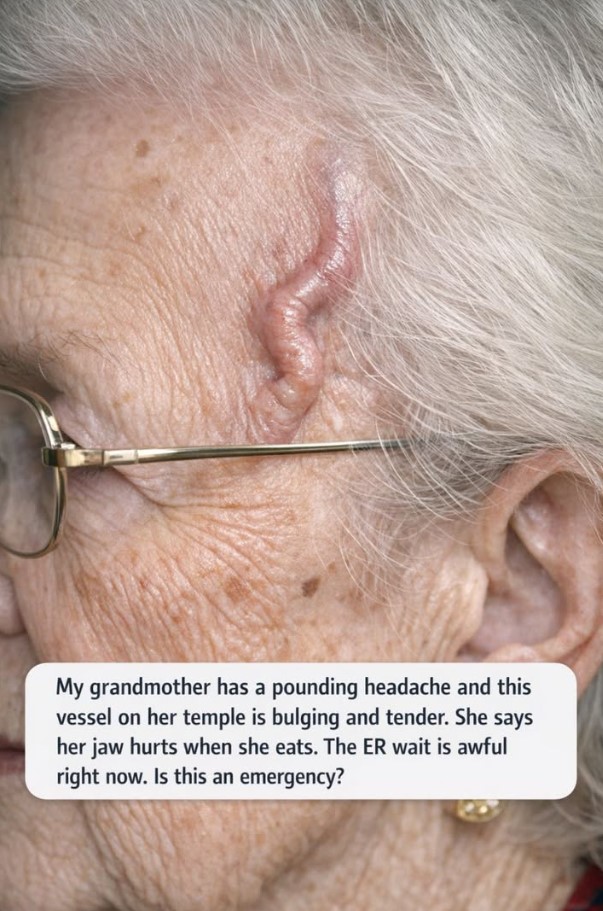
Seeing a loved one in visible pain can be deeply unsettling—especially when the symptoms seem unusual or severe. A pounding headache, a bulging or tender blood vessel at the temple, and pain in the jaw while eating are not typical everyday complaints. When these symptoms appear together, they can feel alarming, particularly if medical care isn’t immediately accessible.
While headaches are common and often harmless, certain combinations of symptoms can signal something more serious that should not be ignored. In older adults especially, these signs may point to an underlying condition that affects blood vessels and circulation in the head.
Understanding what these symptoms might mean can help you decide how urgent the situation is and what steps to take next.
What These Symptoms May Indicate
The combination of:
- Severe, throbbing headache
- Tender or bulging vessel at the temple
- Jaw pain when chewing
is strongly associated with a condition called giant cell arteritis (also known as temporal arteritis).
1. Giant Cell Arteritis (Temporal Arteritis)
This condition involves inflammation of the arteries, especially those around the temples. When these arteries become inflamed, they can swell and become painful or visibly enlarged.
Common symptoms include:
- Persistent, severe headache (often in the temple area)
- Tenderness when touching the scalp or temple
- Jaw pain while chewing (a key warning sign)
- Fatigue or general discomfort
- Vision problems in some cases
The bulging or sensitive vessel you’re noticing may actually be an inflamed artery, which is a hallmark sign of this condition.
Why This Can Be Serious
Giant cell arteritis is not just uncomfortable—it can become dangerous if left untreated.
One of the most serious risks is vision loss. Reduced blood flow to the eyes can lead to sudden and sometimes permanent blindness if treatment is delayed.
Symptoms like jaw pain while eating and temple tenderness are considered red flags that doctors take very seriously because they often appear before complications develop.
Is This an Emergency?
Based on these symptoms, this should be treated as urgent.
Medical sources consistently emphasize that:
- New, severe headaches in older adults
- Jaw pain when chewing
- Temple tenderness or swelling
should be evaluated as soon as possible, not delayed.
Even if the ER wait is long, these symptoms are important enough that seeking urgent care or emergency evaluation is strongly recommended.
What You Can Do Right Now
While waiting for medical care:
1. Don’t Ignore the Symptoms
These signs are not typical and should not be dismissed as a simple headache.
2. Monitor Vision
Ask if there are any changes in vision (blurriness, double vision, or loss of sight). This is especially important.
3. Avoid Delays
If possible, consider:
- Urgent care
- Another emergency facility
- Calling a medical helpline
4. Keep Them Comfortable
Let them rest in a calm environment and avoid activities that worsen the pain, like chewing tough foods.
When It’s Absolutely Critical
Seek immediate medical help right away if any of the following occur:
- Sudden vision changes or loss
- Severe worsening headache
- Confusion or weakness
- Inability to eat due to jaw pain
These could signal complications that require immediate treatment.
Conclusion :
A pounding headache combined with a bulging, tender temple vessel and jaw pain while eating is not something to take lightly—especially in older adults. These symptoms strongly suggest a condition like giant cell arteritis, where inflammation affects the arteries in the head and can lead to serious complications if untreated.
While it may be tempting to wait for a scheduled appointment, this is one of those situations where timing truly matters. Early evaluation and treatment can prevent severe outcomes, including permanent vision loss. Even though the symptoms may start gradually, they can escalate quickly, making prompt attention essential.
In the meantime, staying alert to changes—especially in vision—and seeking medical care as soon as possible is the safest approach. Situations like this are a reminder that certain combinations of symptoms are the body’s way of signaling urgency, and responding quickly can make a critical difference.