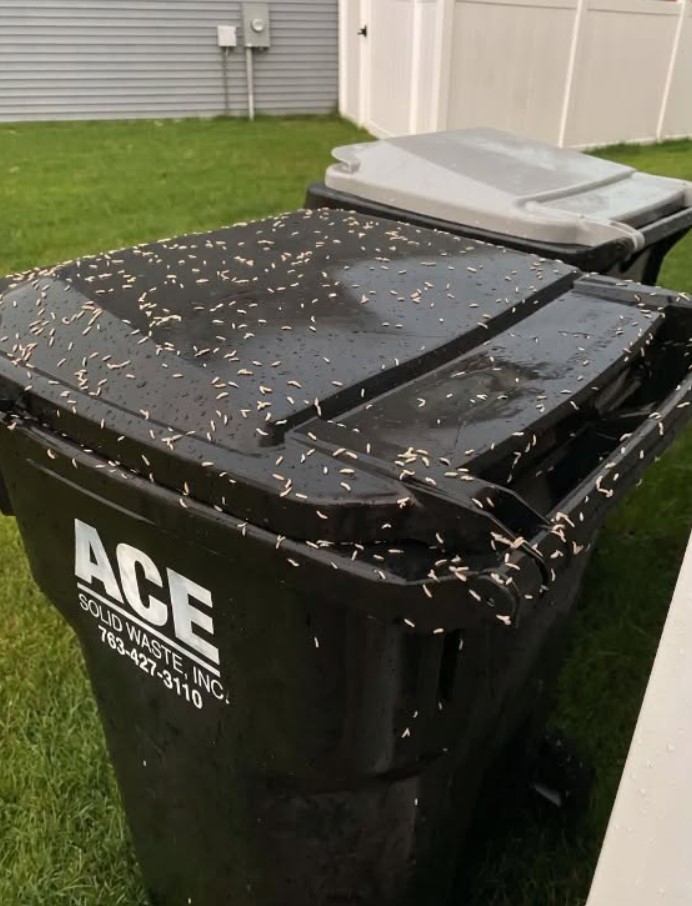
Opening your trash can and suddenly noticing tiny white worms crawling around can be an unpleasant surprise. You may immediately wonder where they came from, how they got there, and whether you should be worried.
The good news is that there is usually a simple explanation.
Those tiny, pale, worm-like creatures found in household garbage are often maggots—the larval stage of flies. They can appear when adult flies find suitable organic material in which to lay their eggs. Once the eggs hatch, the larvae begin feeding on the decaying material around them.
It can seem as though the worms appeared out of nowhere, especially if you only noticed them after leaving the trash for a day or two. But there is a natural life cycle behind the sudden appearance.
So, what exactly attracts them to your garbage, and what should you do if you find them?
What Are Those Tiny White Worms?
Maggots are immature flies.
Adult flies are attracted to suitable sources of organic material, particularly food waste and decomposing matter. When conditions are right, they may lay eggs in or around the material.
After the eggs hatch, the larvae begin feeding.
This is why maggots are frequently associated with things such as:
- Meat scraps
- Spoiled fruit
- Vegetables
- Food leftovers
- Greasy food waste
- Pet food
- Other decomposing organic material
They aren’t actually worms in the biological sense. They are fly larvae, and their presence generally indicates that flies have found a suitable food or breeding source.
Why Do They Seem to Appear Overnight?
This is probably one of the most disturbing parts of discovering maggots.
You may take out the trash in the evening and notice nothing unusual. Then, the next morning, you lift the lid and see tiny white larvae moving through the garbage.
It can feel as though they suddenly appeared.
In reality, the eggs were likely already present but were too small to notice.
Under favorable conditions, fly eggs can hatch relatively quickly, allowing larvae to become visible within a short period. Warm temperatures can also speed up decomposition and insect development, which can make the entire process seem remarkably sudden.
So, the garbage didn’t magically create worms overnight.
The conditions simply allowed an existing life cycle to progress quickly.
Why Your Trash Can Can Attract Flies
Think about what can accumulate inside an ordinary household trash can.
Food scraps.
Moisture.
Fruit peels.
Meat leftovers.
Grease.
Used napkins.
Food containers.
Pet food.
Even small amounts of leftover food can produce odors as they begin to break down.
For flies, these odors can signal the presence of a potential food source or place to lay eggs.
A covered trash can isn’t necessarily completely protected. If flies can access the waste through an opening, loose bag, or residue around the lid, they may still find what they’re looking for.
Warm Weather Can Make the Problem Worse
Hot weather can make garbage-related pest problems more noticeable.
As temperatures rise, organic food waste tends to decompose more quickly. That can produce stronger odors and create conditions that are more favorable for insect activity.
This can create a frustrating cycle:
Warm temperatures → faster decomposition → stronger odors → increased fly activity → more opportunities for eggs → visible larvae.
That’s one reason people may notice maggots more often during warmer periods.
If your home becomes particularly warm, taking food-heavy garbage outside more frequently can help reduce the opportunity for flies to use it as a breeding site.
Where Could the Maggots Be Hiding?
Sometimes the larvae are easy to spot because they’re crawling directly through the garbage.
But they don’t always remain inside the bag.
Food liquids can leak from a garbage bag and collect underneath it. Organic residue can also stick to the bottom or sides of the container.
Flies may be attracted to residue around:
- The bottom of the bin
- The inside walls
- The lid
- The rim
- Cracks and seams
- Sticky food residue
- Leaking areas beneath the garbage bag
That’s why simply removing the old bag may not completely solve the problem.
If organic material remains inside the trash can, flies may continue to be attracted to the area.
What Should You Do If You Find Maggots?
First, don’t panic.
The most important thing is to remove the material that is supporting them.
If the maggots are inside a garbage bag, close the bag securely and remove it from the living area. Place it in the appropriate outdoor waste container according to your local waste-collection rules.
Try to avoid direct contact with the larvae and keep children and pets away from the affected area while you’re cleaning.
Once the garbage is gone, focus on the trash can itself.
That’s the part people sometimes forget.
Step 1: Empty the Trash Completely
Remove the garbage bag and inspect the inside of the bin.
Look carefully for scraps that may have fallen outside the bag.
Pay particular attention to the bottom.
If liquid has leaked from the bag, there may be food residue underneath it. Even a small amount of decomposing organic material can continue producing odors that attract insects.
Don’t simply put a new bag over the old residue.
Remove it first.
Step 2: Clean the Trash Can Thoroughly
Once the garbage has been removed, wash the container using hot water and an appropriate household detergent or cleaning product.
Clean the entire interior rather than focusing only on the areas where you can see larvae.
Pay attention to:
The Bottom
This is where leaking liquids and food debris often collect.
The Sides
Grease and food residue can stick to the interior walls.
The Lid
Flies can land around the lid and its edges.
The Rim
The rim can become contaminated when a leaking bag touches it.
Cracks and Seams
Small amounts of organic material can become trapped in difficult-to-reach areas.
Always follow the instructions on household cleaning products, and never mix bleach with ammonia or other incompatible cleaning chemicals.
Step 3: Rinse the Container
After washing the trash can, rinse it thoroughly.
The goal is to remove loosened food residue, detergent, and any remaining debris.
If your trash can has a removable lid, wash that separately.
Don’t forget handles, wheels, and other surfaces that may have come into contact with garbage.
Step 4: Let It Dry Completely
Once the container is clean, allow it to dry completely before putting a new bag inside.
Good airflow can help speed up the drying process.
A clean and dry bin is much less inviting than one containing food residue and moisture.
Once everything is dry, place a fresh garbage bag inside.
What If the Maggots Keep Coming Back?
If you have removed the garbage and cleaned the trash can but continue seeing larvae, there may be another source nearby.
Check the surrounding area carefully.
Look for:
- Forgotten food
- Spoiled produce
- Leaking garbage
- Pet food
- Pet waste
- Dirty recycling containers
- Food underneath appliances
- Compost
- Outdoor garbage
- Other decomposing organic material
The trash can may not actually be the original source.
Flies simply need access to a suitable food or breeding site.
Don’t Forget the Recycling Bin
Recycling containers are easy to overlook.
Food and drink containers can retain small amounts of residue even after they’re emptied.
Sauce jars, cans, meat packaging, bottles, and other containers may contain enough organic material to attract insects if they remain indoors for several days.
When practical, rinse food containers before placing them into recycling.
Keeping the recycling area clean can also help reduce unwanted insect activity.
Pet Food Can Be Another Source
If you have pets, take a look around their feeding area.
Wet pet food and leftovers can attract flies, particularly in warm weather.
Don’t allow uneaten wet food to sit out longer than appropriate. Clean food bowls regularly and dispose of leftovers properly.
Pet waste can also attract flies, so keeping waste containers closed and cleaning feeding areas regularly can make a difference.
Why Covering Up the Smell Isn’t Enough
When garbage starts to smell, it can be tempting to use an air freshener or another scented product.
But that doesn’t solve the underlying problem.
The smell exists because organic material is breaking down.
Instead of simply masking the odor, remove the source.
Take out the garbage.
Clean the bin.
Remove food residue.
Keep the container dry.
That approach addresses the reason insects were attracted to the area in the first place.
How to Prevent Maggots From Returning
Prevention is much easier than dealing with an infestation after it has started.
A few simple habits can make your garbage much less attractive to flies.
Take Food Waste Out Regularly
Don’t allow food-heavy garbage to sit indoors unnecessarily, especially during hot weather.
Meat scraps, seafood, spoiled produce, and other organic waste should be removed promptly.
Keep Garbage Bags Secure
Tie bags securely when they’re ready to be removed.
A properly closed bag can reduce odors and make it harder for insects to access the contents.
Keep the Bin Dry
If a garbage bag leaks, clean the container as soon as possible.
Don’t simply place another bag over the mess.
Clean Food Containers
When practical, rinse containers that held food before putting them into the trash or recycling.
Removing leftover residue gives flies fewer reasons to investigate.
Keep the Lid Closed
If your trash can has a lid, keep it closed whenever possible.
A closed container isn’t completely insect-proof, but it creates an additional barrier between flies and the waste.
Clean Outdoor Garbage Bins
Don’t forget the containers outside your home.
If garbage leaks inside an outdoor bin, clean the residue rather than allowing it to accumulate.
Are Maggots Dangerous?
Finding maggots in your household trash is certainly unpleasant, but their presence doesn’t automatically mean your home is dangerous.
In ordinary garbage, they generally indicate that flies have found decomposing organic material.
The appropriate response is good hygiene: remove the affected waste, clean the container, and wash your hands after handling the garbage.
However, not every tiny white, worm-like creature found in a home is necessarily a maggot. Other larvae can be associated with pantry foods, drains, fabrics, or damp areas. Identifying the creature based on where you found it and what it looks like can help determine the appropriate response.
What If You Find Larvae Somewhere Other Than the Trash?
Location matters.
If you find small larvae in dry food storage, they could potentially be pantry-pest larvae rather than fly maggots.
If you find worm-like creatures associated with a drain, the source could be organic buildup inside the plumbing.
If you find larvae around fabrics or carpets, another type of household insect may be involved.
So don’t automatically assume every white larva is a maggot.
The surroundings provide an important clue.
What About Larvae on a Person or in a Wound?
That’s a completely different situation.
If larvae are found in or around a wound, don’t treat the situation as an ordinary household trash problem.
Seek appropriate medical attention promptly.
Similarly, if you continue finding unexplained larvae in unusual places despite thoroughly cleaning your home and removing obvious food sources, consider getting professional pest-control advice.
Why You Shouldn’t Simply Ignore Them
It may be tempting to close the trash-can lid and hope the problem disappears.
But if the food source remains, flies may continue to visit the area.
Removing the visible larvae without addressing the underlying cause may only provide a temporary solution.
The better strategy is simple:
Remove the source, clean the container, and prevent access to future food waste.
That approach deals with the problem at its root.
A Simple Cleaning Routine
You don’t have to wait until you see maggots before cleaning your trash can.
A regular cleaning routine can help prevent unpleasant buildup.
Every so often:
- Empty the trash completely.
- Inspect the bottom of the bin.
- Remove food residue.
- Wash the interior with household detergent.
- Rinse thoroughly.
- Clean the lid and rim.
- Allow everything to dry completely.
- Add a fresh garbage bag.
If you regularly dispose of food waste or live in a particularly warm environment, you may benefit from cleaning the container more frequently.
What If Flies Keep Appearing?
Persistent flies can be a sign that there’s another source somewhere nearby.
Check fruit bowls, recycling, pet food, compost, drains, outdoor garbage, and areas underneath appliances.
Sometimes a small forgotten piece of food can be enough to attract insects.
Rather than repeatedly treating the visible flies, try to locate and remove the source.
Once the source is gone, the activity should generally decrease.
The Bigger Lesson
Finding maggots in the trash is unpleasant, but it can also serve as a reminder about how quickly organic waste can change.
Food scraps that look harmless when they enter the garbage can begin breaking down soon afterward.
Flies are naturally attracted to these materials, and their life cycle can progress quickly under favorable conditions.
That means good garbage habits aren’t just about keeping your kitchen looking clean.
They’re also about reducing the food, moisture, and odors that can attract unwanted insects.
Final Thoughts
Discovering tiny white worms in your trash can certainly make you want to shut the lid and walk away.
But once you understand what’s happening, the mystery becomes much less alarming.
In many cases, those tiny white creatures are maggots, the larval stage of flies, developing in decomposing organic material. They can appear surprisingly quickly when food waste, moisture, warmth, and fly activity come together.
The solution doesn’t need to be complicated.
Remove the affected garbage, clean the entire trash can, rinse it thoroughly, and allow it to dry completely. Then focus on prevention by taking food waste out regularly, keeping garbage bags securely closed, cleaning leaks promptly, and keeping lids closed.
And remember that location matters. If you find similar-looking larvae somewhere other than the trash, don’t automatically assume they’re maggots. Different household larvae can have different sources and require different approaches.
So the next time you lift the lid and discover something crawling around inside, don’t panic.
Find the source, remove it, clean the container, and make your trash can less attractive to flies.
A few simple habits can go a long way toward keeping your kitchen cleaner, fresher, and free from these unwelcome little visitors.