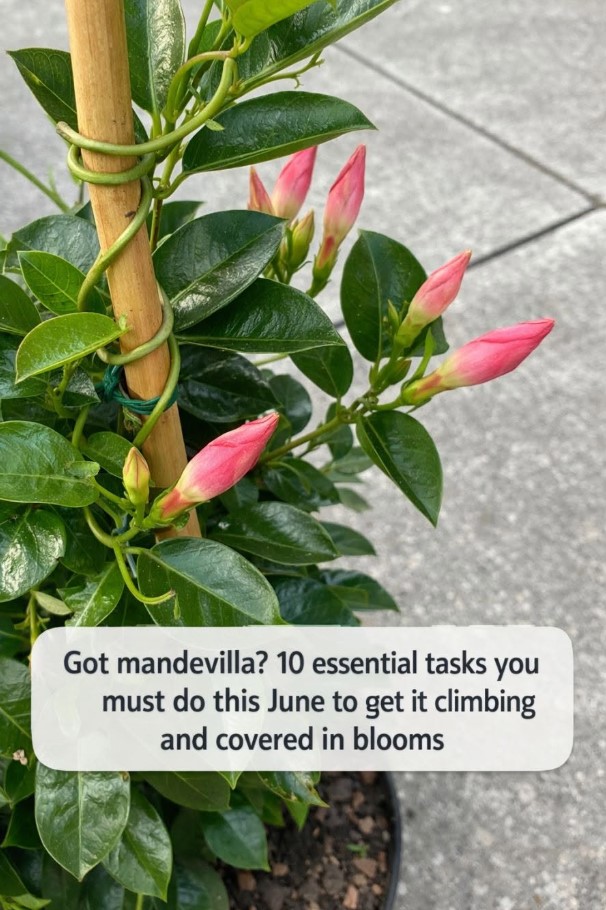
Mandevilla is one of the most stunning flowering vines you can grow, known for its vibrant trumpet-shaped blooms and fast climbing growth. When healthy, it can transform a balcony, garden wall, or trellis into a lush, colorful display throughout the summer season.
However, many gardeners struggle to get their mandevilla to bloom properly or climb as expected. The secret often lies in seasonal care, especially during early summer. June is a critical month because the plant enters its strongest growth phase and needs the right conditions to thrive.
In this guide, we will explore ten essential tasks you should do in June to ensure your mandevilla grows vigorously, climbs beautifully, and produces an abundance of flowers all summer long.
1. Provide Strong but Balanced Sunlight
Mandevilla loves sunlight, but balance is important.
Ideal conditions:
- 6–8 hours of bright light daily
- Morning sun is best
- Light shade during extreme afternoon heat
Too much harsh sun can stress the plant, while too little reduces blooming.
2. Water Deeply and Consistently
Proper watering is essential for healthy growth.
Best practices include:
- Keep soil evenly moist
- Water deeply at the base
- Avoid letting the soil dry out completely
- Ensure proper drainage
Inconsistent watering can cause bud drop and weak flowering.
3. Feed Regularly for Strong Blooms
June is a major feeding period for mandevilla.
Use fertilizers that support flowering:
- Balanced liquid fertilizer
- High-phosphorus bloom booster
- Organic compost feed
Feed every 1–2 weeks for best results during active growth.
4. Give It a Strong Support Structure
Since mandevilla is a climbing vine, support is essential.
You can use:
- Trellises
- Garden stakes
- Fences
- Arbors
Guide the stems gently as they grow upward.
5. Prune Lightly to Encourage New Growth
Pruning helps shape the plant and encourages blooming.
What to do:
- Remove weak or dead stems
- Trim overly long vines
- Encourage branching growth
Avoid heavy pruning during peak flowering season.
6. Check for Common Pests
Mandevilla can attract pests, especially in warm weather.
Watch for:
- Aphids
- Spider mites
- Whiteflies
Use natural insecticidal soap if needed.
7. Maintain Proper Soil Quality
Healthy soil is key for strong roots and blooms.
Ideal soil should:
- Drain well
- Be rich in organic matter
- Stay slightly moist
Add compost if soil is too poor or compact.
8. Encourage Climbing Growth Early
Early training helps shape the plant.
Tips:
- Gently tie stems to support
- Guide vines upward regularly
- Avoid letting stems tangle
This creates a fuller, more attractive display.
9. Remove Spent Flowers Regularly
Deadheading improves blooming performance.
Benefits:
- Encourages new buds
- Keeps plant tidy
- Extends blooming season
Simply pinch or cut off faded flowers.
10. Protect from Extreme Weather Stress
Mandevilla is sensitive to harsh conditions.
Protect it by:
- Moving pots during storms
- Providing shade in extreme heat
- Avoiding cold drafts
Stable conditions lead to better flowering.
Common Mistakes to Avoid
Many gardeners reduce blooming without realizing it by:
- Overwatering the plant
- Using too much nitrogen fertilizer
- Skipping support structures
- Ignoring pruning needs
- Placing it in too much shade
Avoiding these mistakes can dramatically improve results.
Conclusion :
Mandevilla is a beautiful climbing plant that rewards proper care with an explosion of colorful blooms. June is one of the most important months for shaping its growth, strengthening its structure, and encouraging continuous flowering.
By following these ten essential tasks, you can transform your mandevilla into a lush, blooming vine that climbs beautifully and thrives throughout the summer season. From proper watering and feeding to support, pruning, and pest control, each step plays a vital role in the plant’s overall health.
With consistent care and attention, your mandevilla will not only grow stronger but also become a stunning focal point in your garden or outdoor space.