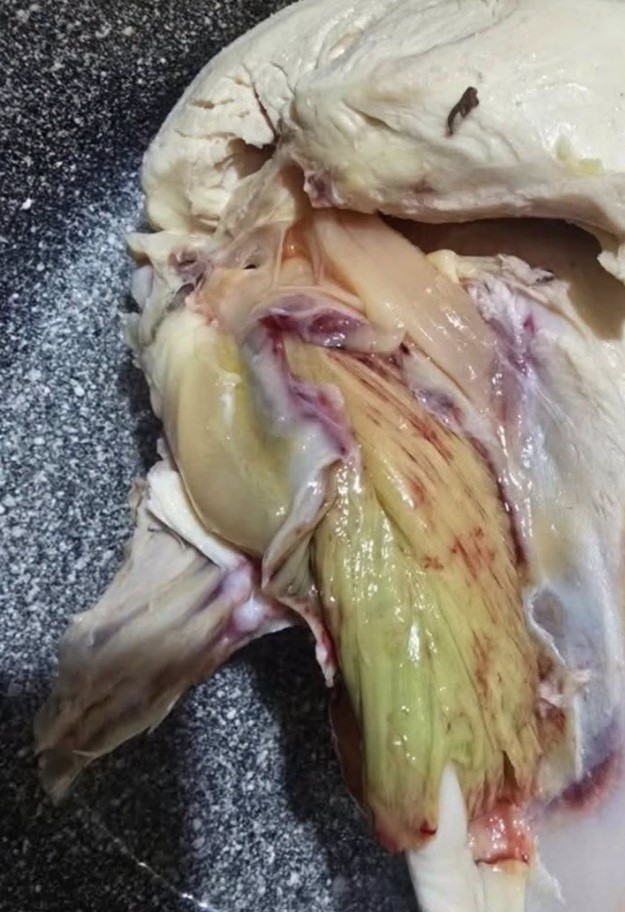
Have you ever sliced into a perfectly cooked chicken breast only to discover an unusual green patch inside? It’s enough to make anyone lose their appetite and wonder whether the meat is spoiled or unsafe to eat. While green chicken meat certainly looks alarming, the explanation behind it is often very different from what most people assume.
In many cases, the strange color isn’t caused by bacteria, mold, or improper cooking. Instead, it’s linked to a condition that develops while the chicken is still alive. Understanding why it happens can help you decide whether the chicken should be discarded and what signs truly indicate spoiled poultry.
Why Does Chicken Sometimes Turn Green?
One of the most common reasons for green discoloration is a condition known as deep pectoral myopathy, often called green muscle disease. This affects a small muscle located deep inside the chicken’s breast.
The condition develops when that muscle temporarily loses its blood supply after vigorous wing movement. Without enough oxygen, part of the muscle tissue becomes damaged. As the tissue heals and breaks down naturally, pigments in the blood change color, giving the meat a green or grayish-green appearance. Importantly, this is not an infectious disease and is not caused by bacteria or parasites.
Is Green Chicken Safe to Eat?
From a food safety perspective, green muscle disease itself is generally not considered harmful to humans. Food safety experts explain that the condition is cosmetic rather than infectious, meaning it doesn’t make the entire bird dangerous to eat.
However, many people choose not to eat the affected portion because the damaged muscle often has a different texture and flavor. If the green area is clearly localized and the chicken shows no other signs of spoilage, the discoloration alone isn’t usually a sign of food poisoning.
That said, if you’re uncomfortable with its appearance, it’s perfectly reasonable to discard the affected meat.
How to Tell the Difference Between Green Muscle Disease and Spoiled Chicken
Not every green or unusual color in chicken has the same cause. It’s important to look for additional warning signs before deciding whether the meat is safe.
Signs that usually indicate spoiled chicken include:
- A strong sour or rotten smell.
- Slimy or sticky texture.
- Mold or fuzzy growth.
- Widespread discoloration combined with unpleasant odor.
- Expired packaging or improper storage.
If any of these symptoms are present, the chicken should be thrown away immediately regardless of its color.
Why Does This Happen More Often Today?
Modern chickens are bred to grow quickly and produce larger breast muscles than in the past. Because of this rapid growth, the deep breast muscles can sometimes experience reduced blood circulation during sudden wing activity, increasing the likelihood of green muscle disease. The condition is seen more frequently in commercial broiler chickens but does not indicate poor hygiene or contamination during processing.
Can You Prevent It?
Unfortunately, consumers have no way to detect this condition before purchasing whole chicken or large cuts because the affected muscle is hidden deep inside the breast.
Once you cut into the meat, if you discover a small green area but everything else appears fresh, the issue most likely occurred long before the chicken reached the grocery store.
What Should You Do If You Find Green Meat?
If you discover green discoloration while preparing dinner:
- Inspect the rest of the chicken carefully.
- Smell the meat for any sour or unpleasant odor.
- Check that the texture feels normal rather than slimy.
- If the discoloration is isolated and there are no spoilage signs, the issue may simply be green muscle disease.
- If you have any doubts about freshness or safety, discard the chicken. When it comes to food safety, it’s always better to be cautious.
Many grocery stores will also refund or replace poultry if you return it with your receipt.
Final Thoughts
Finding green meat inside a chicken can certainly be surprising, but it doesn’t automatically mean the chicken is spoiled or dangerous. In many cases, the unusual color is the result of deep pectoral myopathy, a muscle condition that develops during the bird’s life rather than from contamination after processing. While the appearance may be off-putting, food safety experts generally agree that the condition itself is not associated with harmful bacteria or toxins.
Still, appearance is only one part of the story. Always rely on your senses and proper food safety practices when evaluating any poultry. A sour smell, slimy texture, mold, or signs of improper storage are much more reliable indicators that chicken has gone bad. If the meat seems questionable in any way, it’s never worth taking the risk.
The best approach is to stay informed rather than alarmed. Knowing the difference between a harmless muscle condition and genuine spoilage can save you unnecessary worry while helping you make smart decisions in the kitchen. When in doubt, trust your instincts, follow safe food-handling guidelines, and remember that protecting your health is always more important than saving a single meal.