
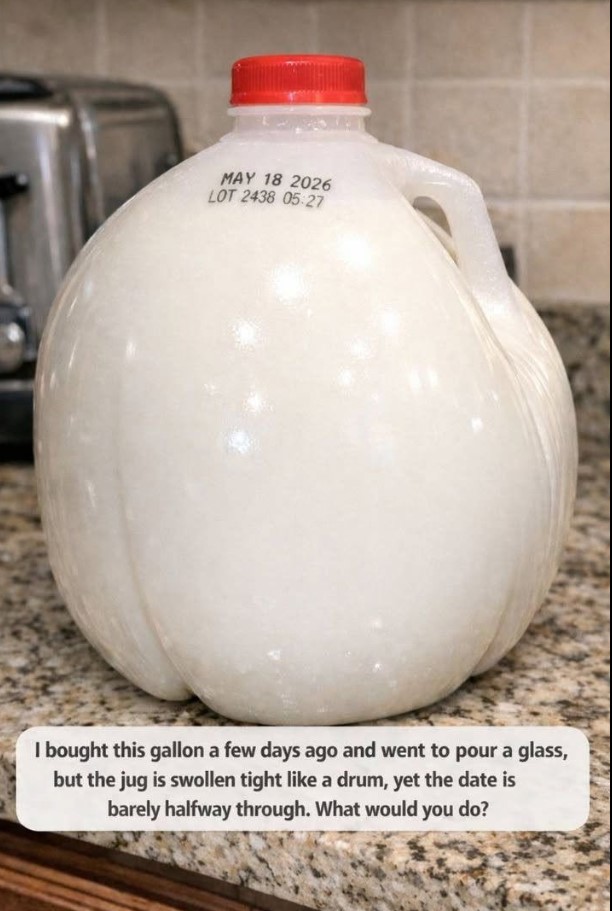
Opening your refrigerator to grab a gallon of milk should be a routine part of the day. But what if you reach for the jug and notice something alarming? Instead of its normal shape, the plastic container is swollen, bulging outward, and feels tight like an inflated balloon. Even more confusing, the expiration date is still days—or even weeks—away. Is the milk still safe to drink, or should it be thrown away immediately?
Many people assume that the printed date guarantees the product is fresh until that day arrives. In reality, expiration dates are only one part of the equation. The condition of the package itself can reveal valuable clues about what’s happening inside. A bloated milk jug is often a warning sign that shouldn’t be ignored, regardless of the date stamped on the container.
Let’s take a closer look at why milk containers swell, what causes the pressure to build inside, how to tell whether the milk has spoiled, and what you should do if you discover a jug that’s puffed up like a drum.
Why Does a Milk Jug Swell?
A milk container normally contains very little internal pressure. If it suddenly becomes bloated, something inside has changed.
The most common reason is the production of gases by microorganisms. As bacteria multiply, they break down components of the milk and release gases such as carbon dioxide. Because the container is sealed, these gases have nowhere to escape, causing the plastic jug to expand.
The Date Doesn’t Guarantee Freshness
Many consumers misunderstand the printed date on milk containers.
Depending on where you live, the label may say:
- Sell By
- Best By
- Best Before
- Use By
These dates primarily help retailers manage inventory and indicate when the product is expected to maintain its best quality if stored properly. They do not guarantee that the milk will remain safe under every condition until that exact date.
Storage temperature, transportation, and handling all play important roles.
Temperature Matters More Than You Think
Milk should remain consistently refrigerated.
Even short periods spent above safe refrigeration temperatures can encourage bacterial growth.
Possible situations include:
- A long drive home from the grocery store.
- Leaving groceries in a warm car.
- Refrigerator temperatures above the recommended range.
- Frequent opening of the refrigerator door.
Once bacteria begin multiplying rapidly, spoilage may occur well before the printed date.
What Causes Gas to Build Up?
Certain bacteria naturally produce gas as they feed on sugars and proteins found in milk.
As these microorganisms grow, they generate pressure inside the sealed jug.
Eventually, the container may:
- Feel firm.
- Lose its original shape.
- Appear inflated.
- Bulge outward on every side.
This visible swelling is often one of the earliest signs that the milk is no longer in good condition.
Can Milk Spoil Before the Date?
Yes.
Although modern dairy processing greatly extends freshness, several factors can shorten milk’s usable life:
- Improper refrigeration.
- Interrupted cold chain during transport.
- Cross-contamination.
- Tiny leaks in the container seal.
- Extended exposure to warm temperatures.
The printed date assumes the milk has remained properly refrigerated throughout its journey from the dairy to your home.
What Happens During Spoilage?
As bacteria multiply, several changes occur inside the milk:
- Acidity increases.
- Proteins begin breaking down.
- Odors become stronger.
- Texture changes.
- Gas production increases.
These changes affect both flavor and safety.
Signs Your Milk Has Gone Bad
Besides a swollen container, watch for:
- Sour smell.
- Lumpy texture.
- Curdling.
- Yellowish discoloration.
- Separation that doesn’t mix back together after shaking.
If any of these signs are present, it’s best not to consume the milk.
Is It Safe to Open a Swollen Jug?
You can technically open the container, but caution is advised.
Because pressure has built up inside, the cap may release gas suddenly.
If the milk is spoiled, you’ll likely notice a strong sour odor immediately.
Avoid tasting milk simply to determine whether it’s safe.
Could It Be a Manufacturing Problem?
Although uncommon, manufacturing defects can sometimes contribute to unusual packaging.
Examples include:
- Incomplete sealing.
- Tiny pinhole leaks.
- Packaging damage during shipping.
- Weak spots in the plastic.
However, noticeable swelling is much more commonly linked to spoilage caused by bacterial activity.
Does Pasteurization Prevent This?
Pasteurization destroys many harmful microorganisms, greatly improving milk safety.
However, it does not make milk sterile.
Small numbers of harmless bacteria may remain, and contamination can also occur after pasteurization during packaging or handling.
Given enough time and favorable conditions, these microorganisms can still multiply.
What About Ultra-Pasteurized Milk?
Ultra-pasteurized (UHT) milk undergoes higher-temperature processing and generally lasts much longer before opening.
Even so, once the seal is compromised—or if storage temperatures are not maintained—it can still spoil.
How Should Milk Be Stored?
For maximum freshness:
- Keep the refrigerator at or below 40°F (4°C).
- Store milk on an interior shelf rather than in the refrigerator door.
- Return it to the refrigerator promptly after use.
- Avoid leaving it at room temperature for extended periods.
Consistent cold storage significantly slows bacterial growth.
Can Freezing Affect the Jug?
Freezing causes liquids to expand, but this usually creates a different appearance than bacterial swelling.
Frozen milk often becomes solid and may split the container rather than creating a uniformly inflated jug.
If the milk has never frozen, gas buildup is a more likely explanation.
Should You Drink It If It Smells Fine?
If the container itself is noticeably swollen, it’s generally safest not to consume the milk—even if it doesn’t immediately smell sour.
Package swelling indicates that something unusual has occurred inside, and visual changes should not be ignored.
What Should You Do?
If you discover a swollen milk jug:
- Do not taste the milk.
- Inspect the container for leaks or damage.
- Dispose of the milk if the package is significantly bloated or shows other signs of spoilage.
- Clean any spills carefully.
- If the purchase was recent, consider contacting the retailer, as many stores will replace products that spoil prematurely.
How to Reduce the Risk of Early Spoilage
Simple habits can help keep milk fresh longer:
- Buy refrigerated products near the end of your shopping trip.
- Transport groceries home promptly.
- Use insulated bags during hot weather.
- Check your refrigerator temperature regularly.
- Keep milk tightly sealed after each use.
These small steps help preserve quality and reduce the likelihood of premature spoilage.
Common Myths About Expiration Dates
Myth: Milk Is Safe Until Midnight on the Printed Date.
Fact: The printed date is only an estimate based on proper storage. Milk can spoil earlier if mishandled or exposed to warm temperatures.
Myth: If It Doesn’t Smell Sour, It’s Safe.
Fact: A swollen container alone is a strong indication that abnormal changes have occurred inside, even before obvious odors develop.
Myth: Swollen Plastic Means the Jug Was Overfilled.
Fact: Properly packaged milk containers are not designed to bulge outward. Expansion usually points to pressure building inside the sealed container.
Why Packaging Can Tell You So Much
Food packaging is designed to protect its contents, but it can also serve as an early warning system. Bulging containers, leaking seals, unusual odors, and changes in appearance often indicate that something has gone wrong before the product is even opened. Paying attention to these signs helps consumers avoid spoiled food and make safer decisions in the kitchen.
Conclusion :
A swollen gallon of milk can be surprising, especially when the expiration date suggests it should still be fresh. However, the condition of the container is often a more reliable indicator than the date printed on the label. Bulging or inflated packaging usually means gases have accumulated inside the sealed jug, most commonly as a result of bacterial growth. While the exact cause may vary—from improper refrigeration to accidental temperature fluctuations during transport—the safest approach is to treat a swollen milk container as spoiled and avoid consuming its contents.
Remember that expiration, “best by,” and “sell by” dates are intended as general guidelines rather than absolute guarantees. Milk remains fresh only when it has been consistently stored at the proper temperature from the dairy to your refrigerator. Even a brief interruption in the cold chain can shorten its shelf life considerably. By regularly checking your refrigerator temperature, handling dairy products carefully, and paying attention to changes in packaging, smell, and texture, you can reduce waste while protecting your health.
The next time you notice a milk jug that’s puffed up like a balloon, trust what your eyes are telling you. A swollen container is nature’s way of signaling that something inside has changed. When in doubt, it’s always better to discard questionable milk or return it to the retailer if it was recently purchased. Replacing a gallon of milk is far less costly than risking foodborne illness, making caution the smartest choice every time.