I married Eleanor for her money.
Let me not soften it. I didn’t love her. I didn’t even truly respect her in the beginning. She was 28 years older than me, a wealthy widow living a quiet and lonely life. I was young, broke, and exhausted from struggling with nothing in my hands and no direction in sight.
To me, it looked like a simple arrangement. She would get companionship in her later years, and I would get financial security and a life I could never afford on my own.
It wasn’t spoken openly, but it didn’t need to be. We both understood what this was, even if we never admitted it out loud.
For eight years, I lived inside that arrangement—inside that carefully built illusion.
And then she died.
That was when everything changed.
Because what Eleanor left behind in a small, forgotten shoebox didn’t just reveal secrets—it completely shattered everything I believed about her, about myself, and about the life we had built together.
THE MARRIAGE EVERYONE THOUGHT WAS PERFECT
1. A love story from the outside
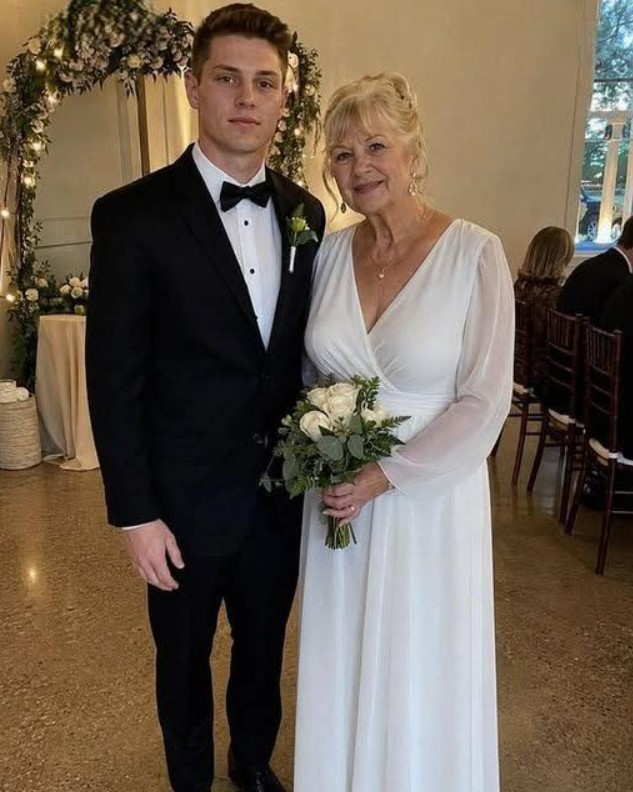
To everyone around us, we looked like something rare and beautiful. People saw an older widow who had found happiness again with a younger husband. They called it inspiring. They called it love that defied age.
I let them believe it.
I played the part well. I held her hand in public. I smiled in photographs. I opened doors, remembered anniversaries, and listened to stories I had heard many times before.
I was patient, attentive, and carefully convincing.
But behind every gesture was calculation.
I was waiting.
2. A relationship built on quiet understanding
Eleanor was not naive. She knew there was a gap between us—age, experience, and intention. But she never confronted it directly.
Instead, she accepted the version of me I was willing to present.
And I accepted the life she offered in return.
It was never love. It was structure. It was convenience. It was survival dressed as companionship.
3. Living a double life
While the world saw a charming marriage, I lived with constant awareness of time, money, and expectation. I followed her health closely, listened to doctors carefully, and quietly measured the years ahead like numbers on a page.
I didn’t wish her harm. I simply stopped imagining a future that didn’t involve her absence.
That is the part I struggle to admit.
WHEN EVERYTHING CHANGED
1. Her death and the silence that followed
When Eleanor passed away, I felt something I didn’t expect.
Relief.
Then guilt.
Then relief again.
The funeral was small. There weren’t many people left in her life. I stood there pretending to grieve while feeling almost nothing at all.
And soon after, I began thinking about what I would do next.
Her house. Her accounts. Her life’s work—all now mine.
Or so I thought.
2. The forgotten shoebox
A few days later, while going through her belongings, I found a simple cardboard box tucked away in her closet.
On the top, written in shaky handwriting, were the words:
“For My Husband.”
I almost ignored it.
I almost threw it away.
But I didn’t.
And that decision changed everything.
THE SHOCKING CONTENTS OF THE BOX
1. She knew everything
Inside the shoebox were documents. Records. Proof.
Eleanor had known who I was from the very beginning.
She had hired a private investigator before we even got married. She knew about my debts, my past relationships, my financial desperation, and my real intentions.
She knew I wasn’t there for love.
And she married me anyway.
2. Letters I was never meant to see
Beneath the documents were letters—dozens of them—written over the course of our marriage.
They were addressed to me, but never delivered.
And each one cut deeper than the last.
3. A woman who saw everything
In the early letters, she wrote about hope. About choosing to believe I might change. About wanting companionship even if it wasn’t perfect.
But over time, the tone shifted.
She began to notice the distance. The emotional absence. The way I looked at her life like a transaction instead of a shared experience.
And she wrote about it—quietly, painfully, honestly.
THE FINAL LETTER
1. Her final message
The last letter was written just days before her death. Her handwriting was weak, almost fading.
But her words were clear.
She left me everything—not out of love, but out of understanding.
She wanted me to live with the consequences.
She wanted me to feel the weight of what I had done.
2. A final gift I didn’t understand at first
At first, I thought she had simply forgiven me.
But she hadn’t.
She had done something far more powerful.
She had made sure I could never escape myself.
WHAT I REALIZED TOO LATE
1. I didn’t lose her—I lost myself
Sitting alone with those letters, I finally understood something I had avoided my entire life.
I hadn’t just used her.
I had wasted the chance to become someone better.
Someone capable of love, gratitude, and real connection.
2. She knew I was empty—and stayed anyway
That realization hurts more than anything else.
She saw my flaws clearly. She understood my intentions. And instead of rejecting me, she chose to remain—hoping, perhaps, that something human might grow between us.
And I gave her nothing in return.
3. The real inheritance
The money, the house, the assets—none of it mattered.
What she left me was heavier than any inheritance.
She left me the truth.
THE LESSON I CAN’T UNLEARN
1. Wealth cannot replace meaning
Everything I thought I wanted—security, comfort, financial freedom—felt empty the moment it arrived without love attached to it.
2. Time is the real currency
She spent eight years with me. Eight years of hope, patience, and quiet disappointment.
And I spent them calculating.
3. Some truths arrive too late
We often believe we are in control of situations like this. But sometimes, we are being watched, understood, and remembered far more deeply than we realize.
CONCLUSION :
Eleanor’s death did not end our story—it revealed it.
What I thought was a clever arrangement built on mutual benefit turned out to be something far more painful. It was a quiet, uneven relationship where one person hoped for love, and the other pretended it wasn’t necessary.
The shoebox she left behind didn’t just expose my intentions. It exposed my emptiness.
And in doing so, it forced me to see something I had avoided for years: that I was never just “a man marrying for money.” I was someone who lost the chance to become better—and didn’t realize it until it was too late.
Now I understand that the real cost of everything I wanted was not paid in money.
It was paid in time, truth, and the realization that being chosen by someone who sees through you is both a gift—and a warning.
And I only understood that when it was already over.