
Have you ever heard an old-fashioned home remedy that sounded unusual enough to make you curious? Some household tricks have been passed down through generations, especially when it comes to dealing with colds, stuffy noses, and nighttime discomfort.
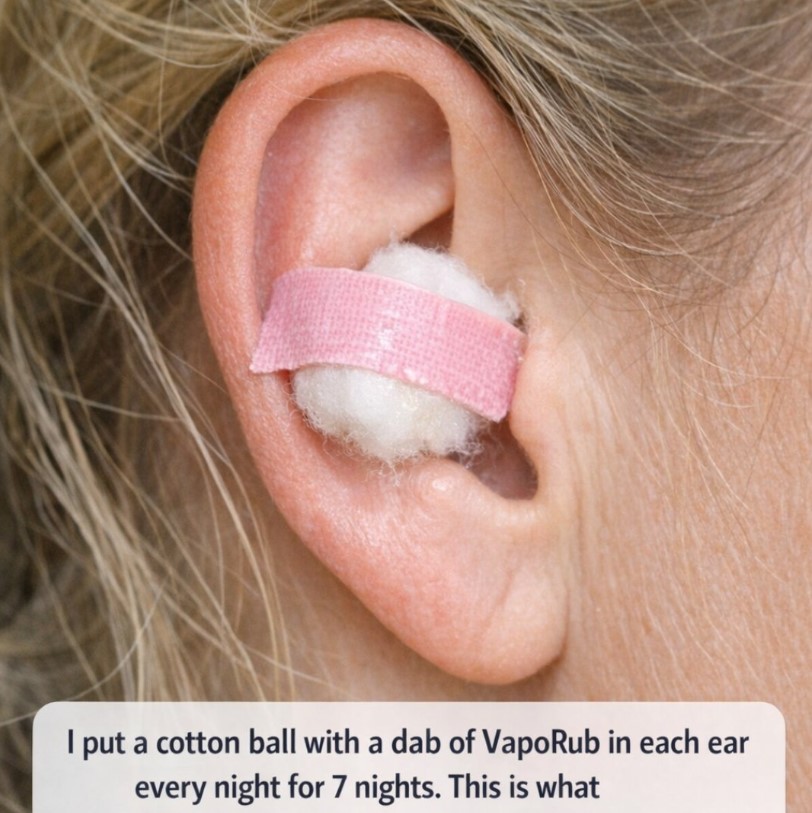
One remedy that has attracted attention involves VapoRub and cotton balls. The idea is simple: place a small amount of the familiar mentholated ointment on cotton near the ears and hope that its cooling aroma helps ease that uncomfortable feeling of a stuffy head.
But does this trick actually work? Can the familiar smell of menthol and eucalyptus make a difference when you’re struggling with congestion at bedtime? And, more importantly, is it safe to put VapoRub near your ears?
A personal account published about this experiment describes trying the method for seven consecutive nights during a head cold. The reported result was modest rather than dramatic: the familiar vapor created a sensation of comfort, particularly when settling down to sleep.
However, there is an important distinction between feeling temporarily more comfortable and treating the underlying cause of a health problem. VapoRub is not an ear treatment, and placing it in or inside the ear is not recommended.
Let’s look at what the seven-night experience reportedly involved, why menthol can create a sensation of relief, what the remedy cannot do, and the precautions everyone should understand.
What Happened After Seven Nights?
According to the original account, the person trying this old home remedy was experiencing a head cold accompanied by a stuffy, heavy feeling that seemed more noticeable at bedtime.
The nose was not completely blocked, but the overall feeling of congestion made it difficult to relax and fall asleep comfortably.
The reported experience was not a dramatic transformation. Instead, the person noticed the familiar menthol and camphor aroma and described a temporary sensation of freshness around the face and nose.
This seemed to make the bedtime congestion feel less bothersome.
The account also made an important distinction: the remedy did not cure the cold, remove earwax, drain the ears, or treat an infection.
By the end of the seven nights, the main reported benefit was a modest improvement in nighttime comfort. The cold itself was also improving, making it impossible to determine whether the natural recovery process accounted for some of the improvement.
It is important to remember that this was one person’s experience, not a controlled medical study. It does not establish that the method works or that it is safe.
Why Does VapoRub Create a Cooling Sensation?
VapoRub contains ingredients such as menthol, camphor, and eucalyptus oil. These ingredients produce a strong, recognizable aroma that many people associate with traditional cold remedies.
Menthol is particularly interesting because it activates cold-sensitive receptors in the body. This can create a cooling sensation and make breathing feel more comfortable, even when nasal congestion has not physically improved.
That distinction matters.
Feeling as though your nose is more open does not necessarily mean that swollen nasal passages have become wider or that mucus has disappeared.
The sensation can still feel pleasant, especially when you are tired and trying to sleep. However, it should not be confused with a treatment for the underlying cause of congestion.
VapoRub should only be used according to the instructions on its packaging. Its familiar aroma does not make every homemade application method safe.
What the Seven-Night Experience Reported
The original account described different experiences throughout the week.
Nights 1 and 2: A noticeable new sensation
During the first two nights, the mentholated aroma was particularly noticeable because it was unfamiliar in that setting. The person described feeling a temporary sense of freshness while lying down.
This was a subjective comfort experience rather than evidence that the ears or sinuses had been cleared.
Nights 3 through 5: A familiar bedtime routine
Over the following nights, the sensation reportedly became familiar. The person continued to describe mild comfort but did not notice a stronger effect or a dramatic improvement.
There was no indication that the remedy was removing earwax or treating an ear condition.
Nights 6 and 7: The cold began improving
Toward the end of the week, the original cold symptoms were also getting better.
This is an important detail because many common colds improve naturally over several days. It would be impossible to conclude that the cotton-and-VapoRub experiment caused the recovery.
The main takeaway from the account was that the person felt somewhat more comfortable at bedtime, not that the remedy had cured the cold.
Does VapoRub Help Clear Earwax?
No reliable evidence shows that VapoRub can remove earwax.
Earwax is a natural substance produced inside the ear canal. It helps protect the ear by trapping dust, dirt, and other particles. In most people, it gradually moves outward on its own.
Putting a mentholated ointment on cotton near the ear does not dissolve wax, pull it out, or clear a blockage.
If you experience muffled hearing, persistent fullness, or the feeling that one ear is blocked, earwax is only one possible explanation. Other causes can include fluid, inflammation, or infection.
Avoid trying to solve the problem by inserting cotton balls, cotton swabs, or other objects into the ear canal.
If you suspect that earwax is causing a blockage, ask a healthcare professional or pharmacist about appropriate options.
Can VapoRub Treat an Ear Infection?
VapoRub is not an ear infection treatment.
Ear infections can involve different parts of the ear and may cause symptoms such as:
- Earache or throbbing pain.
- A feeling of pressure or fullness.
- Reduced or muffled hearing.
- Fluid or discharge from the ear.
- Fever.
- Dizziness or balance problems.
The cooling sensation associated with menthol should never be mistaken for treatment of an infection.
Applying an ointment close to irritated or damaged ear tissue may also cause additional discomfort.
If you experience persistent ear pain, discharge, fever, or hearing difficulties, seek medical advice rather than relying on a home remedy.
Important Safety Precautions You Should Know
This is the most important part of the discussion.
Although VapoRub is a familiar household product, it is not intended to be placed inside the ears. Its ingredients are designed for specific external uses described on the product label.
The product should not be applied inside the ear canal.
There are several reasons to be cautious.
The ear canal is delicate: The skin inside the ear is sensitive, and inappropriate products can cause irritation.
Cotton can become lodged: A cotton ball pushed too far into the ear may become difficult to remove or leave fibers behind.
Ointments can irritate the skin: Mentholated products may cause discomfort when they come into contact with sensitive or damaged tissue.
An underlying problem may be overlooked: Temporary sensations of freshness do not rule out an ear infection, wax blockage, or another medical condition.
The World Health Organization advises against inserting objects or putting substances into the ears unless recommended by a healthcare professional.
For these reasons, it is best not to repeat the cotton-ball-and-VapoRub method. If you want to use VapoRub for cold symptoms, follow the directions on your particular product and use it only on the recommended areas.
Why This Remedy Is Not Suitable for Small Children
Extra caution is necessary when it comes to children.
Young children have smaller ear canals and may be more likely to move, rub, or accidentally push a cotton ball farther into the ear.
They may also have difficulty explaining whether they are experiencing congestion, ear pain, or another problem.
Parents should never use this home remedy as a substitute for appropriate medical advice.
If a child has ear pain, fever, fluid coming from the ear, difficulty hearing, or unusual nighttime crying, a healthcare professional should evaluate the symptoms.
Always follow the age restrictions and instructions on the VapoRub packaging. Do not assume that a remedy suitable for an adult is appropriate for a child.
Safer Ways to Feel More Comfortable During a Cold
If nighttime congestion is making it difficult to sleep, there are other approaches that may help without putting ointment or cotton inside the ears.
Use saline nasal spray: Saline products can help moisturize the nasal passages and loosen thick mucus. Follow the product instructions.
Drink enough fluids: Water, warm tea, and soup can help maintain hydration when you have a cold.
Consider a clean humidifier: Moist air may help relieve dryness and make the room more comfortable. Follow the manufacturer’s cleaning instructions to prevent mold and bacterial growth.
Get enough rest: Sleep and rest give your body time to recover from a common cold.
Use VapoRub only as directed: If you choose to use it, follow the instructions on the packaging. Do not apply it inside the ears, inside the nostrils, or to damaged skin.
These measures may help with comfort, but they do not replace medical care when symptoms are severe or persistent.
When Should You See a Doctor?
Not every blocked-ear sensation is serious, but certain symptoms deserve prompt attention.
Seek medical advice if you experience:
- Persistent or worsening ear pain.
- Fluid, pus, or blood coming from the ear.
- Sudden or significant hearing loss.
- Dizziness or balance difficulties.
- Fever accompanied by ear discomfort.
- Swelling around the ear.
- Symptoms that mainly affect one ear or continue to worsen.
Sudden hearing loss, particularly in one ear, requires urgent medical assessment. Do not wait several days to see whether a home remedy helps.
If VapoRub accidentally gets inside the ear, stop using it there and seek advice from a healthcare professional or poison information service about the appropriate next step.
Frequently Asked Questions
Does putting VapoRub near the ears help with a stuffy nose?
The mentholated aroma may create a temporary cooling sensation that some people find comforting. However, placing VapoRub near the ears has not been established as an effective treatment for nasal congestion.
Can VapoRub dissolve earwax?
No. VapoRub is not an earwax-removal product. It does not dissolve or remove impacted earwax.
Can I put a cotton ball inside my ear overnight?
It is not recommended. Cotton can move deeper into the ear canal, become lodged, or irritate sensitive skin. Avoid inserting cotton balls or other objects into the ear.
Does VapoRub cure a cold?
No. VapoRub may temporarily relieve certain symptoms when used according to its instructions, but it does not cure the common cold or eliminate the virus responsible for it.
Why does menthol make breathing feel easier?
Menthol activates cold-sensitive receptors and creates a cooling sensation. This can make breathing feel more comfortable without necessarily opening blocked nasal passages.
Can I use this remedy for ear pain?
No. VapoRub should not be used inside the ear or as a treatment for ear pain. Persistent or severe ear discomfort should be evaluated by a healthcare professional.
Conclusion: What Should You Really Take Away from This Seven-Night Experiment?
The story of putting a cotton ball with a little VapoRub near each ear for seven nights is certainly interesting. It is one of those old-fashioned home remedies that makes people curious because it uses a familiar household product in an unusual way. The original account describes a modest feeling of comfort during a head cold, particularly at bedtime, rather than a dramatic improvement or an overnight cure.
The most important lesson, however, is understanding the difference between temporary comfort and genuine medical treatment.
Menthol and camphor produce a recognizable cooling sensation that can make a stuffy head feel less uncomfortable. For someone struggling to settle down during a cold, that sensation may feel pleasant. But feeling more comfortable does not mean that earwax has disappeared, that the ears have drained, or that an infection has been treated.
It is also important not to confuse the natural recovery of a common cold with the effect of a home remedy. Colds often improve gradually over several days. When someone tries a new trick during that same period, it can be difficult to know whether the improvement came from the remedy or simply from the body recovering naturally.
Most importantly, VapoRub is intended for specific external uses, not for application inside the ears. A cotton ball should never be pushed into the ear canal, and the ointment should not be placed where it can enter the ear. The delicate skin inside the ear requires proper care, and experimenting with products that are not designed for that area can create unnecessary problems.
If you experience ear fullness, pain, muffled hearing, or discharge, it is better to find out what is causing the symptoms rather than trying to cover them up with a familiar scent. Appropriate treatment depends on the underlying problem, whether it involves congestion, earwax, inflammation, or infection.
There is nothing wrong with being curious about traditional home remedies. Many people enjoy learning about simple ways to feel more comfortable when they have a cold. The key is to examine these ideas carefully, separate personal experiences from proven medical information, and avoid methods that could put sensitive parts of the body at risk.
So, what really happened after seven nights? According to the original account, the person experienced a little bedtime comfort, but no cure, no earwax removal, and no treatment of an ear condition. That is a much more realistic conclusion than the dramatic claims sometimes attached to home remedies.
When it comes to your ears, a little caution goes a long way. Follow product instructions, avoid putting unnecessary substances or objects inside the ear canal, and seek professional advice when symptoms persist. Sometimes the safest and most helpful approach is not another unusual household trick, but simply understanding what your body needs and choosing the right care.