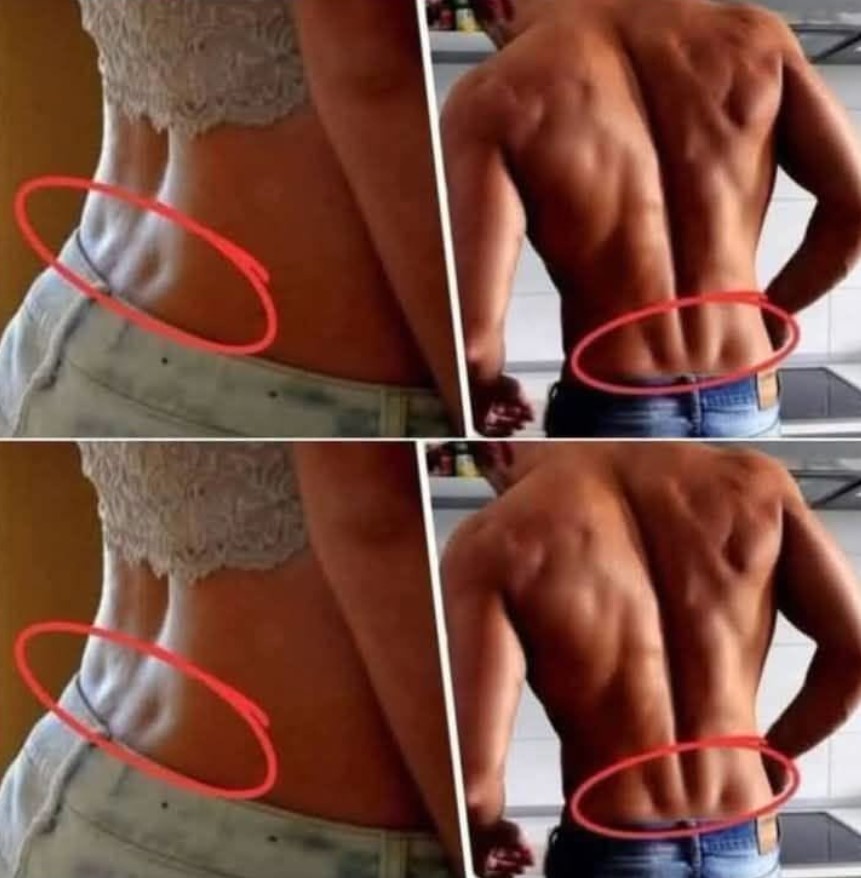
Have you ever noticed two small indentations just above your hips on your lower back? These tiny, symmetrical hollows—often called “back dimples” or “Venus dimples”—have sparked curiosity for years. Many people wonder whether they are a sign of exceptional fitness, a hidden health issue, or simply a unique physical trait.
The truth is that these distinctive dimples are completely natural and, for most people, nothing to worry about. While they’re often associated with beauty and athleticism, they are actually determined primarily by your anatomy and genetics. Whether you’ve had them your entire life or have only recently noticed them after losing weight, these dimples have an interesting story behind them.
Let’s explore what lower back dimples really are, why some people have them while others don’t, and whether they have any connection to your health or physical fitness.
What Are Lower Back Dimples?
Lower back dimples are small indentations located on either side of the spine, just above the buttocks.
Their medical name is dimples of Venus in women and sometimes dimples of Apollo in men.
These dimples form where the skin is naturally attached to a ligament that connects the pelvis to the skin above it. Because this attachment is tighter in these specific spots, the skin forms small depressions that create the familiar dimpled appearance.
Unlike facial dimples, they aren’t created by muscles but by the underlying structure of the pelvis and connective tissues.
Why Do Some People Have Them?
The biggest factor is genetics.
If your bone structure and connective tissues create the right conditions, you’ll naturally have these dimples.
Several factors influence whether they are visible:
- Genetics
- Pelvic bone structure
- Ligament placement
- Distribution of body fat
- Skin thickness
Since these characteristics are inherited, some families have multiple members with noticeable back dimples.
Others may never develop them regardless of their fitness level.
Are They a Sign of Good Health?
One of the most common myths is that back dimples automatically indicate excellent health.
In reality, they are not a medical measurement of fitness or overall wellness.
A person can be:
- Extremely healthy without them.
- Very athletic and not have them.
- Less active and still have prominent dimples.
Their presence simply reflects natural anatomy rather than physical condition.
Why Do They Become More Noticeable?
Some people discover their back dimples after losing weight.
This happens because a reduction in body fat allows the natural indentations to become easier to see.
Similarly, individuals with well-developed back muscles may notice the dimples become more defined due to increased muscle tone surrounding the area.
However, exercise itself does not create back dimples.
If your anatomy doesn’t naturally include them, no workout can produce them.
Are Back Dimples Attractive?
Beauty standards vary across cultures and individuals, but lower back dimples have long been considered an attractive physical feature.
Throughout history they have often been associated with:
- Symmetry
- Youthfulness
- Healthy body proportions
- Graceful posture
- Athletic appearance
Many fashion photographers and fitness models naturally display them because they’re often more visible on lean physiques.
Still, attractiveness is entirely subjective, and having—or not having—back dimples has no bearing on a person’s beauty or worth.
Can Men Have Them Too?
Absolutely.
Although they’re commonly referred to as Venus dimples, men can have them as well.
In men, they’re sometimes called Apollo dimples, named after the Greek god associated with strength and beauty.
The underlying anatomy is exactly the same.
The only difference is the traditional terminology.
Do They Serve Any Purpose?
Back dimples don’t appear to have an important functional role.
They’re simply a visible result of the way connective tissue anchors the skin to the pelvis.
Unlike joints or muscles, they don’t influence movement, strength, or flexibility.
They’re considered a normal anatomical variation rather than a special adaptation.
Can You Develop Them Through Exercise?
This is one of the biggest misconceptions online.
The answer is no.
Exercises can strengthen:
- Lower back muscles
- Core muscles
- Glutes
- Hip muscles
These improvements may make existing dimples easier to notice by reducing surrounding fat or improving muscle definition.
However, exercise cannot create the connective tissue attachment responsible for the dimples.
Can They Disappear?
Sometimes.
Weight gain can make them less visible by adding a layer of fat beneath the skin.
Likewise, natural aging and changes in skin elasticity may soften their appearance over time.
Even so, the underlying anatomical structure remains the same.
If body composition changes again, the dimples may become more noticeable.
Are They Related to Posture?
Not directly.
Good posture can make the lower back appear more defined, which may highlight existing dimples.
Poor posture, on the other hand, can make them appear less noticeable.
However, posture does not determine whether someone has them.
Do They Cause Pain?
Normally, no.
Back dimples themselves are painless.
If someone experiences pain in the lower back, the discomfort is almost always caused by another condition such as:
- Muscle strain
- Arthritis
- Sciatica
- Disc problems
- Sacroiliac joint dysfunction
The dimples themselves are not responsible.
Persistent back pain should always be evaluated by a healthcare professional rather than being attributed to these harmless indentations.
When Should You Be Concerned?
Lower back dimples are almost always harmless in adults.
However, if you notice:
- New swelling
- Redness
- Pain
- Skin drainage
- A rapidly changing lump
it’s important to seek medical evaluation, as these symptoms are unrelated to normal Venus dimples and may indicate another condition.
For newborns, deep dimples located directly over the spine can sometimes warrant medical assessment because certain types may be associated with spinal abnormalities. This is different from the harmless dimples typically seen in adults over the pelvic bones.
Common Myths About Back Dimples
Several myths continue circulating online.
Myth: They Mean You’re Extremely Fit
Not true.
They are determined mainly by anatomy and genetics.
Myth: Only Women Have Them
False.
Both men and women can naturally have lower back dimples.
Myth: Everyone Can Get Them by Working Out
Unfortunately, no.
Exercise can enhance muscle definition but cannot change the connective tissue responsible for forming the dimples.
Myth: They Predict Better Health
There is no scientific evidence linking back dimples with better overall health or longevity.
Appreciating Natural Body Differences
One of the fascinating aspects of human anatomy is that everyone has unique physical features.
Some people have:
- Freckles
- Dimples on their cheeks
- Widow’s peaks
- Attached or detached earlobes
- Back dimples
These characteristics simply reflect the incredible variety found in human genetics.
Rather than viewing them as flaws or achievements, they’re best understood as natural variations that make each person unique.
Conclusion :
Those two small dimples on your lower back may attract attention, but they’re far less mysterious than many internet rumors suggest. Known as Venus dimples or Apollo dimples, these indentations are simply the result of the way your skin and connective tissues attach to your pelvic bones. They’re determined largely by genetics and anatomy—not by fitness level, lifestyle, or special exercises.
For most people, these dimples are completely harmless and require no medical attention. They don’t predict your health, athletic ability, or physical strength, nor do they indicate any underlying problem. Their visibility may change slightly with body composition or muscle definition, but their existence is simply part of your natural body structure.
Whether you have prominent lower back dimples, faint ones, or none at all, they are just one of many features that make every body unique. Understanding the science behind them can help separate fact from fiction and remind us that many of the characteristics we notice in ourselves are simply normal variations of human anatomy. In the end, these tiny indentations are less about health or beauty standards and more about celebrating the remarkable diversity of the human body.