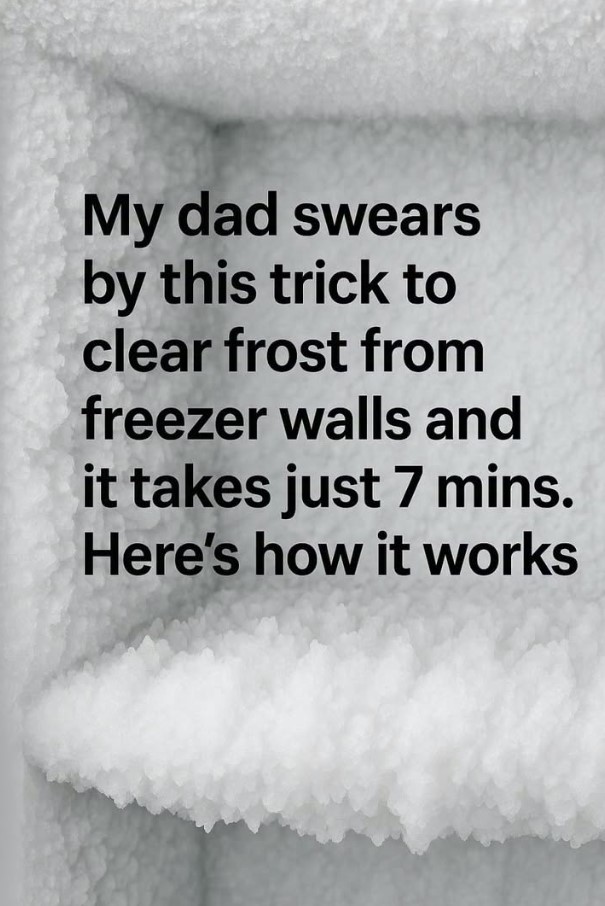
Have you ever opened your freezer only to find its walls coated with thick layers of frost? Not only does this make your freezer look neglected, but it also takes up valuable storage space, makes the appliance work harder, and can even increase your electricity bill. Many people assume that removing freezer frost is a long, messy chore that requires unplugging the appliance for hours. However, there are a few simple techniques that can speed up the process dramatically.
One household trick that has been passed down through generations promises to loosen stubborn frost in just a few minutes using everyday items you probably already have at home. While no method can magically eliminate heavy ice buildup instantly, the right approach can make defrosting much faster, easier, and safer. Here’s everything you need to know about why frost forms, how to remove it efficiently, and how to keep it from returning.
Why Does Frost Build Up in a Freezer?
Frost develops whenever warm, moist air enters your freezer. Every time you open the freezer door, humidity from the surrounding air sneaks inside. As that moisture touches the freezing interior surfaces, it quickly turns into ice.
Over time, these tiny layers accumulate into thick frost that covers the walls, shelves, and sometimes even your frozen food. The more often the freezer door is opened—or if it doesn’t seal tightly—the faster frost can build.
Other common causes include:
- Frequently leaving the freezer door open.
- Damaged or worn-out door gaskets.
- Storing hot food before it has cooled.
- Overloading the freezer, preventing proper air circulation.
- High humidity in your kitchen.
Understanding the cause of frost is the first step toward preventing excessive buildup.
Why You Shouldn’t Ignore Frost
A thin layer of frost isn’t usually a major concern, but once it becomes thick, it begins to affect your freezer’s performance.
Heavy frost can:
- Reduce available storage space.
- Force the compressor to work harder.
- Increase electricity consumption.
- Make drawers difficult to open.
- Cause uneven cooling.
- Shorten the lifespan of your appliance.
Regular maintenance helps your freezer operate more efficiently and can save money on energy costs over time.
The Popular Seven-Minute Defrosting Trick
One of the quickest ways to loosen frost involves using steam instead of scraping the ice manually.
Here’s the basic method:
First, unplug the freezer to ensure safety.
Remove all frozen food and place it in a cooler or insulated bag to keep it cold.
Next, fill a large bowl or baking dish with very hot water and carefully place it inside the freezer. Close the door for several minutes.
The trapped steam warms the icy surfaces, causing the frost to soften and detach much faster than if left to melt naturally.
After about seven minutes, you’ll often notice chunks of frost beginning to loosen from the walls. Depending on the thickness of the buildup, the entire process may still take longer, but the steam significantly speeds things up.
Removing the Ice Safely
Once the frost starts loosening, gently remove it using a plastic spatula or silicone scraper.
Avoid using:
- Knives
- Screwdrivers
- Metal scrapers
- Ice picks
Sharp tools can puncture the freezer lining or damage the hidden cooling coils, potentially leading to expensive repairs or even making the appliance unusable.
Instead, let the softened ice fall away naturally whenever possible.
Clean While the Freezer Is Empty
Defrosting provides the perfect opportunity to give your freezer a thorough cleaning.
Mix warm water with a little mild dish soap or white vinegar and wipe every surface, including:
- Shelves
- Drawers
- Door seals
- Interior walls
Dry everything completely before restarting the freezer. Moisture left behind can quickly become the first layer of new frost.
Check the Door Seal
Many frost problems actually begin with the freezer’s door gasket.
If the rubber seal is dirty, cracked, or loose, warm air constantly leaks inside, encouraging frost formation.
To test the seal:
Close the freezer door on a piece of paper.
Try pulling the paper out.
If it slides out easily, the seal may no longer be tight enough.
Cleaning the gasket regularly and replacing damaged seals can dramatically reduce frost buildup.
Smart Habits That Prevent Frost
Keeping frost under control often comes down to simple daily habits.
Try these tips:
- Open the freezer only when necessary.
- Close the door firmly every time.
- Let leftovers cool before freezing.
- Package food tightly to reduce moisture.
- Avoid blocking air vents.
- Organize items so you can find them quickly.
Small changes can make a noticeable difference over the course of a year.
Is It Safe to Speed Up Defrosting?
Yes—provided you use safe methods.
Steam from hot water is generally considered one of the safest ways to accelerate the process.
However, avoid using:
- Hair dryers near standing water.
- Heat guns.
- Open flames.
- Boiling water poured directly onto freezer walls.
Sudden temperature changes may crack plastic components, and electrical appliances should never be used around water unless specifically recommended by the manufacturer.
Always follow your freezer’s instruction manual whenever possible.
How Often Should You Defrost?
The answer depends on your appliance.
Modern frost-free freezers rarely require manual defrosting because they automatically remove excess frost during normal operation.
Traditional manual-defrost models usually benefit from cleaning whenever frost reaches about one-quarter of an inch (roughly 6 millimeters) thick.
For many households, this means defrosting once or twice a year, although humid climates may require more frequent maintenance.
Extra Tips for Better Freezer Performance
Besides preventing frost, these habits can help your freezer work more efficiently:
- Keep it around three-quarters full for better temperature stability.
- Label frozen foods with dates.
- Rotate older items to the front.
- Vacuum dust from the condenser coils if your model allows.
- Avoid placing the freezer next to ovens or direct sunlight.
These simple maintenance steps can improve performance and extend the life of your appliance.
Common Defrosting Mistakes
Many people accidentally make the job harder than it needs to be.
Some common mistakes include:
- Chipping away at ice with metal tools.
- Forgetting to unplug the freezer.
- Leaving food on the counter for too long.
- Restarting the freezer before it is completely dry.
- Ignoring worn door seals.
Avoiding these errors helps ensure both safety and better long-term performance.
The Bottom Line
The simple hot-water steam method has earned its popularity because it makes one of the least enjoyable household chores much quicker. While it may not completely eliminate thick frost in exactly seven minutes, it can dramatically loosen stubborn ice and reduce the amount of scraping required.
Combined with regular maintenance, careful cleaning, and good freezer habits, this easy trick can help your appliance run more efficiently, preserve valuable storage space, and lower energy consumption. Sometimes the best household solutions aren’t complicated at all—they simply rely on understanding how your appliances work and giving them a little routine care before small problems become big ones.
Conclusion :
A freezer covered in thick frost is more than just an inconvenience—it can reduce storage space, force your appliance to work harder, increase electricity consumption, and make everyday use far less efficient. Fortunately, keeping frost under control doesn’t require expensive products or hours of labor. Simple techniques like using hot water to create steam, cleaning the interior regularly, and checking that the door seal remains airtight can dramatically reduce the time and effort needed to maintain your freezer. When combined with smart habits such as allowing food to cool before freezing, minimizing how often the door is opened, and organizing frozen items for easy access, these small changes can make a noticeable difference in your freezer’s performance.
It’s also important to remember that while quick household tricks can make defrosting easier, patience and safety should always come first. Avoid using sharp metal tools or excessive heat, as these methods can damage the freezer’s interior or even create safety hazards. Instead, rely on gentle, proven techniques that protect your appliance while effectively removing frost. Regular maintenance not only helps preserve your freezer but can also extend its lifespan, saving you money on repairs and reducing unnecessary energy costs over the years.
In the end, the best approach is consistency. Rather than waiting until thick layers of ice have completely taken over the freezer walls, make defrosting and cleaning part of your regular home maintenance routine. Spending just a little time every few months can prevent larger problems from developing and ensure your freezer continues to keep food fresh and safe. Sometimes, the most effective household solutions are the simplest ones, and this easy defrosting trick is a perfect example of how a little practical knowledge can make everyday chores faster, easier, and far less stressful.