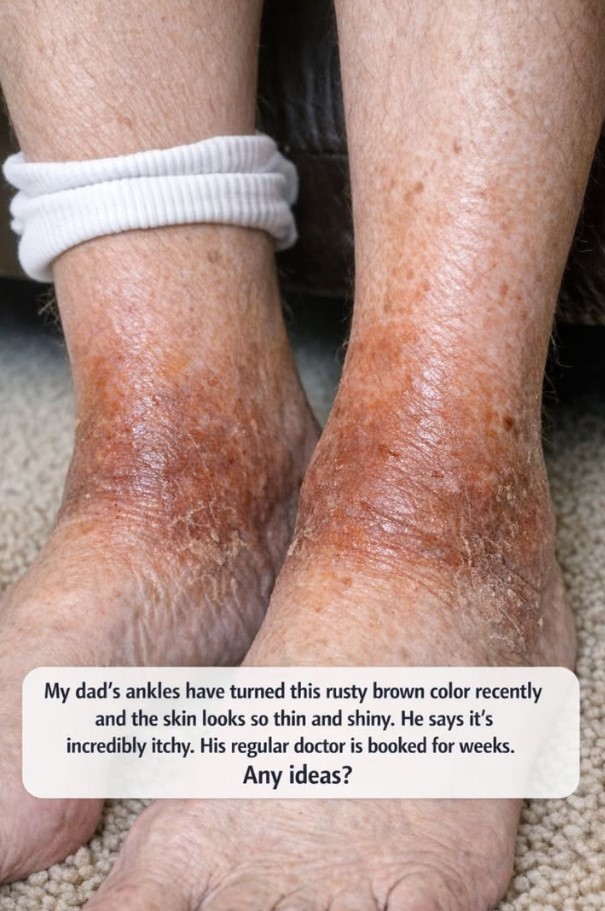
Noticing sudden changes in the appearance of the skin—especially when it involves discoloration, unusual texture, and persistent itching—can be worrying. When the ankles develop a rusty brown color, along with thin, shiny skin and intense itchiness, it’s natural to wonder what’s going on, especially if seeing a doctor isn’t immediately possible.
While skin changes like these can sometimes seem harmless at first, they are often the body’s way of signaling an underlying issue. The ankles and lower legs are particularly sensitive to circulation problems because gravity naturally causes blood and fluids to collect in this area. When something affects how blood flows or drains, visible changes can appear on the skin.
Understanding the possible causes can help you manage symptoms safely at home while also knowing when it’s important to seek medical attention.
What This Combination of Symptoms May Indicate
The combination of rusty brown discoloration, itching, and thin, shiny skin is often linked to circulation-related conditions rather than just a simple skin irritation.
1. Stasis Dermatitis (Poor Circulation in the Legs)
One of the most common explanations for these symptoms is a condition called stasis dermatitis, which happens when blood doesn’t flow properly through the veins in the legs.
When circulation is slow or impaired, blood can pool in the lower legs. This increases pressure in small blood vessels, causing fluid and blood cells to leak into surrounding tissue. Over time, this leads to:
- Brown or rust-colored skin
- Swelling in the ankles
- Itching and irritation
- Skin that becomes thin, shiny, or fragile
The brown color often comes from iron deposits left behind when red blood cells break down under the skin.
2. Hemosiderin Staining (Iron Deposits Under the Skin)
Closely related to circulation issues, hemosiderin staining is another common cause of this rusty-brown appearance. It happens when tiny blood vessels leak and leave behind iron from hemoglobin, which creates a brown or bronze color in the skin.
This discoloration often appears around the ankles and can gradually darken over time. It’s not just cosmetic—it usually points to an underlying circulation issue.
3. Skin Changes from Reduced Blood Flow
In some cases, poor circulation (such as vascular conditions) can also make the skin:
- Look shiny or tight
- Feel thinner than usual
- Become more fragile and prone to damage
These changes happen because the skin isn’t receiving enough oxygen and nutrients from healthy blood flow.
Why It Itches So Much
The intense itching can come from several factors:
- Fluid buildup irritating the skin
- Inflammation caused by poor circulation
- Dryness or damage to the skin barrier
Scratching may feel relieving at first, but it can actually make things worse by damaging already fragile skin and increasing the risk of infection.
What You Can Do at Home (Until You See a Doctor)
While this type of condition usually needs proper medical evaluation, there are a few safe steps that may help reduce discomfort:
1. Keep the Skin Moisturized
Use a gentle, fragrance-free moisturizer to reduce dryness and itching.
2. Avoid Scratching
Try to keep nails short and consider using a soft cloth instead of scratching directly.
3. Elevate the Legs
Raising the legs slightly when sitting or lying down can help improve circulation and reduce swelling.
4. Wear Comfortable Clothing
Avoid tight socks or anything that restricts blood flow around the ankles.
5. Stay Active (Gently)
Light walking can help improve blood circulation in the legs.
When You Should Be More Concerned
You should seek medical attention as soon as possible if you notice:
- Swelling that keeps getting worse
- Open sores or wounds on the ankles
- Severe pain or warmth in the area
- Rapid spreading of discoloration
- Signs of infection (redness, pus, fever)
These could indicate more serious complications that need prompt care.
Conclusion :
A rusty brown discoloration on the ankles combined with thin, shiny skin and persistent itching is often more than just a simple skin issue. In many cases, it points to underlying circulation problems such as stasis dermatitis or hemosiderin staining, where blood flow in the legs is not working as it should.
While the appearance can be concerning, understanding the cause helps take away some of the uncertainty. These changes usually develop gradually and are the result of ongoing pressure and fluid buildup in the lower legs. The itching and skin texture changes are part of the body’s response to that process.
In the meantime, gentle care—like moisturizing, avoiding irritation, and improving circulation through simple habits—can help manage discomfort. However, it’s important to remember that these symptoms should not be ignored long-term. Getting a proper diagnosis is essential to prevent the condition from worsening and to protect overall skin and vascular health.
In the end, your body is sending a signal that something needs attention. Taking it seriously and following up with a healthcare professional when possible is the best step toward relief and recovery.