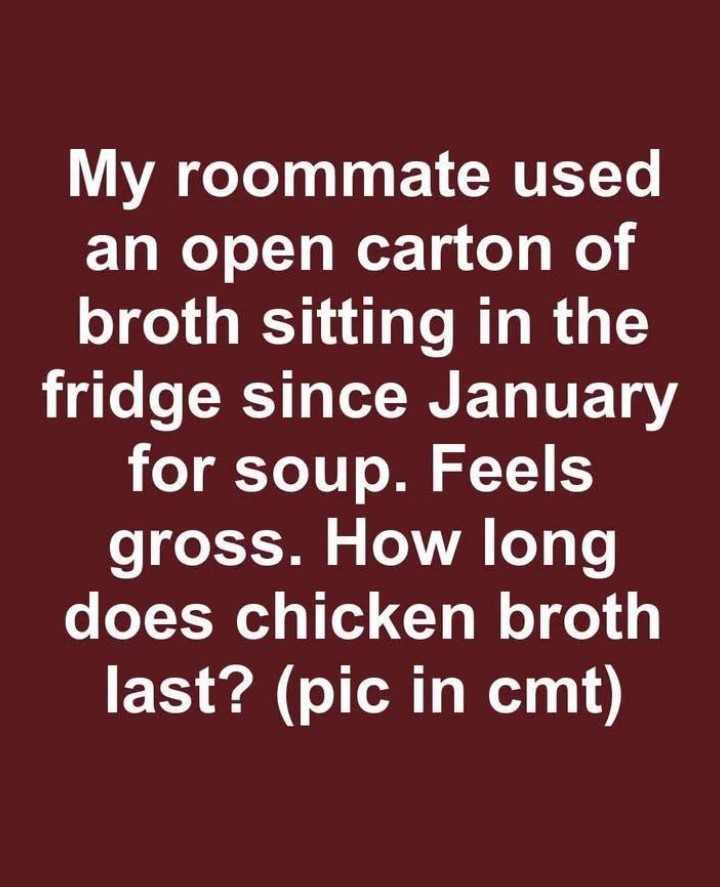
Finding an old carton of chicken broth tucked away in the refrigerator is something many people have experienced. Maybe it was opened for a recipe weeks ago, pushed to the back of the shelf, and forgotten. But what happens when someone decides to use that broth months later? Is it still safe, or is it a recipe for food poisoning?
Chicken broth is a kitchen staple that adds rich flavor to soups, sauces, casseroles, rice dishes, and countless other recipes. While unopened cartons often have a long shelf life, everything changes once the seal is broken. Refrigeration slows bacterial growth, but it doesn’t stop it entirely.
Knowing how long chicken broth stays fresh, how to recognize spoilage, and how to store it properly can help protect you and your family from foodborne illness. Here’s everything you need to know before pouring that forgotten carton into your next meal.
Does Chicken Broth Go Bad?
The simple answer is yes.
Like most foods containing moisture and nutrients, chicken broth eventually becomes a breeding ground for bacteria, mold, and yeast after it’s opened.
Even though refrigerated broth may still look normal, harmful microorganisms can multiply over time, especially if the broth has been repeatedly warmed, left out on the counter, or contaminated by dirty utensils.
Never assume broth is safe simply because it still smells acceptable.
How Long Does Chicken Broth Last?
The answer depends on whether the broth is unopened, opened, homemade, or frozen.
Unopened Shelf-Stable Chicken Broth
Commercially packaged broth stored in a sealed carton can usually remain safe until its printed “Best By” or expiration date when kept in a cool, dry pantry.
Many unopened cartons maintain good quality for several months.
However, always inspect the package before using it.
Discard it if the carton is:
- Swollen
- Leaking
- Rusted (for canned broth)
- Damaged
- Bulging
These can indicate bacterial growth or packaging failure.
Opened Chicken Broth
Once opened, chicken broth has a much shorter lifespan.
Generally, refrigerated broth should be used within:
- 3 to 4 days for maximum safety.
Some manufacturers may suggest up to 5 days, but food safety experts generally recommend consuming it within four days after opening.
If your broth has been sitting in the refrigerator for weeks—or especially months—it should be discarded, even if it appears normal.
Homemade Chicken Broth
Homemade broth contains no commercial preservatives, so it has an even shorter refrigerated life.
Most homemade broth stays fresh for:
- 3 to 4 days in the refrigerator.
If you won’t use it within that time, freezing is the safest option.
Can You Freeze Chicken Broth?
Absolutely.
Freezing is one of the best ways to extend the life of broth.
Properly frozen chicken broth maintains its best quality for about:
- 4 to 6 months
Although it may remain safe longer if continuously frozen, flavor gradually declines over time.
Freeze broth in:
- Freezer-safe containers
- Ice cube trays for small portions
- Freezer bags laid flat for easy storage
Leave a little room at the top because liquids expand as they freeze.
Why Refrigeration Isn’t Enough Forever
Many people mistakenly believe refrigerated foods remain safe indefinitely.
In reality, refrigerators only slow bacterial growth.
Certain bacteria, including Listeria monocytogenes, can continue growing even at refrigerator temperatures.
The longer broth sits after opening, the greater the chance that harmful bacteria may multiply to unsafe levels.
Signs Your Chicken Broth Has Gone Bad
Always inspect broth before cooking with it.
Common warning signs include:
Sour or Unpleasant Odor
Fresh chicken broth has a mild savory aroma.
If it smells:
- Sour
- Fermented
- Rotten
- Sulfur-like
Throw it away immediately.
Mold
Any visible mold means the entire container should be discarded.
Never try to remove the mold and use the remaining liquid.
Microscopic mold roots may already be spread throughout the broth.
Bulging Container
If the carton or container appears swollen, internal gas may have been produced by bacteria.
Do not open or taste it.
Dispose of it carefully.
Cloudiness or Slime
Although broth naturally varies in appearance, excessive cloudiness, slimy texture, or unusual particles can indicate spoilage.
Strange Taste
Never taste broth to determine whether it’s safe.
If you’re uncertain, it’s much safer to throw it away.
What Happens If You Eat Spoiled Chicken Broth?
Consuming spoiled broth can lead to foodborne illness.
Symptoms may include:
- Nausea
- Vomiting
- Diarrhea
- Stomach cramps
- Fever
- Chills
- Fatigue
Symptoms often begin within hours but may sometimes take several days to appear depending on the organism involved.
Young children, older adults, pregnant women, and people with weakened immune systems face the greatest risk of severe illness.
Why Food Poisoning Can Be Serious
Although many cases resolve within a few days, food poisoning can occasionally lead to:
- Severe dehydration
- Hospitalization
- Bloodstream infections
- Kidney complications
If symptoms become severe or persistent, medical attention should be sought promptly.
Proper Storage Tips
To maximize freshness:
- Refrigerate broth immediately after opening.
- Keep refrigerator temperature at or below 40°F (4°C).
- Store broth in a tightly sealed container.
- Avoid leaving broth at room temperature for more than two hours (or one hour if temperatures exceed 90°F/32°C).
- Use clean utensils each time you scoop broth from the container.
Small habits greatly reduce contamination.
Label the Opening Date
One of the easiest ways to avoid confusion is writing the opening date directly on the carton.
A simple marker note such as:
“Opened: March 4”
makes it easy to know when it’s time to discard leftovers.
Can You Boil Old Broth to Make It Safe?
Unfortunately, no.
Boiling may kill many bacteria, but it cannot reliably destroy all toxins that certain bacteria leave behind.
If spoiled broth has developed bacterial toxins, heating it may not make it safe to consume.
When in doubt, throw it out.
Does Cooking Hide Spoilage?
Some people believe spoiled broth becomes safe once mixed into soup or sauce.
Unfortunately, cooking cannot reverse spoilage.
Strong seasonings may hide unpleasant flavors, but they do not eliminate dangerous contaminants.
Best Practices for Leftover Soup
Once you’ve prepared soup using fresh broth:
- Refrigerate leftovers within two hours.
- Divide large batches into shallow containers for faster cooling.
- Consume refrigerated soup within 3 to 4 days.
- Freeze portions you won’t eat soon.
Proper cooling helps reduce bacterial growth.
Common Food Safety Mistakes
Many households unknowingly make mistakes such as:
- Keeping broth “just in case.”
- Smelling food instead of checking storage time.
- Returning unused heated broth to the original carton.
- Leaving soup on the stove overnight.
- Using dirty spoons repeatedly.
Avoiding these habits greatly improves kitchen safety.
A Simple Rule to Remember
If you can’t remember when you opened the broth—and it’s been sitting in your refrigerator for what could be weeks—the safest decision is to discard it.
Replacing a carton of broth costs far less than dealing with food poisoning.
Conclusion :
Chicken broth is an incredibly versatile ingredient, but once it’s opened, the clock starts ticking. While unopened cartons can last for months in the pantry, opened broth should generally be used within three to four days when refrigerated. Keeping it longer significantly increases the risk of spoilage, even if the broth still looks or smells normal. Because harmful bacteria aren’t always visible, relying on appearance alone isn’t enough to determine safety.
Practicing good food storage habits is one of the simplest ways to protect yourself and your family. Label opened containers, refrigerate them promptly, freeze portions you won’t use within a few days, and never hesitate to throw away broth if you’re unsure how long it has been stored. In food safety, it’s always better to waste a small amount of broth than to risk a preventable case of foodborne illness. A little caution in the kitchen goes a long way toward keeping every meal both delicious and safe.