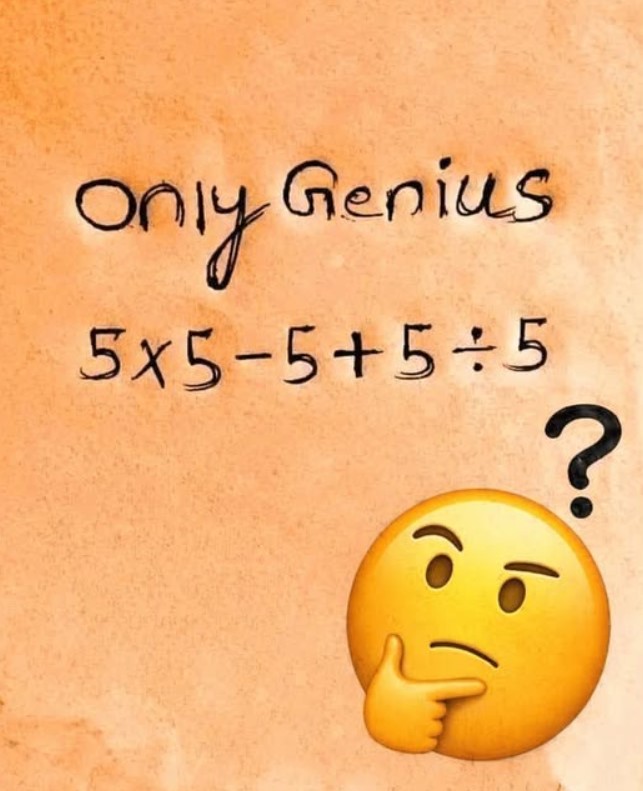
The internet is full of viral math puzzles that claim only geniuses can solve them. These challenges often spread rapidly across social media because they appear simple at first glance but become surprisingly confusing once you begin working through them.
The phrase “Only Geniuses Can Solve This Math Puzzle” is designed to grab attention, but these puzzles are rarely actual intelligence tests. Instead, they are exercises in observation, logic, concentration, and careful interpretation.
Many people get the wrong answer not because they are bad at math, but because they rush, overlook details, or misinterpret the rules hidden within the problem.
In this article, we will explore why these puzzles are so popular, what skills they actually test, and how to approach them correctly.
Why Viral Math Puzzles Are So Popular
These puzzles continue to attract millions of people because they are:
- Quick and easy to share
- Entertaining and challenging
- Great conversation starters
- Competitive by nature
- Designed to trick the brain
People naturally enjoy testing themselves and comparing answers with friends and family.
These Puzzles Are Not Really About Genius-Level Intelligence
Despite the title, solving a puzzle does not determine whether someone is a genius.
Success usually depends on:
- Careful observation
- Patience
- Logical thinking
- Following instructions
- Avoiding assumptions
Even highly intelligent people can make mistakes if they answer too quickly.
Common Tricks Used in Viral Math Puzzles
Many online puzzles use the same techniques to confuse people.
1. Ignoring the Order of Operations
This is one of the most common mistakes.
Remember the standard mathematical order:
- Parentheses
- Exponents
- Multiplication and division (from left to right)
- Addition and subtraction (from left to right)
Skipping these rules often leads to incorrect answers.
2. Changing Symbols Midway Through the Puzzle
Some puzzles replace pictures with numbers.
Examples include:
- Different shapes representing values
- Images that slightly change size
- Missing details in later equations
People often overlook these small changes.
3. Using Hidden Visual Clues
Visual math puzzles frequently contain tiny details that alter the answer.
Common examples include:
- Extra objects added later
- Different quantities inside images
- Changed colors or positions
Observation is just as important as calculation.
4. Creating Time Pressure
Titles such as:
- Only geniuses can solve this
- 95% of people fail
- Can you solve this in 10 seconds?
These phrases encourage rushing, which increases mistakes.
Skills These Puzzles Actually Test
These challenges help exercise several mental abilities.
Logical Reasoning
You learn to process information systematically.
Pattern Recognition
You identify relationships between numbers and symbols.
Attention to Detail
Small differences become easier to notice.
Concentration
You train yourself to stay focused on a problem.
Patience
You learn to slow down and think carefully.
How to Solve Math Puzzles More Effectively
If you want to improve your success rate, follow these steps.
Step 1: Slow Down
Avoid answering immediately.
Step 2: Read Every Part Carefully
Look at every number, symbol, and image.
Step 3: Follow Mathematical Rules
Apply the proper order of operations.
Step 4: Double-Check Your Work
Before deciding on an answer, review everything once more.
Step 5: Look for Hidden Changes
Compare all elements carefully.
Why People Often Get Different Answers
Disagreements happen because people:
- Interpret symbols differently
- Skip important details
- Ignore order of operations
- Rush under time pressure
The puzzle is often designed to create multiple wrong answers.
Benefits of Solving Brain Teasers Regularly
Practicing puzzles can help improve mental skills over time.
Potential benefits include:
- Better focus
- Improved memory
- Stronger problem-solving abilities
- Increased patience
- Enhanced logical thinking
While they are not official intelligence tests, they are excellent mental exercises.
Conclusion :
The phrase “Only Geniuses Can Solve This Math Puzzle” is more about entertainment than measuring intelligence. These viral challenges are designed to trick the brain by encouraging people to rush and overlook small details.
The real secret to solving them is not extraordinary intelligence but careful observation, patience, and logical thinking. Anyone can improve at these puzzles by slowing down, paying attention to details, and applying basic mathematical principles.
Ultimately, these brain teasers remind us that success often comes from thoughtful analysis rather than speed. The next time you see one online, take your time, enjoy the challenge, and remember that missing the answer does not say anything about your intelligence—it simply means the puzzle did its job.