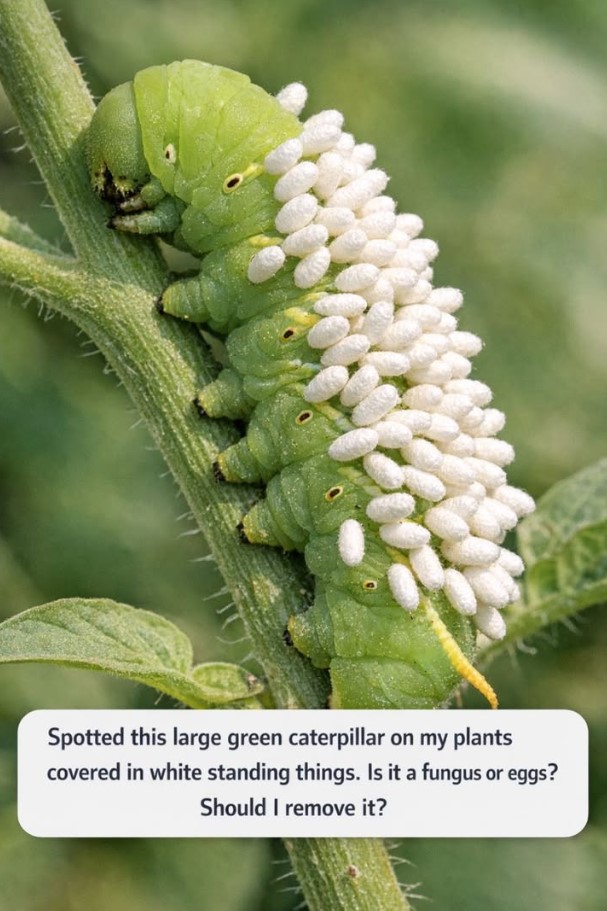
Finding a large green caterpillar in your garden can already be surprising—but seeing it covered in strange white structures makes it even more unsettling. At first glance, it might look like a disease, fungus, or some kind of infestation taking over the insect.
Naturally, the first questions are: What are those white things? Is it dangerous? And should you remove it from your plants?
The answer is fascinating—and a little disturbing—but also surprisingly good news for your garden.
What those white “spikes” actually are
Those white structures are not fungus and not typical eggs.
They are actually cocoons of parasitic wasps.
Here’s what happened:
- A tiny parasitic wasp laid its eggs inside the caterpillar
- The larvae developed inside, feeding on the caterpillar
- Once mature, they emerged and formed white cocoons on its body
This is a well-documented natural process. Experts explain that these white structures are cocoons spun by wasp larvae after feeding inside the caterpillar.
Why this happens
This is part of a natural form of biological pest control.
Parasitic wasps:
- Target caterpillars (especially pests like hornworms)
- Lay eggs inside them
- Eventually kill the host
While it may look alarming, this is actually one of nature’s most effective ways of controlling plant-damaging insects.
Caterpillars themselves are the larval stage of moths or butterflies, and many species can cause significant damage to garden plants.
Is the caterpillar still alive?
Usually, yes—but not for long.
At this stage:
- The caterpillar is weakened
- It may move slowly or stop eating
- It is essentially in the final stage of being parasitized
The white cocoons mean the process is already advanced.
Should you remove it?
In most cases: No, you should leave it
Here’s why:
- The caterpillar is already dying
- The wasps inside the cocoons will soon emerge
- These wasps will go on to control other pests in your garden
Removing it would interrupt this natural pest control cycle.
Experts often recommend leaving parasitized caterpillars in place so the beneficial insects can complete their life cycle.
Why this is actually good for your garden
It may not look pleasant, but this situation is helpful.
Many large green caterpillars (like hornworms or cabbage worms) can:
- Eat large amounts of leaves
- Damage vegetables and plants quickly
Parasitic wasps help reduce their population naturally, without chemicals.
Is it dangerous to touch?
Generally, no—but it’s best to avoid handling it.
- It’s not harmful in a typical sense
- But it can be unpleasant and messy
- You may disturb the cocoons
It’s best to simply leave it alone.
Common misconception: fungus or disease
Many people assume the white structures are:
- A fungal infection
- Mold
- Or eggs laid on the outside
In reality:
- The eggs were laid inside the caterpillar
- The white structures are pupae (cocoons), not eggs
This is why they appear firmly attached and evenly spaced.
What if there are many in your garden?
If you see multiple caterpillars like this, it usually means:
- Your garden has an active ecosystem
- Natural pest control is already happening
In most cases, this is a positive sign.
The bottom line
If you find a green caterpillar covered in white “spikes”:
- It is not fungus
- It is not a typical egg infestation
- It is a caterpillar parasitized by beneficial wasps
And the best thing to do is:
- Leave it alone
Conclusion :
While it may look strange or even alarming, a caterpillar covered in white cocoons is actually a powerful example of nature at work. What seems like a problem is, in reality, part of a natural balance that helps protect your plants.
Instead of reaching for pesticides or removing the insect, allowing this process to continue can benefit your entire garden. The emerging wasps will help control other pests, reducing damage in the long run.
Moments like this can feel unsettling, but they also offer a glimpse into how complex and efficient natural ecosystems really are. What looks unusual at first is often doing exactly what it’s supposed to do.