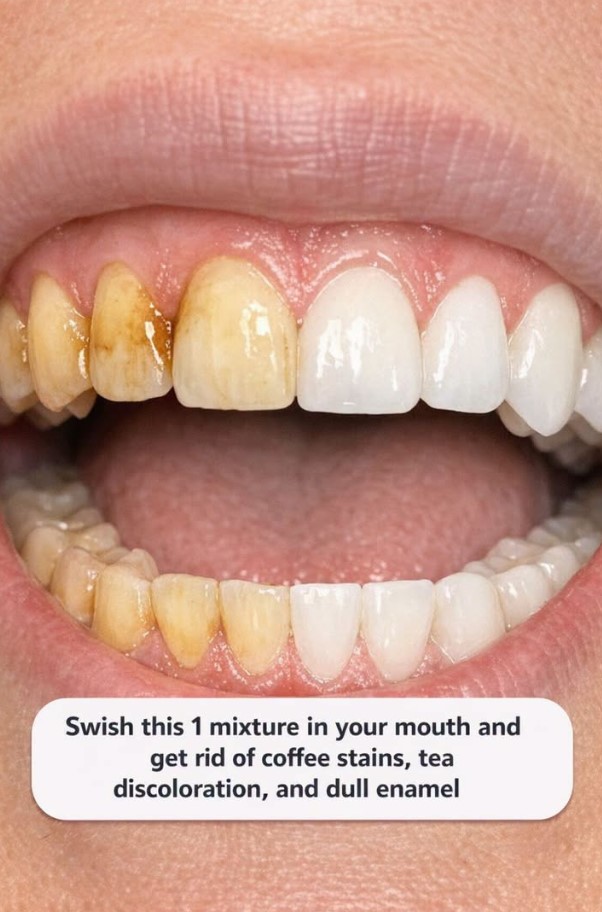
For millions of people around the world, starting the day without a cup of coffee or enjoying a relaxing cup of tea in the afternoon is almost unimaginable. While these beverages provide comfort, energy, and enjoyment, they also have one unfortunate side effect: they can gradually stain your teeth.
Over time, frequent consumption of coffee, tea, red wine, and certain dark-colored foods can leave behind stubborn surface stains that make teeth appear yellow, dull, or discolored. Although professional whitening treatments are highly effective, they can be expensive and sometimes cause temporary sensitivity.
This is why many people search for simple, affordable at-home remedies that can help maintain a brighter smile. One popular mixture combines baking soda and hydrogen peroxide, two ingredients that may help reduce surface discoloration when used carefully and in moderation.
However, it is important to understand that no homemade remedy is a miracle solution, and protecting your enamel should always remain the top priority.
Why Coffee and Tea Stain Your Teeth
Coffee and tea contain natural compounds called tannins. These compounds easily attach to the outer surface of your teeth, creating yellow or brown stains over time.
Several factors can make staining more noticeable:
- Drinking multiple cups every day
- Sipping beverages over long periods
- Smoking cigarettes
- Poor oral hygiene habits
- Natural enamel thinning that occurs with age
Even people who brush regularly may eventually notice some discoloration if they consume these beverages daily.
The Popular Two-Ingredient Mixture
Many people use a simple combination of:
- 1 teaspoon baking soda
- 2 teaspoons of 3% hydrogen peroxide
When mixed together, these ingredients create a paste-like solution that may help remove some external stains from the surface of the teeth.
Baking soda acts as a mild abrasive that gently polishes away certain surface stains, while hydrogen peroxide works as a mild bleaching agent that may help brighten the appearance of teeth.
How to Use the Mixture Safely
If you decide to try this method, follow these simple steps:
- Brush your teeth normally first.
- Mix the baking soda and hydrogen peroxide into a smooth paste.
- Swish the mixture around your mouth for about one minute or gently brush your teeth with it.
- Spit it out completely.
- Rinse your mouth thoroughly with water afterward.
Never swallow the mixture, and avoid using it every day.
Most dental professionals recommend limiting homemade whitening treatments to once or twice a week to avoid damaging enamel.
What Results Can You Expect?
It is important to have realistic expectations.
This mixture may help:
- Reduce mild surface stains
- Brighten the appearance of teeth
- Improve overall cleanliness
However, it will not:
- Instantly whiten severely stained teeth
- Repair damaged enamel
- Replace professional whitening procedures
- Change the natural color of your teeth permanently
Results vary from person to person depending on age, oral hygiene habits, genetics, and the severity of discoloration.
Common Mistakes to Avoid
Many people unintentionally damage their teeth by overusing whitening methods.
Avoid these common mistakes:
- Using the mixture every day
- Applying strong concentrations of hydrogen peroxide
- Brushing aggressively
- Leaving the mixture on your teeth for extended periods
- Combining several whitening methods at once
Excessive use can lead to increased tooth sensitivity and gradual enamel wear.
Other Ways to Keep Your Teeth Brighter
Simple daily habits can make a big difference over time.
Helpful practices include:
- Brushing twice daily with fluoride toothpaste
- Flossing every day
- Drinking water after coffee or tea
- Using a straw when possible
- Scheduling regular dental cleanings
- Waiting at least 30 minutes before brushing after consuming acidic beverages
Consistency often produces better long-term results than quick-fix solutions.
When to Consult a Dentist
Certain individuals should speak with a dentist before trying any whitening treatment.
This includes people who have:
- Sensitive teeth
- Gum disease
- Cavities
- Crowns or veneers
- Persistent tooth pain
A dentist can recommend safer options that suit your individual needs.
Conclusion :
Everyone wants a healthy, bright smile, but maintaining one is usually the result of consistent daily habits rather than miracle remedies. While simple mixtures like baking soda and hydrogen peroxide may help reduce minor surface stains, they should always be used carefully and in moderation. The goal should never be to achieve unrealistically white teeth at the expense of long-term dental health.
It is also important to remember that healthy enamel is extremely valuable because, unlike many other tissues in the body, it cannot naturally regenerate once it is significantly damaged. This is why protecting your enamel should always come before chasing rapid whitening results. A balanced approach that includes good oral hygiene, regular dental visits, and smart dietary habits will always produce better outcomes over time.
Coffee and tea do not have to become enemies in your daily routine. Instead of giving up the beverages you enjoy, focus on minimizing their effects through proper care and preventive habits. Small actions practiced consistently often lead to noticeable improvements.
Ultimately, a beautiful smile is not about perfection. It is about maintaining healthy teeth, protecting your enamel, and building habits that support your long-term oral health. A naturally healthy smile will always be more valuable than any temporary whitening trend.