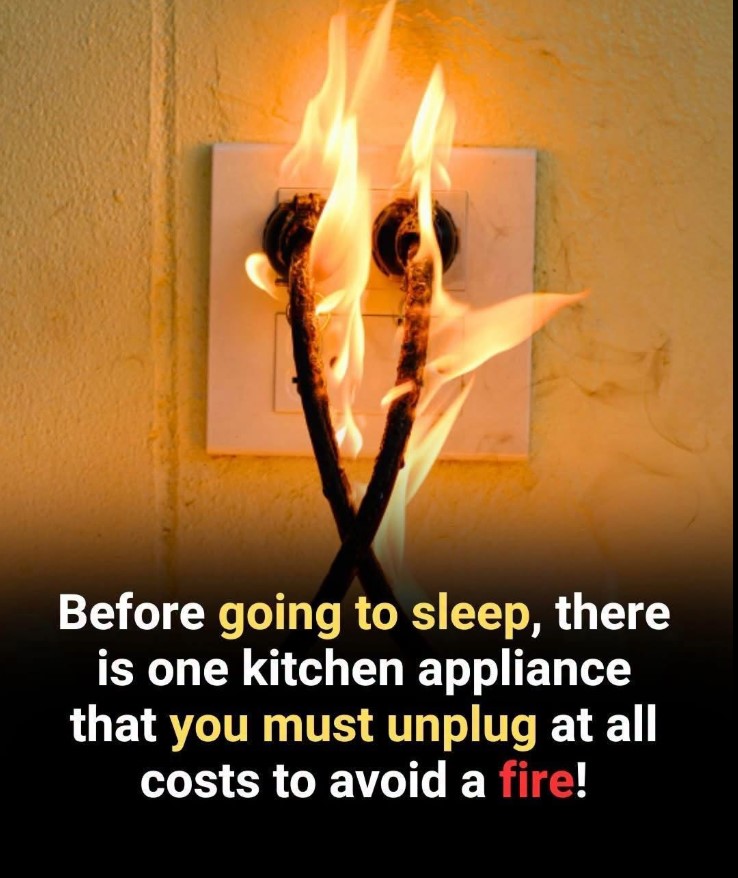
There is a simple habit that can make a home feel a little safer and more organized: unplugging certain appliances when they are not being used.
It may seem like a tiny task—pulling a plug from the wall before leaving the house or going to bed—but it can have practical benefits. Some household appliances continue to consume a small amount of electricity while plugged in, even when they appear to be switched off. Others contain heating elements or components that are better left completely disconnected when they are unattended.
The article that inspired this discussion describes unplugging as a simple form of mindful home care, particularly for people who want a quieter evening routine and greater peace of mind.
Of course, you don’t need to walk around your home unplugging every electronic device. Some equipment is specifically designed to remain connected to power, and constantly disconnecting certain devices can be inconvenient. The smarter approach is to focus on appliances where unplugging makes practical sense.
Here are five common household appliances worth paying particular attention to.
Why Unplugging Appliances Can Be a Good Habit
Before looking at individual appliances, it helps to understand why this simple habit matters.
Phantom Energy Can Add Up
Some electronics draw small amounts of electricity even when they aren’t actively operating. This is sometimes called standby power, phantom load, or vampire power.
A device may use energy to maintain a clock, remote-control function, display, memory, or standby mode.
The amount used by one appliance is usually small, but many devices operating this way throughout a home can contribute to unnecessary electricity consumption.
The source article highlights phantom load as one of the reasons people may want to disconnect selected appliances when they’re not needed.
It Can Add an Extra Layer of Fire Safety
Electrical problems can happen for many reasons, including damaged cords, faulty components, overheating, or malfunctioning appliances.
Unplugging an appliance removes its connection to the electrical supply.
That doesn’t eliminate every possible household fire risk, of course, but it can be a sensible precaution for certain heat-producing appliances when they’re not being used.
It Can Give You Peace of Mind
There’s also a psychological benefit.
If you’ve ever climbed into bed and suddenly wondered, “Did I leave the coffee maker on?”, you already know how a tiny uncertainty can keep you awake.
Creating a simple evening routine—checking certain appliances and disconnecting them—can eliminate that question before you turn out the lights.
1. Toasters
A toaster is one of the first appliances many homeowners should consider unplugging after use.
Toasters contain heating elements that become extremely hot during operation. They are designed to heat bread quickly and then switch off, but leaving an appliance connected when it isn’t needed provides little practical benefit.
Before unplugging your toaster, allow it to cool normally after use.
It’s also important to keep the area around the toaster free of paper towels, dishcloths, packaging, and other materials that could be affected by heat.
Don’t Forget the Crumbs
Unplugging is only one part of toaster safety.
Crumbs can accumulate inside the appliance over time. Follow the manufacturer’s cleaning instructions and empty the crumb tray when appropriate.
Never insert knives, forks, or other metal objects into a toaster, especially while it is connected to power.
A few seconds of maintenance can be much more valuable than trying to solve a problem after something goes wrong.
2. Coffee Makers
For many people, the coffee maker is one of the last appliances used in the morning and one of the easiest to forget about afterward.
Some modern coffee makers have automatic shutoff features, which are helpful. Nevertheless, if your machine doesn’t need to remain connected for a programmed function, unplugging it after use is a simple additional precaution.
This is particularly useful for older coffee makers.
Make It Part of Your Morning Routine
Rather than treating unplugging as a separate chore, connect it to something you already do.
For example:
Pour the last cup → rinse the pot → clean the area → unplug the coffee maker.
After a while, the sequence becomes automatic.
3. Electric Kettles
Electric kettles are another appliance that produces significant heat in a short period.
Many kettles automatically switch off once the water reaches boiling temperature, which is an important safety feature.
Even so, once you’ve finished using the kettle, unplugging it is a straightforward habit—especially if you’re leaving the kitchen for an extended period.
Keep the Kettle Dry and Clean
Pay attention to the condition of the cord and plug.
If you notice cracking, exposed wires, burn marks, unusual odors, or other signs of damage, stop using the appliance until it has been properly assessed or replaced.
Also keep electrical connections away from water.
The safest kitchen habits are usually the simplest ones.
4. Hair Straighteners and Curling Irons
Few household appliances deserve more attention when it comes to remembering to switch them off than styling tools.
Hair straighteners, curling irons, and similar devices can reach extremely high temperatures.
That heat is useful when styling hair, but it becomes a hazard if the appliance is accidentally left on against a flammable surface.
If you’ve ever driven away from home and suddenly wondered whether you remembered to switch off your straightener, you understand why this category deserves special attention.
Make “Off” the Last Step
When you’re finished styling your hair:
- Turn the appliance off.
- Disconnect it from the outlet.
- Place it somewhere heat-safe while it cools.
- Store it only once it has cooled completely.
Don’t wrap a hot styling tool tightly in a cord or put it immediately into a drawer or bag.
And if the cord is damaged, don’t continue using it simply because the appliance still appears to work.
5. Portable Heaters
Portable heaters deserve particular caution because they are specifically designed to produce substantial amounts of heat.
If you’re leaving the room, going to bed, or leaving the house, follow the manufacturer’s instructions regarding whether the heater should be switched off and disconnected.
Keep portable heaters away from curtains, bedding, furniture, clothing, paper, and other combustible materials.
They should also be placed on a stable, appropriate surface where they cannot easily be knocked over.
Never Ignore a Damaged Heater
If a heater produces an unusual smell, makes strange noises, shows signs of electrical damage, or repeatedly trips a circuit breaker, stop using it.
Electrical appliances that behave unexpectedly should not be treated as though the problem will simply disappear.
What About TVs, Computers, and Chargers?
Not every appliance needs to be unplugged every time you leave the room.
Modern electronics often use very little standby power, and some devices are designed to remain connected continuously.
For example, unplugging a television every night may be unnecessary if doing so interferes with updates, settings, recordings, or other functions.
The better approach is to consider how much standby power the device uses, whether it generates heat, whether it needs to remain connected, and what the manufacturer recommends.
Appliances You Shouldn’t Unplug Randomly
It’s tempting to interpret “unplug everything” as the safest strategy, but that’s not always practical.
Some devices are intended to stay connected.
Examples can include:
- Refrigerators and freezers
- Certain medical or monitoring equipment
- Security systems
- Wi-Fi equipment
- Devices that need scheduled functions
- Equipment that requires continuous power for proper operation
Before unplugging anything important, check the manufacturer’s instructions.
The goal isn’t to disconnect your entire home.
The goal is to make thoughtful choices about appliances that don’t need to remain energized.
A Simple Nighttime Unplugging Routine
You don’t have to make this complicated.
A short evening routine can be enough.
Before going to bed, walk through the kitchen and other relevant rooms.
Ask yourself:
What did I use today that doesn’t need to remain plugged in overnight?
You might check the:
- Toaster
- Coffee maker
- Electric kettle
- Hair styling tools
- Portable heater
Once you’ve checked them, you can stop thinking about them.
No second-guessing.
No getting out of bed to check.
No wondering whether you remembered.
Don’t Create a New Hazard While Unplugging
There is an important detail that is easy to overlook.
Unplug appliances by holding the plug, not by yanking the cord.
Pulling repeatedly on the cord can damage the wiring or connection.
If an outlet, plug, or cord feels unusually hot, looks burned, sparks, smells strange, or shows visible damage, don’t simply continue using it.
Electrical problems are not something to experiment with.
If you’re unsure about the condition of an outlet or appliance, have it evaluated by a qualified professional.
Power Strips Can Make the Routine Easier
If you have several small electronics in one area, a properly rated power strip with an appropriate switch can make disconnecting them easier.
Instead of reaching behind furniture for several individual plugs, you may be able to switch off the power to a group of devices.
However, never overload a power strip, and don’t use one as a substitute for proper electrical installation.
High-wattage heating appliances should generally be connected according to their manufacturer’s instructions rather than casually grouped together.
Unplugging Is About Habits, Not Fear
It’s important not to turn this simple household practice into a source of anxiety.
The purpose isn’t to become obsessed with checking plugs.
Instead, create a small routine that works for you.
The original article presents unplugging as a calm, proactive form of caring for your home rather than something that should create constant worry.
That’s an important distinction.
A useful safety habit should make life easier—not make you constantly nervous.
The Energy-Saving Side of the Habit
Unplugging selected appliances can also reduce standby electricity use.
The savings from one small appliance may be modest, but households often have numerous devices connected simultaneously.
Over time, reducing unnecessary standby consumption can be part of a broader energy-conscious lifestyle.
Other useful habits include:
- Turning lights off when rooms aren’t occupied
- Using energy-efficient bulbs
- Running full loads in dishwashers and washing machines
- Maintaining appropriate refrigerator temperatures
- Using programmable thermostats where appropriate
- Replacing inefficient appliances when they reach the end of their useful life
Unplugging is simply one small piece of a larger energy-saving strategy.
The Importance of Appliance Maintenance
Unplugging an appliance doesn’t replace maintenance.
A damaged appliance can remain dangerous whether it’s plugged in or not.
Regularly inspect cords and plugs for:
- Fraying
- Cracking
- Melted areas
- Discoloration
- Loose connections
- Burn marks
Also pay attention to changes in how an appliance behaves.
An appliance that suddenly begins overheating, making unusual sounds, producing an unusual smell, or repeatedly tripping a breaker deserves attention.
Make Your Home Feel More Peaceful
There is something satisfying about ending the day by putting the kitchen back in order.
Counters are clean.
Dishes are finished.
The lights are off.
The appliances that don’t need to remain connected are unplugged.
The house becomes quieter.
It’s not just about electricity or safety. It’s also about creating a sense of completion.
You’ve finished the day’s tasks, taken care of your surroundings, and can finally relax.
A Small Habit With Several Benefits
The beauty of unplugging is that it requires almost no effort.
It takes seconds.
Yet the habit can contribute to:
- Reduced standby energy consumption
- Better awareness of appliance safety
- Less worry about forgotten devices
- A more organized evening routine
- Greater attention to the condition of household equipment
None of these benefits requires turning your home into a technology-free zone.
The key is simply knowing which appliances deserve your attention.
Final Thoughts
The gentle art of unplugging is really about being intentional with the small things we do around our homes. The original article points to phantom electricity use, appliance safety, and the peace of mind that can come from knowing certain devices are completely disconnected when they’re no longer needed.
Toasters, coffee makers, electric kettles, hair styling tools, and portable heaters are all examples of appliances that deserve particular attention because of the heat they produce or the way they are used. Making a habit of switching them off and unplugging them when appropriate can be a simple addition to your daily routine.
At the same time, there is no need to unplug every electronic device in the house. Refrigerators, security equipment, networking devices, and other appliances may need continuous power. Always follow the manufacturer’s instructions and use common sense.
Ultimately, the best approach is simple rather than obsessive. Take a few moments at the end of the day to look around, disconnect what doesn’t need to remain powered, check for damaged cords or unusual appliance behavior, and then let the day come to an end.
Sometimes peace of mind comes from big changes. But sometimes, it’s as simple as pulling a plug, turning off the light, and knowing that you’ve taken one small step toward a safer, calmer home.