Preparing your home before leaving for a vacation usually involves a familiar checklist: locking doors, adjusting the thermostat, taking out the trash, and making sure appliances are turned off. Yet every so often, an unusual home tip starts making the rounds online and leaves homeowners wondering if they’ve been missing an important trick all along.
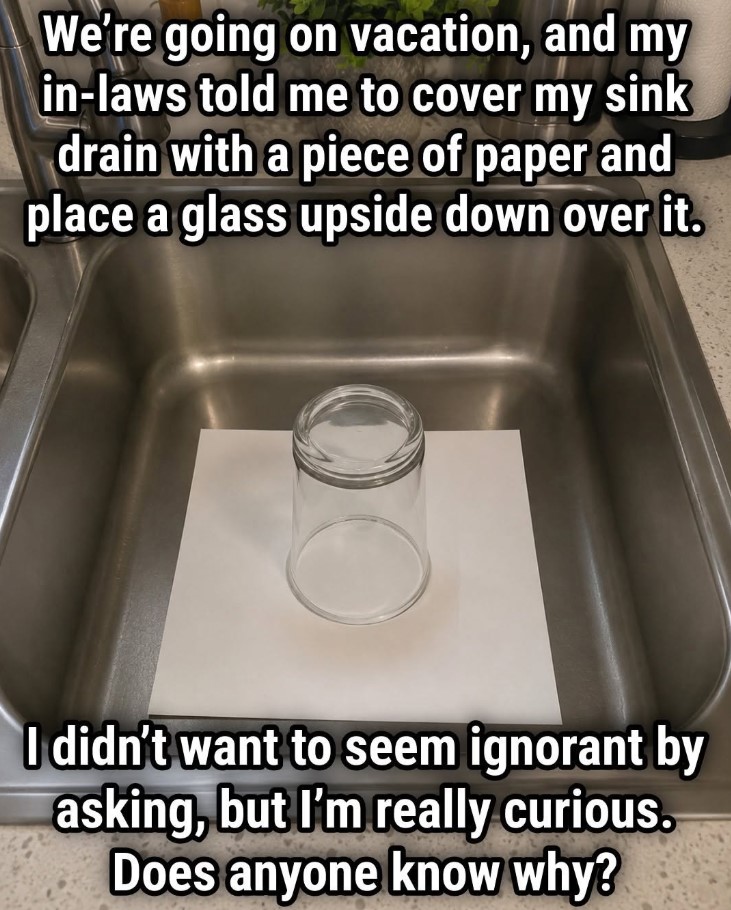
One such tip suggests covering your kitchen sink drain with a sheet of paper and placing an upside-down glass over it before heading out of town. At first glance, the idea seems odd, even a little unnecessary. After all, what could a simple drinking glass possibly do to protect your home?
As it turns out, this old-fashioned household hack has roots in practical home maintenance. While it isn’t a magical solution to every plumbing problem, it can serve a useful purpose under certain circumstances. More importantly, understanding why people recommend this trick—and what additional steps you should take before leaving—can help you return home to a fresher, cleaner, and more comfortable house.
Let’s take a closer look at where this advice comes from, how it works, and whether it’s something worth adding to your pre-vacation routine.
Where Did the Upside-Down Glass Trick Come From?
Long before social media and online home improvement forums, families passed household tips from one generation to the next. Many of these ideas were based on practical experience rather than formal instruction.
The upside-down glass method is one of those traditions. It became especially common in older homes where plumbing systems weren’t always airtight and kitchens were more likely to experience odors or unwanted pests entering through drain openings.
Although modern plumbing has improved significantly, many homeowners still use this trick because it’s inexpensive, easy to do, and offers an extra layer of protection.
Why Cover the Sink Drain Before Leaving?
Your kitchen sink drain connects directly to your home’s plumbing system.
Normally, a U-shaped pipe beneath the sink—called a P-trap—holds water that acts as a barrier between your home and the sewer system. This water prevents unpleasant gases from traveling back up through the drain.
However, if a home sits unused for an extended period, especially in warm or dry climates, some of that water can slowly evaporate. When the water level drops too low, odors may begin to enter the kitchen.
Covering the drain creates another physical barrier that can help reduce airflow and slow the movement of odors into the room.
Does the Paper Serve a Purpose?
Yes, although its role is fairly simple.
The sheet of paper acts as a clean surface between the sink and the glass while helping to cover the drain opening more completely.
It can also absorb small amounts of condensation and create a tighter seal beneath the glass.
Some people use paper towels instead of regular paper, while others prefer reusable silicone mats for the same purpose.
Why Place a Glass Upside Down?
The inverted glass helps trap air over the drain opening.
By reducing airflow, it becomes slightly more difficult for odors from the plumbing system to enter the room.
It also prevents insects from easily accessing the drain opening if they happen to travel through the plumbing system.
Although it isn’t completely airtight, it provides a surprisingly effective temporary barrier for short vacations.
Can This Help Keep Bugs Away?
One reason many homeowners continue using this trick is the possibility of discouraging insects.
Insects such as:
- Drain flies
- Small cockroaches
- Ants
- Gnats
can sometimes enter homes through plumbing systems, particularly if drains remain unused for several days.
Covering the drain won’t guarantee complete protection, but it may reduce the chance of pests emerging while you’re away.
Will It Prevent Bad Odors?
Sometimes.
If your plumbing is functioning properly and the P-trap still contains water, you probably won’t notice much difference.
However, if you’re planning a longer trip or your home has experienced occasional drain odors in the past, covering the drain can provide additional peace of mind.
It’s best viewed as a backup measure rather than the primary solution.
The Most Important Step: Start With a Clean Drain
Before covering the sink, make sure the drain itself is clean.
Food particles, grease, soap residue, and organic buildup can create unpleasant smells regardless of whether the drain is covered.
A simple cleaning routine before leaving can make a noticeable difference.
Try these steps:
- Flush the drain with hot water.
- Wash away grease using dish soap.
- Rinse thoroughly.
- Remove any visible debris from the drain strainer.
A clean drain is far less likely to produce odors while you’re away.
Should You Pour Anything Down the Drain?
Many homeowners like to flush the drain before vacation.
Warm water followed by a small amount of dish soap can help remove grease from the pipes.
Some people also pour a mixture of baking soda and vinegar into the drain, followed by hot water after several minutes.
This can help freshen the drain and loosen minor buildup without using harsh chemicals.
Other Smart Things to Do Before Leaving Home
While covering the drain may help, it’s only one part of preparing your home for an extended absence.
Consider adding these tasks to your vacation checklist:
- Empty indoor trash cans.
- Clean out the refrigerator.
- Wipe kitchen counters.
- Run the garbage disposal with ice and citrus peels if applicable.
- Check for dripping faucets.
- Turn off unnecessary appliances.
- Close and lock all windows.
- Adjust your thermostat.
- Water indoor plants or arrange for someone to do so.
- Stop mail or have a neighbor collect it.
Small preventive measures can help you avoid unpleasant surprises when you return.
Should You Cover Every Drain?
Some homeowners cover more than just the kitchen sink.
If you’ll be away for several weeks, you might also consider covering:
- Bathroom sinks
- Utility sinks
- Laundry room drains
- Floor drains
Again, this isn’t always necessary, but it can provide extra protection in homes where drains occasionally produce odors.
Common Myths About the Glass Trick
Myth 1: It Stops All Sewer Gas
Not entirely.
A properly functioning P-trap remains the primary defense against sewer gases.
Myth 2: It Eliminates Plumbing Problems
No.
If your plumbing system has underlying issues, covering the drain won’t fix them.
Myth 3: Every Home Needs This Hack
Not necessarily.
Many modern homes with well-maintained plumbing never experience drain odors.
The trick is simply an extra precaution.
Better Long-Term Ways to Prevent Drain Odors
If drain smells are a recurring issue, consider addressing the root cause rather than relying solely on temporary solutions.
Helpful habits include:
- Running water in infrequently used sinks.
- Cleaning drains regularly.
- Keeping garbage disposals clean.
- Repairing plumbing leaks promptly.
- Having persistent odor problems inspected by a licensed plumber.
These practices offer much more reliable long-term results.
Frequently Asked Questions
Is the upside-down glass trick safe?
Yes.
It poses no risk to your sink or plumbing and takes only a few seconds to set up.
Does it work in every home?
Results vary depending on the plumbing system, climate, and length of your trip.
Is paper necessary?
Not always.
Some people simply place the glass directly over the drain, while others use paper to create a better seal.
Can I use a bowl instead?
Certainly.
Any clean container that fully covers the drain opening can serve a similar purpose.
How long can the drain remain covered?
As long as you’re away.
Simply remove the cover when you return and run water through the drain before using the sink.
Final Thoughts
The upside-down glass over the sink drain may seem like an old-fashioned household trick, but it’s based on a simple idea: creating an extra barrier against odors and the occasional unwanted pest while your home sits empty. Although it isn’t a substitute for proper plumbing maintenance, it can be a quick, inexpensive precaution that takes only a moment to set up before leaving for vacation.
The real key to protecting your home, however, is a combination of good housekeeping and smart preparation. Cleaning your drains, taking out the trash, checking for plumbing issues, and following a thorough pre-trip checklist will do far more to keep your home fresh and problem-free than any single hack alone. When paired with these habits, the upside-down glass trick becomes one small but useful step toward returning home to a clean, comfortable, and worry-free space.