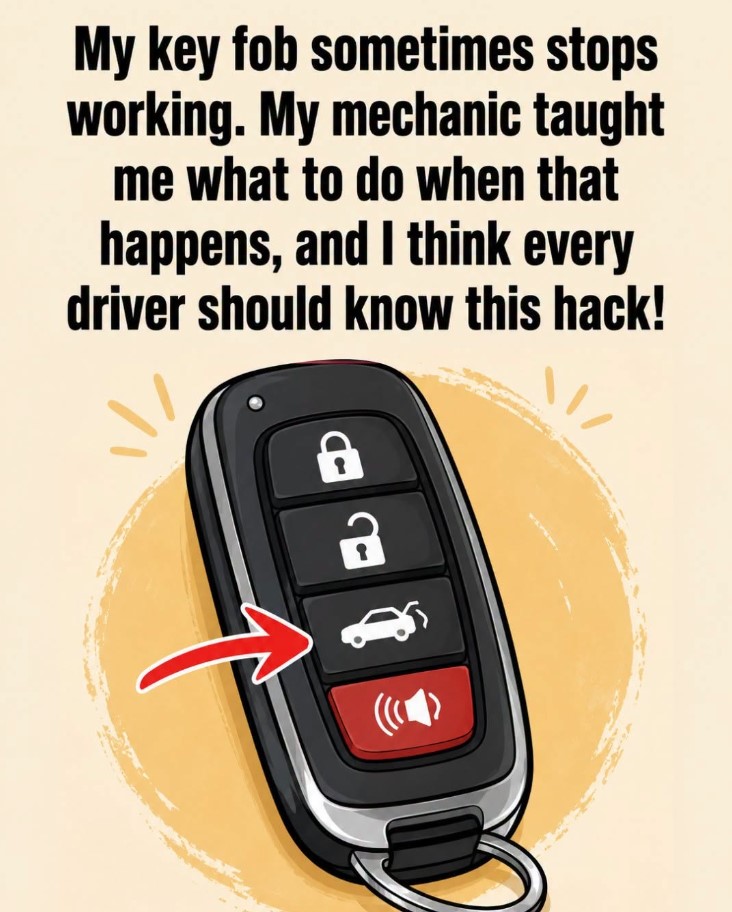
There are few modern-day annoyances quite as frustrating as walking toward your car, pressing the button on your key fob, and getting absolutely no response. You press it again. Nothing. You try another button. Still nothing. Suddenly, something as simple as unlocking your own car can feel like a major problem.
Before assuming that your vehicle has developed a serious electrical issue or that you’re completely locked out, take a moment to stay calm. A key fob that stops responding is often dealing with a relatively simple problem, and there are several practical things you can try before calling for roadside assistance or heading to a dealership.
Modern vehicles are designed with backup systems specifically for situations like this. Your key fob may contain a hidden mechanical key, and many push-button-start vehicles have an emergency recognition system that can still detect the fob even when its battery is weak or completely dead.
Understanding these features can save you time, money, and quite a bit of unnecessary frustration.
First, Don’t Panic When the Buttons Stop Working
The first thing to remember is that a nonresponsive key fob does not necessarily mean your car is broken.
The fob is a small electronic device that communicates wirelessly with the vehicle. Like any battery-powered gadget, it can eventually lose power, experience a temporary fault, or become less effective as the battery gets weaker.
You might notice that the range becomes shorter before the fob stops working altogether. Perhaps you normally unlock the car from several meters away, but suddenly you have to stand directly beside the door. That can be an early warning that the fob battery is running low.
Sometimes, however, the problem can appear suddenly.
Whatever the reason, there are a few simple checks worth trying.
Look for the Hidden Mechanical Key
One of the most useful features built into many modern key fobs is something you might not even realize is there: a traditional metal key.
Manufacturers know that electronic systems can fail, so many fobs include a small mechanical key hidden inside the plastic housing. Look carefully along the side or back of your fob for a small release button, slider, or latch.
Press or move the release mechanism and you may be able to pull out a slim metal key.
This key is designed to provide manual access to the vehicle if the electronic locking system cannot be used.
Depending on the vehicle, the keyhole may be visible on the driver’s door handle or hidden beneath a small plastic cover. If you don’t immediately see a keyhole, check the owner’s manual for the correct location and instructions for removing the cover.
This is one of those features that is easy to forget until the exact moment you need it.
Try the Fob Close to the Vehicle
If the buttons aren’t working from a distance, move closer to the vehicle and try again.
A weak battery can reduce the effective range of the fob. Instead of working from across a parking lot, it may only work when you’re standing directly beside the car.
If the doors unlock when you’re very close but not from farther away, that’s a useful clue that the fob battery may need replacement.
Avoid repeatedly pressing the buttons dozens of times. If the battery is already weak, repeated attempts aren’t likely to solve the underlying problem.
Instead, move closer, try once or twice, and then consider replacing the battery if the problem continues.
What About the Famous “Chin Trick”?
You may have heard the unusual suggestion that holding a key fob near your chin or head can sometimes increase its apparent range.
This trick has circulated for years, and there is some basic physics behind why people may notice a temporary improvement. The human body can interact with radio-frequency signals, and changing the position of the fob and your body can sometimes alter how the signal propagates.
However, it shouldn’t be treated as a guaranteed solution.
If your fob is barely working because its battery is almost completely depleted, changing its position may occasionally help you get one final successful unlock, but replacing the battery is the proper long-term solution.
So, if you’re standing in a parking lot desperately trying to unlock your car, holding the fob near your head may be worth trying as a temporary measure. Just don’t rely on it instead of fixing the underlying problem.
If You Can Get Inside but the Car Won’t Start
This is where many drivers become especially confused.
You may successfully unlock the vehicle using the hidden mechanical key, climb inside, press the start button—and discover that the engine still won’t start.
Don’t immediately assume the vehicle’s starter or electrical system has failed.
Many push-button-start vehicles are designed to recognize the key fob even when its battery is too weak to communicate normally.
The exact emergency starting procedure differs between manufacturers and models, but a common method is to hold the key fob directly against the vehicle’s start button while pressing it.
Some vehicles instead require the fob to be placed in a designated backup location, such as a slot, tray, cup holder, or specific area near the steering column.
The reason this can work is that many key fobs contain a passive electronic transponder or similar identification technology that can be detected by the vehicle without relying entirely on the fob’s normal remote-control battery.
Because procedures vary, check your vehicle owner’s manual for the exact instructions.
Replace the Key Fob Battery
If the fob repeatedly becomes weak or stops responding, replacing the battery is usually one of the first things worth investigating.
Most key fobs use a small coin-style battery, although the exact battery type varies between models.
Look at the existing battery for its identification number before purchasing a replacement. Your vehicle owner’s manual may also specify the correct battery.
Opening a key fob is generally straightforward, but don’t force the plastic casing apart. Many fobs have a small seam designed to separate with a coin or a small flat tool.
Before replacing anything, take note of how the old battery is positioned. The positive and negative sides need to be installed correctly.
Once the new battery is installed, test the buttons from close to the vehicle and then from a normal distance.
If the fob begins working again, you’ve likely solved the problem.
What If a New Battery Doesn’t Fix It?
A fresh battery isn’t a guarantee that the fob will work.
If the vehicle still doesn’t respond, several other possibilities exist.
The fob itself may have been damaged. Dropping it, exposing it to water, or repeatedly subjecting it to extreme temperatures can affect its electronics.
A button may also be worn out or physically damaged. If one button works while another doesn’t, the issue could be with the individual button rather than the battery.
In some situations, the vehicle may also have a problem with its receiver or another part of its keyless-entry system.
If you have a second key fob, test it.
This is an extremely useful troubleshooting step. If the spare fob works normally while the first one doesn’t, the problem is probably with the original fob. If neither fob works, the issue could be on the vehicle side.
Check Whether the Vehicle’s Battery Is the Problem
It’s easy to blame the key fob when the real problem is the car itself.
If the vehicle’s 12-volt battery is weak or completely discharged, electronic locking and starting functions may not behave normally.
Look for other symptoms.
Are the interior lights unusually dim? Do the dashboard lights fail to illuminate? Does the vehicle make clicking sounds when you attempt to start it? Does nothing electrical seem to work?
If several electrical functions have stopped working at once, the vehicle battery may deserve attention.
This is another reason not to immediately replace the key fob. A little troubleshooting can help determine whether the problem is with the small device in your hand or the much larger electrical system in your vehicle.
Keep Your Spare Key Somewhere Safe
One of the best ways to avoid a stressful key-fob situation is surprisingly simple: know where your spare key is before you need it.
Many people have a backup key but keep it buried somewhere in the house, inside a drawer they rarely open. That’s not especially helpful if the main key stops working while you’re away from home.
Keep your spare in a secure but accessible location, and make sure you know how it works.
If your vehicle uses a hidden mechanical key, learn how to remove it from the fob. If your vehicle has a special emergency starting procedure, familiarize yourself with it while everything is working normally.
It is much easier to learn these details in your driveway than in a dark parking lot when you’re already frustrated.
Protect Your Key Fob From Damage
Preventive care can also make a difference.
Try to avoid dropping your key fob or leaving it in places where it can be crushed or exposed to moisture.
Don’t leave it sitting in extreme heat for long periods, especially on a dashboard under direct sunlight.
Water resistance varies considerably from one key fob to another, so don’t assume that your particular model is waterproof simply because it looks sealed.
If you frequently carry your keys alongside other heavy objects, consider using a protective case designed for your specific fob.
A little protection can help prevent accidental damage to the electronics and buttons.
When You Should Call for Professional Help
Sometimes the simple tricks won’t solve the problem.
If you’ve replaced the battery, tried the spare key, followed the manufacturer’s emergency procedure, and still cannot unlock or start the vehicle, professional assistance may be necessary.
A locksmith who specializes in automotive keys may be able to diagnose or reprogram the fob. In other cases, a dealership or qualified automotive technician may need to inspect the vehicle’s keyless-entry or immobilizer system.
Avoid attempting complicated electrical repairs without knowing what you’re doing. Modern vehicles contain sophisticated security systems, and incorrect procedures can create additional problems.
Your owner’s manual should be the first source for model-specific emergency instructions.
Don’t Forget the Owner’s Manual
It may seem obvious, but the owner’s manual can be incredibly valuable in a key-fob emergency.
Manufacturers often provide detailed instructions explaining exactly what to do if the remote battery dies.
The manual may tell you where the hidden keyhole is located, where to place the fob for emergency starting, what type of replacement battery is required, and how to replace or reprogram the remote.
If you’ve misplaced the paper manual, many manufacturers provide digital versions through their official websites or vehicle apps.
Knowing where this information is before an emergency happens can save considerable time.
A Few Simple Habits Can Prevent a Future Headache
The best solution to a key-fob emergency is preparation.
Pay attention when the operating range begins to decrease. Keep a replacement battery available at home if your vehicle uses a common battery type. Know where your spare key is. Learn how to access the mechanical key hidden inside the fob.
And most importantly, know your vehicle’s emergency starting procedure.
These steps require only a few minutes of preparation but can make a huge difference when you’re standing beside a locked car.
Final Thoughts
A key fob that suddenly stops working can feel like a much bigger problem than it actually is. When the buttons stop responding, it’s easy to assume that you’ve been completely locked out or that an expensive repair is waiting around the corner.
In many cases, however, the solution is much simpler.
Start by staying calm and checking the basics. Look for the hidden mechanical key, try the fob closer to the vehicle, and consider whether the battery is simply running low. If you can get inside but the car won’t start, consult your owner’s manual for the emergency procedure, as many modern vehicles have a way to recognize the fob even when its remote battery is depleted.
If replacing the battery doesn’t solve the issue, test your spare key and pay attention to whether other electrical systems in the vehicle are functioning normally. Those clues can help determine whether the problem is the fob itself or the vehicle.
The biggest lesson is that modern cars often have backup systems built into them for exactly these situations. You may not notice those features during everyday driving, but when your key fob suddenly goes silent, knowing how they work can turn a stressful situation into a manageable one.
So the next time you press your key fob and nothing happens, don’t panic and don’t immediately assume the worst. Take a breath, work through the simple possibilities, and use the backup features your vehicle was designed to provide.
A little knowledge and a few minutes of preparation can make the difference between a frustrating roadside problem and a quick, easy fix.