Most people probably don’t spend much time thinking about the color of their urine. You use the bathroom, flush, and move on with your day.
But your urine can sometimes provide useful clues about what is happening inside your body.
A change from pale yellow to dark yellow may simply mean you haven’t had enough fluids. A bright yellow color can sometimes be related to vitamins. Certain foods and medications can also temporarily change the appearance of urine.
However, some unusual colors, particularly red, dark brown, or persistently cloudy urine, deserve more attention.
The important thing to remember is that urine color cannot diagnose a health condition by itself. The same color can have several different causes, and factors such as food, medications, hydration and exercise can all affect what you see.
Still, paying attention to changes can help you recognize when something may be worth discussing with a healthcare professional.
What is the normal color of urine?
Healthy urine can range from almost clear to pale yellow or light straw-colored.
The yellow color comes from pigments produced as the body breaks down substances and the kidneys filter waste from the blood. How much water you drink also has a major effect on the final appearance.
When you drink plenty of fluids, the urine becomes more diluted and generally looks lighter.
When you drink less, the urine becomes more concentrated and usually becomes a deeper yellow or amber color.
That means there isn’t necessarily one exact shade that everyone should have every time they use the bathroom.
A little variation throughout the day is completely normal.
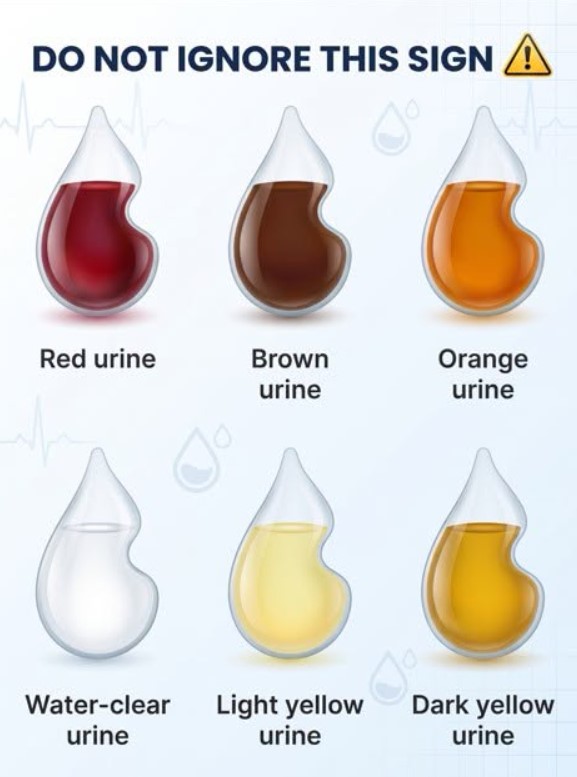
Clear urine
Completely clear urine can simply mean that you’re very well hydrated.
If you’ve recently been drinking a lot of water, especially over a short period, it isn’t surprising to see urine that looks almost transparent.
Occasional clear urine usually isn’t something to worry about.
However, consistently producing completely clear urine when you aren’t deliberately drinking large amounts of fluid may be worth discussing with a healthcare professional. Persistent excessive urination and thirst, for example, can sometimes be associated with underlying conditions that require evaluation.
Rather than trying to make your urine perfectly clear, the goal is generally to maintain adequate hydration for your individual needs.
Pale yellow or light straw-colored urine
This is generally the color people associate with normal, well-hydrated urine.
If your urine is a light yellow or straw shade and you don’t have other concerning symptoms, there is usually no reason to panic.
Your urine may become lighter after drinking water and darker later in the day depending on your fluid intake, activity level, temperature and other factors.
The color doesn’t have to remain exactly the same from morning until bedtime.
Dark yellow or amber urine
Dark yellow urine is commonly associated with concentrated urine and mild dehydration.
You may notice this after sleeping overnight, exercising, spending time outside in hot weather, sweating heavily, or simply going several hours without drinking enough fluid.
In many cases, increasing your fluid intake causes the urine to gradually become lighter again.
If the dark color continues despite appropriate hydration, however, don’t automatically assume dehydration is the explanation. Persistent changes can have other causes and may deserve medical evaluation.
Bright yellow urine
Bright or almost neon-yellow urine can look alarming, but it is often linked to something relatively simple.
Certain vitamins, particularly B-complex supplements, can make urine appear intensely yellow because excess water-soluble vitamins are eliminated through urine.
If you recently started taking a vitamin supplement and noticed a sudden change in color, the supplement may explain it.
That doesn’t mean every bright-yellow change should automatically be blamed on vitamins, though. Consider the timing, your fluid intake and whether you have any other symptoms.
Orange urine
Orange urine can have several possible explanations.
Dehydration can make urine more concentrated and give it an orange or amber appearance. Certain foods, supplements and medications can also change urine color. For example, some medicines used for urinary discomfort can produce a noticeable orange color.
In some circumstances, orange urine may be related to a liver or bile-duct problem, particularly if it occurs alongside other symptoms such as yellowing of the skin or eyes or unusually pale stools.
If orange urine doesn’t go away or you have additional symptoms, it’s a good reason to contact a healthcare professional rather than assuming you simply need more water.
Pink or red urine
Red or pink urine deserves more attention because it can sometimes indicate blood in the urine.
Blood can occur for several reasons, including urinary tract infections, kidney stones, certain kidney problems and other urinary-tract conditions. In some cases, more serious diseases can also cause blood in the urine.
But red urine doesn’t automatically mean there is blood.
Foods such as beets, blackberries and rhubarb can temporarily produce a pink or reddish color. Certain medications can do the same.
The problem is that it can be difficult to tell the difference just by looking.
For that reason, visible blood or unexplained pink, red or cola-colored urine should be discussed with a healthcare professional.
Brown or cola-colored urine
Dark brown urine can have several causes, ranging from significant dehydration to certain foods, medications and medical conditions.
Some liver and kidney disorders can cause urine to become dark brown. Certain medications can also produce this color. In addition, very intense exercise can sometimes be associated with muscle injury that causes dark, tea- or cola-colored urine.
If your urine is dark brown and does not quickly return toward its usual color after appropriate hydration, it shouldn’t simply be ignored.
The situation becomes particularly important if the change occurs together with weakness, severe muscle pain, abdominal pain, yellow skin or eyes, reduced urination or other unusual symptoms.
Blue or green urine
Blue or green urine can be surprising, but there are several possible explanations.
Food coloring and certain dyes can change urine color. Some medications can also make urine appear blue, green or blue-green.
In some cases, urinary tract infections involving particular bacteria can cause greenish urine.
Rare medical conditions can also produce unusual colors.
If you can clearly connect the color change to a food, supplement, medication or medical procedure and you otherwise feel well, it may be temporary.
If you don’t know why your urine has suddenly become blue or green, or the color persists, speak with a healthcare professional.
Cloudy or milky urine
Urine doesn’t always change color dramatically. Sometimes the most noticeable difference is that it becomes cloudy, hazy or milky.
Cloudy urine can have relatively harmless causes, but it may also occur with urinary tract infections or kidney stones.
If cloudy urine is accompanied by burning when urinating, frequent urination, pelvic discomfort, fever, back pain or an unusual smell, it is particularly important to seek medical advice.
A healthcare professional can determine whether testing is necessary.
What foods can change urine color?
Food can produce some surprisingly dramatic changes.
Beets, blackberries and rhubarb can give urine a pink or reddish appearance. Large amounts of certain foods can also contribute to darker shades.
Carrots and some vitamin supplements may produce orange or yellow-orange urine, while brightly colored food dyes can create unusual shades.
This is one reason it’s useful to think about what you have eaten recently before assuming a color change means something is wrong.
If the unusual color disappears after the food has passed through your system, that may explain the change.
Medications and supplements can change urine color too
Medications are another common reason urine looks different.
Some medicines can turn urine orange, red, blue, green or other unusual shades. Vitamin supplements, particularly B vitamins, can also produce very bright yellow urine.
If you notice a color change after beginning a new medication or supplement, check the medication information or ask your pharmacist or healthcare provider whether the change is an expected side effect.
Don’t stop a prescribed medication simply because it changes the color of your urine unless a healthcare professional tells you to do so.
When urine color may be a warning sign
A temporary change in urine color is often harmless.
However, certain changes deserve medical attention, especially when there is no obvious explanation.
Contact a healthcare professional if you notice:
- Red or pink urine that could contain blood
- Dark brown or cola-colored urine
- Persistent orange urine without an obvious explanation
- Cloudy urine accompanied by urinary symptoms
- An unusual color that continues for several days
- Blood clots in the urine
- Significant pain while urinating
- Severe pain in your back or side
- Fever or chills along with urinary changes
- Yellowing of the skin or whites of the eyes
- A major reduction in how much urine you produce
Blood in the urine is particularly important to have evaluated because you cannot reliably determine its cause simply by looking at the toilet bowl.
Don’t judge your health by urine color alone
One of the biggest mistakes people can make is treating a urine color chart like a diagnostic test.
Urine color can provide clues, but it doesn’t tell the whole story.
For example, dark urine may simply reflect dehydration. But persistent dark urine can have other explanations.
Likewise, red urine might come from beets, but it might also represent blood.
This is why other symptoms, medications, recent foods, exercise, hydration and medical history all matter.
If a healthcare professional is concerned about a urine change, they may recommend a urinalysis. A urine test can look for blood, signs of infection, protein and other substances that aren’t visible just by looking at the sample.
What can a urine test reveal?
A urinalysis is much more informative than simply looking at the color.
During testing, a urine sample can be examined visually and chemically, and sometimes under a microscope.
Testing can help identify signs of urinary tract problems, blood, abnormal protein levels, infection and other changes.
Depending on the symptoms, a healthcare professional may also recommend blood tests or additional examinations to investigate kidney, liver or other health concerns.
This is why persistent or unexplained changes shouldn’t be diagnosed at home based on color alone.
How to keep your urinary system healthy
There isn’t one magic trick for maintaining urinary health, but several everyday habits can help.
Drink enough fluids for your individual needs, particularly during hot weather or physical activity.
Don’t routinely ignore the urge to urinate.
Maintain a balanced diet and stay physically active.
Take medications exactly as directed.
And pay attention to changes that are unusual for you.
You don’t need to obsessively inspect every trip to the bathroom. The goal is simply to notice persistent changes and understand when they might deserve attention.
The bigger picture
Your urine is one of the body’s ways of getting rid of waste and excess fluid. Because its appearance changes with hydration, food, medications and certain health conditions, it can sometimes offer a useful glimpse into what’s happening inside your body.
But a single unusual color doesn’t automatically mean something is wrong.
Maybe you drank less water than usual.
Maybe you exercised hard.
Maybe you ate beets.
Maybe you took a vitamin supplement.
Or perhaps a medication changed the color.
On the other hand, unexplained blood, persistent dark brown urine, continuing unusual colors or changes accompanied by pain, fever, yellowing of the skin or other symptoms should not be dismissed.
Conclusion :
So, what does the color of your urine say about your health?
Sometimes, it simply tells you that you need to drink more fluids. Pale yellow urine is generally associated with normal hydration, while darker yellow or amber urine commonly occurs when urine is more concentrated.
Other colors can have equally simple explanations. Foods, vitamins, supplements, medications and food dyes can all change the appearance of urine temporarily.
But unusual colors can sometimes provide an important warning. Pink or red urine may indicate blood, while dark brown urine can have several possible causes that deserve attention if the change persists. Cloudy urine may occur with infections or kidney stones, and unusual blue or green urine can sometimes be related to medications, dyes or less common medical conditions.
The most important lesson is not to panic over one strange-looking bathroom visit—but also not to ignore persistent or unexplained changes.
Your urine can provide clues, but only proper medical evaluation can determine what those clues mean.
If a color change continues, appears alongside other symptoms, or makes you suspect there may be blood in your urine, contact a healthcare professional. A simple urine test can often provide much more useful information than color alone.
In other words, take a quick look, pay attention to changes, and listen to what your body is telling you—but don’t try to diagnose yourself from color alone.