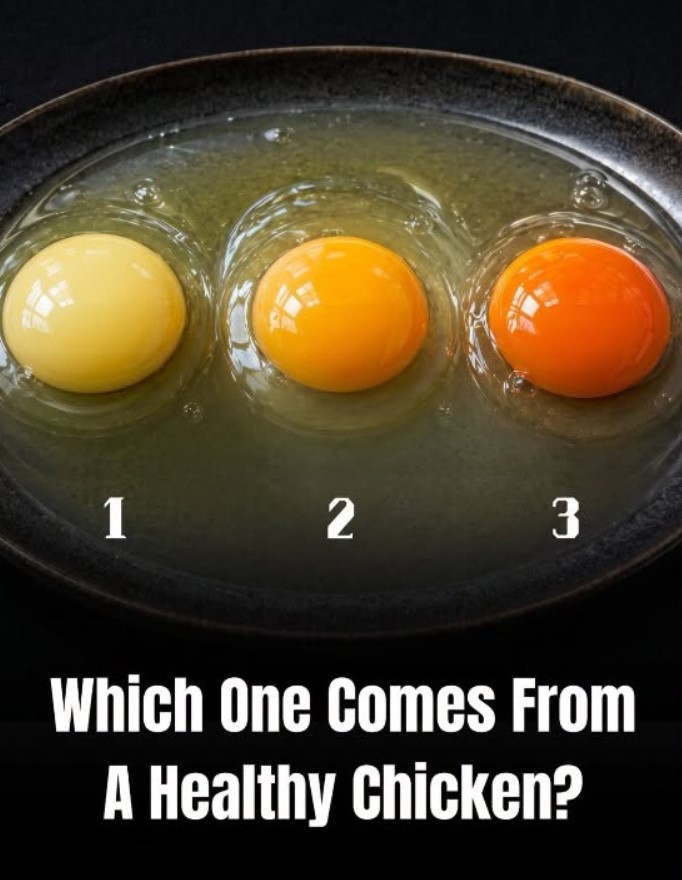
Have you ever cracked open two eggs and noticed that the yolks looked completely different?
One might have a pale yellow center, while another has a deep golden or almost orange yolk. When you see those colors side by side, it is natural to wonder whether one egg came from a healthier chicken.
For years, many people have assumed that the darker the yolk, the healthier and more nutritious the egg must be. A rich orange yolk can look especially appealing, and it is easy to associate that color with pasture-raised chickens, fresh food, and better farming practices.
But there is an important detail that often gets overlooked.
Yolk color is mostly a reflection of what the hen eats—not a simple health report card.
The pigments in a hen’s diet can dramatically change the color of the yolk. Foods containing carotenoids and other plant pigments can produce yellow, golden, or orange shades, while a diet containing fewer of these pigments may result in a much paler yolk.
That means a pale yolk can come from a perfectly healthy hen, while a beautiful orange yolk does not automatically prove that the chicken was healthier or better cared for.
So what does the color actually tell us?
What Actually Determines Egg Yolk Color?
The biggest influence is the hen’s diet.
Egg yolks naturally contain pigments called carotenoids. These are compounds found in many plants and plant-based foods. When hens consume feed containing more of these pigments, some of them are deposited in the developing yolk.
This can create noticeably darker colors.
For example, feed containing ingredients such as corn, alfalfa, grasses, leafy plants, and marigold petals can influence yolk pigmentation.
This explains why two eggs from healthy chickens can look completely different after being cracked open.
One hen might eat a diet containing plenty of pigment-rich ingredients and produce a deep golden yolk.
Another healthy hen might eat a diet containing fewer of those pigments and produce a pale yellow yolk.
Neither color automatically means that something is wrong.
The difference is largely dietary.
Does a Dark Orange Yolk Mean the Chicken Was Healthier?
Not necessarily.
This is one of the most common misunderstandings about eggs.
A deep orange yolk may certainly come from a hen that has access to a varied diet, including grasses and other plants. But producers can also influence yolk color through the feed given to laying hens.
In other words, yolk color can be influenced intentionally.
That makes it unreliable as a stand-alone measurement of chicken health.
Think of it this way: if you see a bright orange yolk, you can reasonably say that the hen’s diet contained pigments capable of producing that color.
You cannot automatically conclude that:
- The chicken was healthier
- The chicken lived outdoors
- The chicken received better care
- The egg contains more protein
- The egg is fresher
- The egg is automatically more nutritious
Those are separate questions.
The color gives you a clue about the diet, but it does not tell the whole story.
What Does a Pale Yellow Yolk Mean?
A pale yellow yolk can look less impressive, especially when compared with a rich orange yolk.
But there is no reason to assume that a pale yolk came from a sick or poorly nourished chicken.
A hen eating feed with fewer yellow and orange pigments can naturally produce a lighter yolk.
This is completely normal.
The University of Florida’s agricultural extension explains that yolk pigmentation is strongly connected to the pigments present in a hen’s feed. Different diets can therefore produce a broad range of yolk colors.
So if you crack an egg and see a pale yellow center, don’t automatically throw it away because you think it is inferior.
Color alone doesn’t tell you enough to make that judgment.
Why Do Free-Range Eggs Often Have Darker Yolks?
This is where things become a little more interesting.
Hens with access to outdoor areas may eat a more varied selection of plants, grasses, and other foods.
Those foods can contain carotenoids, which may contribute to a deeper yolk color.
That is one reason some eggs from hens with outdoor access can have noticeably golden or orange yolks.
But this doesn’t mean every free-range egg will have a dark yolk.
And it doesn’t mean every dark yolk came from a free-range chicken.
Feed formulation can also influence pigmentation.
So while yolk color may sometimes be consistent with a hen eating a more varied diet, it is still not enough information to determine how the hen was raised.
If the way a chicken was raised matters to you, look at the labeling and the producer’s information rather than trying to determine it from the yolk alone.
Does a Darker Yolk Have More Protein?
This is another common assumption.
People sometimes believe that a dark orange yolk must contain significantly more protein than a pale yellow yolk.
That isn’t a reliable conclusion.
Yolk color primarily reflects pigmentation, not a simple measurement of protein content.
An orange yolk doesn’t become a protein-rich food simply because it has a stronger color.
Eggs in general are an excellent source of high-quality protein, and they also provide several important vitamins and minerals.
The exact nutritional profile can vary depending on factors such as the hen’s diet and production system, but color by itself isn’t enough to tell you how nutritious the egg is.
Can Yolk Color Affect Nutritional Value?
There is an important distinction here.
A hen’s diet can influence more than just the appearance of the yolk.
Specially formulated diets can affect certain components of an egg, including some fatty acids and vitamins. But those differences should be evaluated based on the actual feeding system or nutritional information—not simply by looking at whether the yolk is yellow or orange.
Some carotenoids themselves are biologically interesting. Egg yolks contain compounds such as lutein and zeaxanthin, which are associated with eye health.
However, it would be misleading to say that every dark-orange yolk automatically provides a major health advantage.
Scientists continue to study how egg composition and dietary patterns affect human health, and yolk color alone is not a reliable shortcut for making those judgments.
What Should You Look for When Choosing Eggs?
If yolk color isn’t the best way to judge an egg, what should you pay attention to?
There are several things that are much more useful.
1. Check the Egg’s Condition
Avoid eggs with cracked or damaged shells.
A cracked shell can make it easier for bacteria to enter the egg, so intact shells are an important basic quality and safety consideration.
2. Pay Attention to Freshness
Freshness matters more than yolk color.
As an egg ages, its internal structure changes. A very fresh egg generally has a thicker white and a yolk that holds its shape well when cracked onto a plate.
An older egg may spread more easily because the egg white becomes thinner over time.
That doesn’t mean every older egg is unsafe, but proper storage and handling are important.
3. Consider How the Eggs Were Produced
If animal welfare or farming practices matter to you, look beyond the yolk.
Labels can provide information about how hens were housed and how the eggs were produced. Depending on where you live, you may see terms such as cage-free, free-range, pasture-raised, or organic.
Those terms have specific meanings that can vary by country and certification system, so reading the package information is more useful than guessing from yolk color.
4. Look at the Producer
Buying from a local farm or producer can sometimes give you more information about what the hens eat and how they are raised.
If you have questions, ask.
A farmer who can explain the hens’ feed, housing, and egg-handling practices can give you much more useful information than the color of a yolk can.
What Does the Shell Color Tell You?
Interestingly, the same principle applies to the color of the eggshell.
Brown eggs are not automatically healthier than white eggs.
Shell color is largely determined by the breed of the hen.
The same is true of yolk color in a different way: appearance can tell you something, but not necessarily what people assume it tells them.
A brown shell doesn’t mean a healthier chicken.
A white shell doesn’t mean a less healthy chicken.
And an orange yolk doesn’t automatically mean a healthier chicken.
These visual differences can be fascinating, but they shouldn’t be confused with a complete nutritional or health assessment.
Why Do People Prefer Orange Yolks?
There is also a psychological reason that dark yolks can seem more appealing.
Color influences how we perceive food.
A bright orange yolk can look richer, fresher, and more substantial than a pale yellow one. Because people often associate vibrant colors with nutritious fruits and vegetables, they may naturally assume the same thing about eggs.
This creates a powerful association:
Darker color = better food.
But that shortcut doesn’t always work.
The color is real, but the conclusion may not be.
A deep orange yolk may simply reflect a higher concentration of pigments in the hen’s diet.
Can Farmers Influence Yolk Color?
Yes.
The feed given to laying hens can influence yolk pigmentation.
This is one reason yolk color can vary even among commercially produced eggs.
Farmers and egg producers understand that consumers often prefer certain yolk colors, so feed can be formulated with ingredients that influence pigmentation.
This doesn’t necessarily mean the egg is fake or unsafe.
It simply means that appearance is not always a direct reflection of the hen’s living conditions.
A dark yolk may look completely natural while still being strongly influenced by the feed formulation.
That’s why judging the chicken’s health from the yolk alone is unreliable.
What About a Very Orange or Almost Red Yolk?
Extremely intense yolk colors can sometimes look surprising.
But unusual shades can still be related to the pigments present in the hen’s diet.
Certain plants and feed ingredients contain strong pigments that can produce deeper yellow, orange, or even reddish tones.
Again, the important point is not to panic based on color alone.
If an egg otherwise appears normal and has been handled and stored properly, the shade of the yolk isn’t by itself evidence that the chicken was unhealthy.
Does Yolk Color Affect Taste?
Not necessarily.
People sometimes claim that dark-orange yolks taste richer or more flavorful.
There can certainly be differences in taste between eggs, but yolk color alone doesn’t guarantee a particular flavor.
Factors such as the hen’s diet, freshness, and individual preferences can influence how an egg tastes.
So if you prefer orange yolks because you enjoy their appearance or the eggs you buy happen to taste good, that’s perfectly reasonable.
Just don’t assume that color alone proves superior quality.
The Health of the Chicken Is More Complicated Than the Color of an Egg
A chicken’s health depends on many factors.
Nutrition is important, but so are clean water, appropriate housing, hygiene, disease prevention, sufficient space, and proper overall care.
None of those things can be accurately measured by looking at an egg yolk.
A chicken receiving appropriate nutrition can lay a pale-yolked egg.
Another healthy chicken receiving a different diet can lay a bright orange egg.
And two hens living under completely different conditions could potentially produce eggs with similar-looking yolks.
That is why the question “Which yolk comes from the healthiest chicken?” doesn’t have a simple visual answer.
The honest answer is:
Any of them could.
So, Which Egg Comes From a Healthy Chicken?
If you place three eggs in front of someone—a pale yellow yolk, a golden yolk, and a deep orange yolk—you cannot reliably identify the healthiest chicken simply by looking at them.
The pale yolk isn’t automatically bad.
The golden yolk isn’t automatically better.
And the orange yolk isn’t automatically the winner.
Yolk color is primarily influenced by the hen’s diet, particularly the pigments present in the feed.
If you want to know more about the quality of an egg, consider the bigger picture:
- How were the hens fed?
- How were they housed?
- Were the eggs handled properly?
- How fresh are they?
- Is the shell intact?
- Who produced the eggs?
- What does the label actually say?
Those questions will tell you much more than the shade of the yolk.
A Simple Way to Think About Yolk Color
The next time you crack open an egg, imagine the yolk as a tiny record of the hen’s diet.
A pale yellow yolk tells you that the hen consumed fewer pigments that produce intense yellow and orange coloration.
A golden yolk suggests more of those pigments.
A deep orange yolk suggests even more pigmentation.
But none of those colors comes with a built-in label saying “healthy chicken.”
That’s the part many viral egg comparisons leave out.
The color is interesting.
The story behind it is even more interesting.
Final Thoughts
Egg yolk color is one of those everyday details that seems simple until you look a little closer.
A pale yellow yolk and a deep orange yolk can look dramatically different, but that difference doesn’t automatically tell you which chicken was healthier or which egg is more nutritious.
The main factor behind yolk color is the hen’s diet, especially the pigments found in the foods and feed she consumes. Ingredients such as corn, grasses, alfalfa, marigold petals, and other pigment-rich foods can influence whether the yolk appears pale, golden, or intensely orange.
So don’t judge an egg too quickly.
A beautiful orange yolk can certainly be appealing, but appearance isn’t everything. Likewise, a pale yolk shouldn’t be dismissed simply because it doesn’t have the dramatic color that social media often celebrates.
When choosing eggs, look beyond the yolk. Consider freshness, safe handling, the producer, the feed, and the farming practices that matter to you.
The next time you crack an egg and see a pale yellow center, don’t assume you’ve made a bad choice.
And when you find a gorgeous orange yolk, enjoy it—but remember that its color isn’t a health certificate.
The healthiest chicken cannot be identified simply by the color of the egg yolk.
Sometimes, the most important things about our food are the things we cannot see just by looking at them.