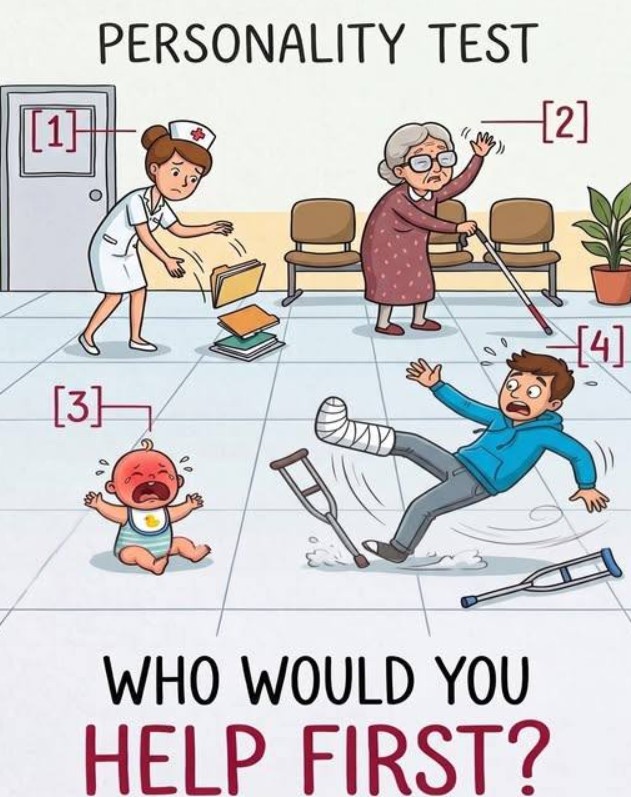
Personality choice tests and moral dilemma quizzes are a popular form of online content that challenges people to think about their values, instincts, and decision-making style. One of the most engaging formats asks a simple question: “Who would you help first?”
These scenarios usually present multiple people in need of help at the same time, forcing you to make a quick decision. While there is no correct answer, your choice is often interpreted as a reflection of your personality, priorities, and emotional instincts.
The purpose of these quizzes is not to judge right or wrong behavior, but to explore how different people react under pressure and how they prioritize responsibility, empathy, and logic.
WHY MORAL CHOICE QUIZZES ARE SO POPULAR
1. They reveal decision-making styles
These quizzes help people reflect on whether they are more emotional, logical, or balanced when making decisions. Even though the scenarios are hypothetical, they feel realistic enough to trigger genuine thought.
2. They are quick and engaging
Unlike long psychological tests, these quizzes can be completed in seconds, making them easy to enjoy and share online.
3. They create curiosity about personality
People enjoy discovering new things about themselves, especially when it relates to values, empathy, and behavior in difficult situations.
COMMON TYPES OF CHOICES IN “WHO WOULD YOU HELP FIRST” SCENARIOS
1. Helping a child first
Choosing a child often symbolizes strong empathy, protection, and emotional sensitivity. It may reflect a personality that prioritizes innocence and vulnerability.
People who choose this option are often seen as caring, protective, and family-oriented.
2. Helping an elderly person first
Selecting an elderly individual may represent respect, tradition, and a strong sense of responsibility. It often reflects a personality that values wisdom and experience.
This choice can also suggest patience and compassion toward those who may need more assistance.
3. Helping an injured adult first
Choosing an injured adult may indicate a practical and problem-solving mindset. It often reflects someone who focuses on urgency and logical decision-making.
These individuals may prioritize situations based on immediate risk rather than emotional attachment.
4. Helping a friend or familiar person first
If the scenario includes someone familiar, choosing them often reflects loyalty and strong personal bonds. It may show that relationships and trust are important factors in decision-making.
5. Helping a stranger first
Choosing a stranger can symbolize fairness, neutrality, and a strong sense of universal empathy. It may reflect a personality that does not prioritize based on familiarity.
WHAT THESE CHOICES SAY ABOUT PERSONALITY (IN THEORY)
1. Emotional decision-makers
People who choose based on emotional connection often prioritize feelings, relationships, and compassion over logic.
2. Logical decision-makers
Those who focus on urgency or practicality tend to evaluate situations based on consequences and risk levels.
3. Balanced thinkers
Some people naturally try to balance emotion and logic, considering both personal connection and objective need.
WHY THERE IS NO “RIGHT ANSWER”
1. Real-life situations are complex
In real emergencies, decisions are influenced by many factors such as safety, time, and available help.
2. Different values lead to different choices
Everyone has unique priorities shaped by culture, upbringing, and personal experience.
3. These quizzes are symbolic, not scientific
They are designed for entertainment and reflection, not psychological diagnosis.
HOW THESE QUIZZES HELP SELF-REFLECTION
1. Understanding personal priorities
They encourage people to think about what matters most to them in difficult situations.
2. Exploring empathy
These scenarios highlight how individuals respond to others in need.
3. Encouraging discussion
They often lead to conversations about morality, values, and human behavior.
Conclusion :
“Who would you help first?” style quizzes are simple yet powerful tools for exploring human behavior and decision-making. While they do not provide scientific personality analysis, they offer an interesting way to reflect on how people think and react in challenging situations.
Each choice in these scenarios can represent different values such as empathy, logic, loyalty, or fairness. However, real-life decisions are far more complex than any single question can capture.
These quizzes remain popular because they make people think about their instincts and priorities in a quick and engaging way. They also encourage meaningful reflection on how we respond to others when multiple needs arise at once.
In the end, there is no universally correct answer—only different perspectives shaped by personality, experience, and values.