
For centuries, people have been fascinated by the idea that our hands can reveal hidden aspects of our personality. Palmistry, often referred to as the art of reading the hand, has been practiced in many cultures around the world and continues to spark curiosity today. While modern science does not support palmistry as a method for predicting the future or determining personality traits, many people enjoy it as a fun and thought-provoking way to reflect on themselves.
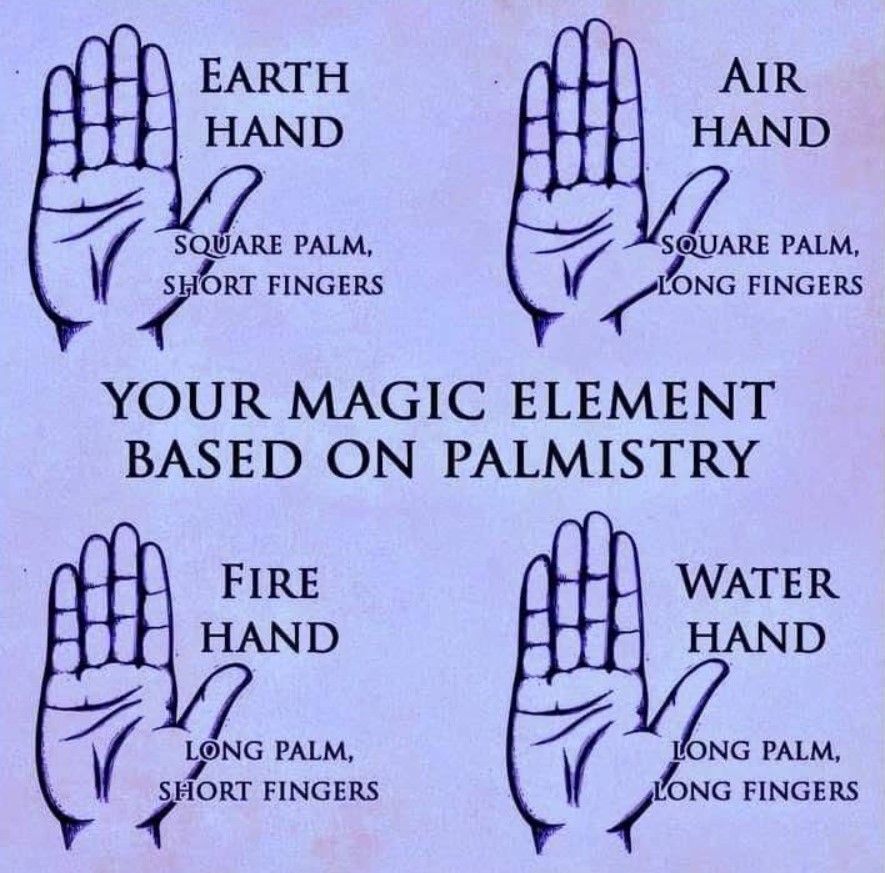
One popular palmistry-inspired concept is the idea of a personal “magic element.” According to traditional interpretations, the shape of your hand, the length of your fingers, and other visible characteristics may align with one of the four classical elements: Earth, Water, Fire, or Air. Each element is associated with different personality tendencies, strengths, and ways of interacting with the world.
Whether you are a believer in palmistry or simply enjoy personality quizzes and symbolic traditions, exploring these elemental associations can be an entertaining way to learn more about yourself.
The Four Classical Elements in Palmistry
Many traditional palmistry systems categorize hands into four elemental groups. Each group is believed to represent a different style of thinking, feeling, and acting.
The four elements are:
- Earth
- Water
- Fire
- Air
Each element carries its own symbolic meaning and is associated with distinct personality characteristics.
Earth Hands: The Practical Builders
People associated with the Earth element are often described as grounded, dependable, and realistic.
Traditional palmistry suggests that Earth hands typically have:
- Broad or square-shaped palms
- Shorter fingers
- Strong, sturdy appearance
Those connected to the Earth element are often viewed as:
- Hardworking
- Loyal
- Patient
- Reliable
- Organized
Earth personalities are often drawn to stability and practical solutions. They tend to value consistency and prefer actions over empty promises.
Water Hands: The Intuitive Dreamers
The Water element is commonly associated with emotions, creativity, and sensitivity.
Traditional descriptions of Water hands include:
- Longer palms
- Long, slender fingers
- Softer appearance
People connected with Water are often believed to be:
- Compassionate
- Imaginative
- Empathetic
- Artistic
- Emotionally aware
Water personalities may be deeply connected to their feelings and often possess strong intuition. They are frequently drawn toward creative pursuits and meaningful relationships.
Fire Hands: The Energetic Leaders
The Fire element symbolizes passion, confidence, and action.
Fire hands are traditionally characterized by:
- Long palms
- Shorter fingers
- Strong and dynamic appearance
Individuals associated with Fire are often described as:
- Ambitious
- Enthusiastic
- Courageous
- Charismatic
- Adventurous
According to palmistry traditions, Fire personalities enjoy taking initiative and are often energized by challenges and new experiences.
Air Hands: The Curious Thinkers
The Air element is linked to intellect, communication, and curiosity.
Traditional Air hands may feature:
- Square or rectangular palms
- Long fingers
- Visible joints or knuckles
Air personalities are commonly associated with:
- Analytical thinking
- Strong communication skills
- Curiosity
- Creativity
- Adaptability
People connected to Air are often lifelong learners who enjoy exploring ideas, solving problems, and engaging in stimulating conversations.
Why Element-Based Personality Tests Are So Popular
Personality quizzes based on elements continue to attract attention because they offer a simple and engaging way to reflect on personal characteristics.
People enjoy these quizzes because they:
- Encourage self-reflection
- Spark curiosity
- Are easy to understand
- Create opportunities for discussion
- Offer entertaining insights
Even when taken purely for fun, these personality frameworks can inspire people to think about their strengths and habits in new ways.
The Difference Between Entertainment and Science
It is important to recognize that palmistry is considered a cultural tradition and form of entertainment rather than a scientifically proven method of personality assessment.
Modern psychology relies on research-based tools and evidence to study personality traits. Palmistry, by contrast, is based on symbolic interpretations and historical traditions.
Many people enjoy palmistry because:
- It connects them with cultural history
- It encourages personal reflection
- It offers interesting symbolic meanings
- It serves as a fun social activity
Approaching it with curiosity rather than certainty allows people to enjoy the experience while maintaining a balanced perspective.
What Your Hands Can Actually Tell You
While palmistry cannot scientifically determine your personality, your hands can reveal certain real-world information.
For example, hands may reflect:
- Daily activities and hobbies
- Occupational habits
- Physical wear and tear
- Age-related changes
- General hand health
These observations are based on physical evidence rather than symbolic interpretation.
Using Personality Frameworks for Self-Reflection
Whether based on palmistry, personality quizzes, or other traditions, symbolic systems can sometimes encourage useful self-reflection.
Questions you might ask yourself include:
- What are my greatest strengths?
- How do I respond to challenges?
- What motivates me most?
- How do I communicate with others?
- What qualities would I like to improve?
The answers to these questions often provide more meaningful insights than any single personality category.
Conclusion :
The idea of discovering your magical element through palmistry is an intriguing blend of tradition, symbolism, and self-exploration. Whether your hand is associated with Earth, Water, Fire, or Air, each element represents a unique collection of characteristics that many people find relatable and interesting.
Although palmistry is not supported by scientific evidence as a way to determine personality or predict the future, it continues to captivate people because it encourages curiosity and reflection. Exploring elemental traits can be an enjoyable exercise that helps individuals think about their strengths, preferences, and personal growth.
Ultimately, the true value of these personality interpretations lies not in whether they are objectively accurate, but in the conversations and self-awareness they inspire. By reflecting on the qualities associated with different elements, we may gain a better understanding of ourselves and the ways we interact with the world around us.
Whether you identify most with the steady nature of Earth, the emotional depth of Water, the bold energy of Fire, or the intellectual curiosity of Air, the journey of self-discovery is always worth exploring. Sometimes the most meaningful insights come not from finding definitive answers, but from asking thoughtful questions about who we are and who we aspire to become.