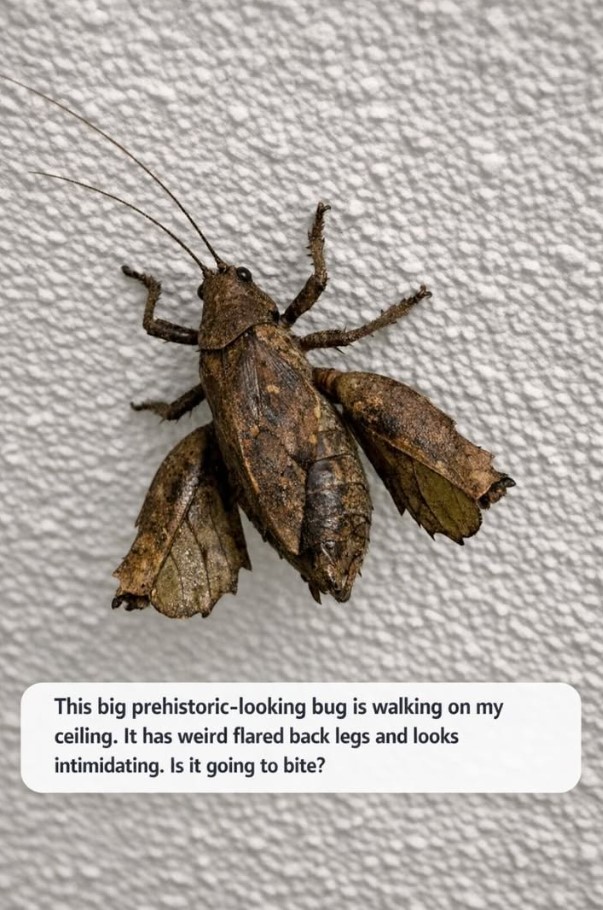
Discovering a large, unusual insect crawling across your ceiling can be an alarming experience. Its long legs, strange body shape, and prehistoric appearance can make it look intimidating, causing many people to immediately worry about whether it is dangerous.
One insect that frequently causes this reaction is the leaf-footed bug, an assassin bug, or another harmless outdoor species that occasionally wanders indoors. Their unusual appearance often makes them seem far more threatening than they actually are.
The good news is that most large insects found inside homes are not aggressive and rarely pose a serious threat to humans. Understanding how to identify them and knowing how to respond can help eliminate unnecessary fear.
In this article, we will explore what these prehistoric-looking insects might be, whether they are dangerous, and what you should do if you find one inside your home.
Why These Bugs Look So Intimidating
Many insects have evolved unusual body shapes that help them survive in nature.
Some characteristics that make them appear frightening include:
- Long legs
- Wide or flared back legs
- Large bodies
- Long antennae
- Slow, deliberate movements
Although these features may look scary, they are often defensive adaptations rather than signs of aggression.
One Common Suspect: Leaf-Footed Bugs
Leaf-footed bugs are frequently mistaken for dangerous insects because of their appearance.
How to Identify Them
Common features include:
- Brown or dark-colored bodies
- Flattened, leaf-like expansions on the back legs
- Long antennae
- Elongated body shape
They are often found near gardens and plants.
Are They Dangerous?
In most cases, no.
Leaf-footed bugs:
- Do not actively seek humans
- Are not aggressive
- Rarely bite people
- Prefer feeding on plants and fruits
They are more of a garden nuisance than a household threat.
Could It Be Another Type of Insect?
Several insects are commonly confused with each other.
Possibilities include:
Wheel Bugs
Large insects with unusual body structures.
Important note:
- They can bite if handled
- Usually avoid humans
- Beneficial because they eat pests
Stink Bugs
Another harmless visitor.
Characteristics:
- Shield-shaped bodies
- Strong odor when disturbed
- Slow-moving behavior
Assassin Bugs
Predatory insects that feed on other insects.
While useful outdoors, they should not be handled directly.
Why These Bugs End Up Inside Your House
Insects often enter homes accidentally.
Common reasons include:
- Open doors and windows
- Outdoor lights attracting them
- Seasonal temperature changes
- Searching for shelter
Most do not intend to stay indoors permanently.
What Should You Do If You Find One?
There is no need to panic.
Step 1: Stay Calm
Most large insects are harmless.
Step 2: Avoid Touching It Bare-Handed
Even harmless insects may defend themselves if trapped.
Step 3: Use a Cup and Paper Method
Carefully:
- Place a cup over the insect
- Slide paper underneath
- Carry it outside
Step 4: Seal Entry Points
Check for:
- Window gaps
- Door cracks
- Damaged screens
Preventing entry is easier than repeatedly removing insects.
How to Keep Large Bugs Out of Your Home
Simple preventive measures include:
- Install proper window screens
- Reduce outdoor lighting near entrances
- Seal small cracks and gaps
- Keep vegetation trimmed near walls
These steps can significantly reduce indoor insect visits.
When Should You Be Concerned?
Most single insects are harmless visitors.
However, consider investigating further if:
- Large numbers appear regularly
- You notice signs of infestation
- The insect repeatedly returns indoors
In those situations, professional pest control may help.
Why Appearance Can Be Misleading
Humans naturally associate unusual appearances with danger.
However, many insects use intimidating shapes simply as survival mechanisms.
Their appearance may help them:
- Scare predators
- Blend into surroundings
- Protect themselves without fighting
Looking scary does not automatically mean they are dangerous.
Conclusion :
Finding a large prehistoric-looking insect walking across your ceiling can certainly be startling, but in most cases, there is no reason to panic. Many of these insects are harmless outdoor species that accidentally find their way inside.
Rather than reacting with fear, the best approach is to identify the insect, avoid handling it directly, and safely relocate it outdoors whenever possible.
Understanding these insects helps replace fear with knowledge. Most are simply trying to survive and have no interest in bothering humans.
The next time you spot one of these intimidating-looking visitors, remember that appearance alone is not a reliable indicator of danger, and a calm, informed response is often all that is needed.