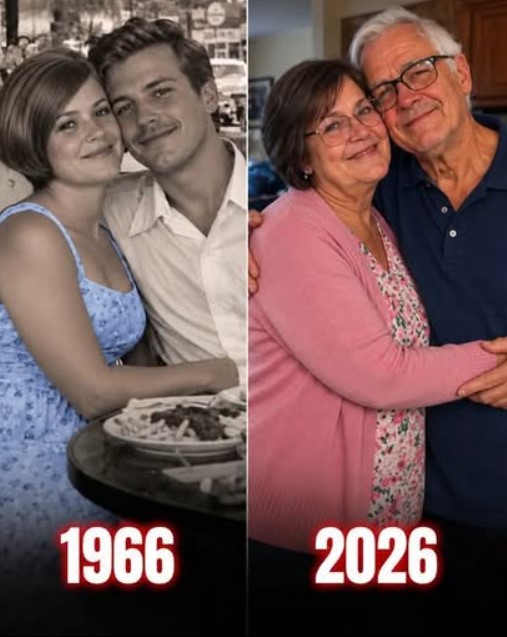
I buried the woman I had always believed was my wife after sixty years together.
A few days later, a lawyer I had never met appeared at my front door carrying a letter Irene had written before she died. What he told me next made me question everything I thought I knew about my life.
“Sir, according to the law, you and Irene were never actually married.”
I am eighty-six years old. I only recently learned how to use social media because I needed somewhere to tell this story. I have lived a long life, raised a family, watched my children grow into adults, and welcomed five grandchildren into the world. I thought I understood the most important things about my life.
But until that lawyer arrived, I had never imagined that the woman I loved for sixty years had been keeping a secret that could change the meaning of our entire marriage.
Irene had passed away only a few days earlier. I had sat beside her, holding her hand, until she took her final breath. I watched the woman who had shared nearly every important moment of my adult life slip away, and I felt as though the world had suddenly become an unfamiliar place.
For sixty years, I had called her my wife.
And for sixty years, I had believed that she was.
The Woman Who Changed My Life
I first met Irene when we were both in college. I can still remember the first time I saw her. There was something about her that caught my attention immediately, although I couldn’t have explained it if someone had asked me.
I simply knew I wanted her in my life.
Getting her to feel the same way took nearly a year. Irene was independent, thoughtful, and not easily impressed. She wasn’t the kind of woman who would agree to a date simply because a young man asked.
But eventually, she said yes.
That first date led to another, and then another. Before long, I couldn’t imagine my future without her.
Not long afterward, I enlisted in the Army and received orders to serve in Vietnam. The thought of leaving without making Irene my wife became unbearable.
So I proposed.
She accepted.
Our wedding was nothing extravagant. We were young and had very little money. There was no grand ballroom, no expensive reception, and no elaborate honeymoon.
But I remember what Irene wore as clearly as if I had seen her yesterday.
She had on a light white summer dress covered in tiny pale-blue flowers. She looked beautiful, and when she smiled at me, I felt like the luckiest man alive.
After the ceremony, we went to a small roadside diner and shared an ordinary meal. We sat across from each other, talking about the future and making plans we were far too young to understand fully.
I remember thinking that I had never felt richer.
A few days later, I left for Vietnam.
During those long months away, Irene and I wrote letters whenever we could. Receiving one from her could change my entire day. I would read her words repeatedly, sometimes so often that I nearly memorized every sentence.
Her letters reminded me that someone was waiting for me at home.
About a year later, I finally returned for good. The memory of Irene waiting to see me again remains one of the clearest of my life.
After that, we built the future we had dreamed about.
We found a home, raised three children, worked through the ordinary struggles of family life, and eventually watched our children have families of their own. Five grandchildren filled our lives with laughter, noise, and more happiness than I could ever have imagined when I was young.
Irene adored them. She spoiled them shamelessly, saved every photograph they gave her, and could turn even an ordinary family visit into something special.
Our life was not perfect. We had disagreements, difficult years, illnesses, and losses. We buried people we loved and experienced moments when neither of us knew what the future would bring.
But we faced those years together.
I knew how Irene liked her coffee. I knew which knee bothered her when the weather changed. I knew she pretended not to be frightened by thunderstorms, even though she hated them. I knew she cried during old movies and kept birthday cards in a wooden box in the bedroom closet.
I knew the little sounds she made when she slept. I knew the difference between her genuinely happy smile and the one she used when she was pretending not to be upset.
I knew the way her face lit up whenever one of our grandchildren entered the room.
I believed I knew everything there was to know about her.
This year, we celebrated what I thought was our sixtieth wedding anniversary.
Not long afterward, Irene died quietly while I sat beside her.
I held her hand until she was gone.
Even now, I sometimes expect to hear her moving around the house. Her chair remains where she left it. Her coffee mug is still in the cabinet. Her side of the bed looks impossibly empty.
Every ordinary object reminds me of the life we shared.
Then the lawyer arrived.
The Letter That Changed Everything
The knock at the door came one afternoon when I was still struggling to understand how to live in a house without Irene.
I opened it and found a man standing on the porch with a briefcase.
He introduced himself as Irene’s attorney.
I was confused. I had never heard her mention hiring an attorney, much less one whose name I didn’t recognize.
“Your wife retained my services several years ago,” he explained.
I stared at him.
“Why would my wife secretly hire an attorney?”
His expression changed slightly.
“Your wife?”
I assumed I had misunderstood his reaction.
“Yes,” I replied. “Irene. My wife.”
The man paused before answering.
“I’m sorry, sir. But legally, Irene was never your wife.”
For several seconds, I couldn’t speak.
“What did you just say?”
“You and Irene were never legally married.”
I told him that we had married sixty years earlier. I remembered the ceremony, the dress, the diner, and the promises we had made. I remembered the photographs and the life that followed.
How could a stranger tell me that none of it had been a legal marriage?
He looked uncomfortable.
“You truly never knew?”
“Knew what?”
Instead of answering, he removed a sealed envelope from his briefcase and held it toward me.
“Irene left very specific instructions about this letter. I was not allowed to give it to you until after her death.”
My hands began to tremble.
I took the envelope and immediately recognized Irene’s handwriting. My name was written across the front in the familiar letters I had seen on birthday cards, grocery lists, and countless little notes over the years.
That was what hurt most.
Whatever secret the envelope contained, Irene had known about it.
She had known for decades.
I opened it and began reading.
The first lines were enough to make me feel as though the floor had shifted beneath my feet.
By the time I reached the middle of the letter, my hands were shaking so badly that I could barely hold the pages.
I stood in the home we had shared for sixty years and whispered, then shouted, “God, Irene… who were you?”
I stared at her handwriting.
“Sixty years? You knew this for sixty years and never told me?”
The empty house gave me no answer.
I looked down at the remaining pages.
I had not even reached the part where Irene finally explained why.
The Letter Irene Left Behind
I unfolded the first page with both hands. Irene had chosen thick, cream-colored paper, the kind she always used when something mattered enough to be written by hand.
At the top were four words.
My dearest Samuel,
I stopped reading.
Samuel.
She had always called me that. Never simply Sam, never Mr. Harris. Whenever she used my full name, especially when we were young, there was something in her voice that made the rest of the world seem to disappear.
I swallowed hard and continued.
“If you are reading this, then I am gone.
“I wish I could say I am sorry for the pain these pages will cause you. But I know that sorry will never be enough. So I will not ask you to forgive me. Not yet. Maybe not ever.
“I only ask that you read until the end.”
I put the letter down and stared at the wall.
“Why, Irene?”
There was nobody there to answer.
I picked it up again.
She wrote that she should have told me the truth on the day we married. She should have told me before we had children, before we bought our first house, and before we celebrated our first anniversary.
Every year, she had promised herself she would tell me tomorrow.
Tomorrow became next week. Next week became next year. Eventually, sixty years passed.
I felt my hands begin to shake again.
I thought about everything I had known about Irene. Her habits, her fears, her favorite things, and all the small details that make two people feel they belong to one another.
I had believed there was nothing left about her that I didn’t know.
Then I read the next sentence.
“The ceremony you remember was real. The vows were real. The ring was real. My love for you was real.
“But the marriage license was not.”
I read those words three times.
They did not change.
I looked toward the doorway, almost expecting Irene to walk through it and explain that there had been some terrible misunderstanding.
She didn’t.
I lowered myself into her chair, the same chair where she had sat every morning for decades, and pressed the letter against my chest.
Then I continued.
“I know what you are thinking. You are wondering whether I ever loved you.
“Please believe me when I tell you that I did.
“I loved you before you left for Vietnam. I loved you when I waited for you to come home. I loved you when we welcomed our first child into the world. I loved you through every argument, every Christmas, every hospital visit, and every ordinary Tuesday.
“I loved you when you grew old. And I loved you most when I realized I was going to die before you.”
A tear landed on the page.
Then another.
I wiped them away angrily.
“No,” I whispered. “You don’t get to do this.”
But she wasn’t there.
So I continued reading.
The First Marriage I Never Knew About
“The reason we were never legally married began before you ever met me. If I had told you then, I was afraid you would have walked away.
“I was afraid of losing you.
“So I lied.”
There it was. The word I had been trying not to think.
Lied.
For sixty years.
I suddenly remembered the occasions when Irene had avoided paperwork or insisted that she would take care of certain documents herself. I had sometimes joked that she hated government offices.
I had never thought much about it.
Why would I? She was my wife.
At least, that was what I had believed.
I continued reading.
“When I was twenty-one, I made a decision that changed the rest of my life. I thought it was a small decision, and I believed I could bury it.
“I was wrong.
“Before you met me, I had been married once before.
“His name was Daniel.”
I whispered the name aloud.
Daniel.
It meant nothing to me at first. Then I remembered an old photograph I had seen decades earlier: a young Irene standing beside a dark-haired man.
When I asked her about it, she had laughed and said he was someone from a very long time ago.
I had accepted her answer and never asked again.
Now I wished I had.
Irene’s letter explained that Daniel had not been a good man. She had left him because she was afraid, although she had never told anyone the details of what she experienced.
She believed she had escaped him. She believed their marriage was over. Because he had disappeared and other people had told her he had left, she thought she was free to begin again.
But she had been wrong.
“Daniel was still legally my husband when I met you.”
I sat completely still.
Suddenly, the lawyer’s words made sense, although only partly.
If Irene had already been married, that explained why our marriage had not been legally valid. But it raised a dozen new questions.
Why had nobody stopped our wedding? Why had no one told me? Why had we been allowed to live as husband and wife, raise children, and build a family without either of us knowing the truth?
And where was Daniel?
I turned the page.
“Samuel, there is something else you don’t know about Daniel.
“He did not disappear.
“I knew exactly where he was.”
My hands went numb.
The house was silent except for the refrigerator humming in the kitchen. For some reason, even that ordinary sound frightened me.
I looked toward the hallway, feeling as though someone might be standing there.
Someone who had been waiting sixty years for me to discover the truth.
Then I read the next sentence.
“Daniel was the reason I could never legally marry you. But he was not the reason I stayed with you.”
I continued to the final part of the letter.
Irene explained that she had never stayed because she needed money or protection. She had stayed because I had become her home.
“You were the first man who ever made me feel safe. Somewhere along the way, I became so afraid of losing that safety that I convinced myself silence was the same thing as love.
“It wasn’t.
“Silence was selfish.
“And I am sorry.”
I folded the letter.
For the first time in sixty years, I wondered whether the woman I had loved had ever truly been mine.
Then another thought came to me.
What if she had been afraid of someone else? What if Daniel was still alive? And if he was, why had Irene’s attorney waited until after her death to tell me?
I looked at the clock. It was nearly six in the evening, and the sky outside had turned dark.
I sat alone in the house that had been our home for six decades.
For the first time, I felt like a stranger inside it.
The Box Hidden in Irene’s Closet
Later that evening, I heard a soft sound from the hallway.
It sounded like a drawer opening.
I froze.
There was nobody else in the house. At least, there shouldn’t have been.
I stood slowly and walked toward the bedroom. The hallway was empty, but the door to Irene’s closet was open. I was certain I had closed it earlier.
I stepped inside.
Her clothes were still hanging there: her blue sweater, her winter coat, and the dress she had worn to our granddaughter’s wedding.
Beneath them sat an old wooden box.
I had seen that box hundreds of times, but I had never opened it.
I don’t know why I reached for it that night. Perhaps after sixty years, I was finally tired of being the man who never asked questions.
I lifted the lid.
Inside were photographs, letters, a few newspaper clippings, and one small black-and-white photograph.
I turned it over.
On the back, in Irene’s handwriting, were four words.
Before Samuel knew me.
I looked at the photograph again.
The man standing beside Irene was someone I recognized from my own life. I knew his face. I knew his name.
And suddenly I understood why Irene had spent sixty years afraid that I might discover the truth.
Daniel had never been as far away as I thought.
Beneath the photographs, I found another envelope. My name was written on it, but the handwriting was not Irene’s. It belonged to the lawyer.
I opened it and began reading.
The lawyer explained that what had happened sixty years earlier was not simply a case of an invalid marriage. There had been legal complications and people who had made decisions they should never have made.
Then came a sentence that made my stomach tighten.
“Daniel was not Irene’s only secret.”
The letter explained that the man I remembered as Daniel had died in 1961, before Irene and I began our life together. But the circumstances surrounding his identity had been falsified, and the information Irene received had not been as straightforward as she believed.
Daniel had been involved in a criminal organization. Irene had witnessed something she was never supposed to see. She had been threatened, fled, and changed her name.
When she met me, she believed the danger was finally over.
Suddenly, the old locks on our doors no longer seemed strange. Neither did Irene’s habit of keeping the curtains closed at night or checking the driveway before opening the front door.
I remembered how she avoided talking about her childhood and always told our children never to give strangers personal information.
I had considered those habits little quirks.
They weren’t quirks.
They were fear.
The letter explained that Irene had worried that people connected to Daniel might still be searching for her. If they discovered her new identity and connected her to me, she feared our children could become targets.
She had convinced herself that keeping me ignorant was the best way to protect us.
But there was another name in the letter.
Thomas Vale.
I remembered hearing that name at a family gathering years earlier. When someone mentioned it, Irene had dropped a plate and gone pale. I had assumed she was unwell.
Now I understood why she had reacted that way.
Thomas Vale had been Daniel’s closest associate, and he had never been convicted of the crimes connected to him. He had disappeared, but he apparently believed Irene had taken evidence that could destroy him.
She had.
She had kept it hidden for decades, afraid that handing it to the authorities would expose me and our children to danger.
Instead, she waited until she was dying.
I sat quietly, trying to understand what this meant for our family.
Three children. Five grandchildren. Sixty years of memories.
Had all of us been living beside a secret that none of us understood?
I had no answers.
Then I found the final part of Irene’s letter.
What Irene Wanted Me to Understand
“Samuel,
“If you have reached this point, then you finally know the truth.
“I wish I could have told you when we were young. I wish I could have trusted that our love was strong enough to survive the truth.
“But I was afraid. And fear makes cowards of people who otherwise believe themselves brave.
“I did not lie about loving you. That was the only thing in my life that was never a lie.”
I began to cry.
Not quietly or gracefully, but the way an old man cries when he has spent a lifetime believing he understood his own story and suddenly realizes he never did.
Irene continued:
“You will probably wonder why I never told you that we weren’t legally married. The truth is simple. I was terrified that if I told you, you would leave.
“But there is another truth.
“You never needed a government document to become my husband.
“You became my husband the first night you sat beside me after I had a nightmare and stayed awake until morning.
“You became my husband when you held our first child.
“You became my husband when you worked two jobs so I could stay home with the children.
“You became my husband every time you came home, every time you chose me, and every time you forgave me.
“Every ordinary day we spent together was a marriage to me.”
My tears blurred the ink.
I pressed the letter against my chest and tried to breathe.
Then I noticed the final line.
“Please do not hate yourself for believing me. You were never foolish. You trusted the woman you loved. That is not something to be ashamed of.”
I sat there for a long time.
Then I remembered our wedding photograph.
I found the old album in the bedroom dresser. There we were, young and smiling, Irene in her white summer dress with tiny blue flowers and me standing beside her in my suit.
Neither of us looked afraid.
I turned the pages.
There were our children, our first Christmas, our first house, graduations, weddings, birthdays, holidays, hospital visits, funerals, and ordinary moments that would never have seemed important when they happened.
Sixty years of evidence that something had been real.
Perhaps the marriage certificate had been missing.
But the life wasn’t.
The life was there in every photograph, every scar, every gray hair, and every argument we had survived.
I was still staring at the album when the phone rang.
It was the lawyer.
“Mr. Harris, there is one thing I forgot to tell you.”
My heart tightened.
“What?”
“Irene left instructions that I should ask you something before giving you the final document.”
“What document?”
“The original evidence. The evidence she kept hidden for sixty years.”
I stood up.
“What evidence?”
“Your wife left it in a safe-deposit box.”
I repeated the words slowly.
“My wife.”
The lawyer was silent for a moment before replying, “Yes, sir.”
I asked what the evidence contained.
“Proof,” he said quietly.
“Proof of what?”
“Proof that the man responsible for destroying her first life was not dead.”
My blood went cold.
“He’s alive?”
The lawyer confirmed that the evidence pointed to a man Irene had known for many years. He told me that I had known the same man for almost thirty years. He had attended our children’s weddings, stood beside me at funerals, sent Christmas cards, and even visited Irene in the hospital before she died.
I could hardly believe what I was hearing.
“You’re telling me he knew her?”
“He knew everything.”
“And Irene knew he was alive?”
“Yes.”
“For how long?”
“Almost thirty years.”
I closed my eyes.
Thirty years of handshakes, conversations, and pretending. Thirty years during which a man connected to Irene’s hidden past had been part of our lives.
Suddenly, I understood why she had hired an attorney and left such careful instructions.
She knew that after her death, the truth could finally come out without placing her in immediate danger.
The lawyer told me that the safe-deposit box contained another letter, one Irene had specifically instructed him not to open.
“Would you like me to bring the box to you?” he asked.
I looked around our house.
The place where we had raised our children. The place where we had laughed until our stomachs hurt, sat through illnesses, and shared the quiet moments that make up a life.
The place where Irene had taken her final breath.
I realized I did not want another mystery.
I wanted the truth.
All of it, even if it destroyed the last comfortable belief I had about my life.
“Yes,” I told him. “Bring it.”
The Final Letter
The next morning, the lawyer returned carrying a small metal box.
He placed it on the kitchen table and slid a key toward me.
For sixty years, I had believed my greatest mystery was how lucky I had been to find Irene.
Now I understood that the real mystery was why she had chosen me, why she had trusted me, and why she had risked everything to build a life with me.
I put the key into the lock.
Before turning it, I noticed a piece of paper taped to the inside of the lid.
It was in Irene’s handwriting.
Only one sentence was written there.
“Samuel, if you are reading this, then you finally know who I was.”
I turned the key.
The lock clicked, and I lifted the lid.
Inside were photographs, a passport, several newspaper clippings, a small gold ring, and one final envelope.
On the front were the words:
For the man I chose.
I opened it.
There were only three pages.
The first began with my name.
“Samuel,
“If there is anything I want you to understand after everything you have learned, it is this:
“I did not spend sixty years pretending to be your wife.
“I spent sixty years trying to become worthy of being one.”
I stopped reading. My eyes filled with tears.
Then I continued to the final words.
“The law may say we were never married.
“Let it.
“The law was not there when you held my hand. It was not there when you waited for me at the hospital. It was not there when our children were born, when we buried our parents, or when we danced in the kitchen at seventy.
“It was not there when you kissed my forehead every night.
“And it was not there when I took my final breath.
“You were my husband.
“I was your wife.
“We had sixty years.
“And if I had been given the choice to live them all again, knowing exactly how they would end, I would still choose you.
“Every single time.”
I couldn’t continue.
I folded the letter and held it against my chest.
The lawyer stood quietly across from me. Neither of us spoke for a long time.
Eventually, I looked at him.
“Do you know what hurts the most?”
He shook his head.
“I thought she had stolen sixty years from me.”
I looked toward the empty chair where Irene used to sit.
“But she didn’t.”
I smiled through my tears.
“She gave me sixty years.”
The lawyer lowered his eyes.
For the first time since Irene died, I no longer felt angry.
I felt heartbroken.
There is a difference.
Anger asks why someone lied. Heartbreak begins to understand why they were afraid.
I still wished Irene had trusted me enough to tell me the truth. I wished I could have helped her carry the burden rather than discover it after she was gone.
But I could no longer believe that our entire life had been a lie.
The Marriage That No Document Could Erase
I never found a way to make Irene legally my wife. That part of our history could not be changed by the letters, photographs, or documents she had left behind.
But I learned something far more complicated.
Marriage was never just a piece of paper.
It was the mornings we spent drinking coffee together. It was the arguments we survived and the apologies that followed. It was raising three children, loving five grandchildren, and showing up for one another through the ordinary days that make up a lifetime.
It was the quiet nights when neither of us needed to say anything because simply being together was enough.
It was the hand I held while Irene died.
That was our marriage.
And no lawyer, government office, or missing document could take those sixty years away from me.
A week later, I returned to the cemetery alone.
The morning was cold. I stood beside Irene’s grave and placed my hand on the stone.
For a long time, I said nothing.
Then I whispered, “You should have told me.”
I smiled sadly.
“But I understand why you didn’t.”
The wind moved through the trees, and I closed my eyes.
“And Irene?”
I waited, even though I knew there would be no answer.
“If there is another life after this…”
My voice broke.
“Find me sooner.”
I stood there for another few minutes before turning toward home.
Our home.
Not because the papers said it belonged to me. Not because a lawyer could prove anything. But because for sixty years, every road I traveled eventually led back to Irene.
And even though she was gone, some part of me still knew exactly where she would want me to go.
Home.
I am eighty-six years old now. I have lived long enough to know that life rarely gives us all the answers we want. Sometimes the people we love carry burdens we never see. Sometimes fear convinces them to keep secrets they should have shared. And sometimes, the truth arrives when it is too late to ask the person who knows it the questions that matter most.
I will never know everything Irene endured before we met. I will never hear her explain every decision she made or understand every fear that followed her through our life together.
But I know what we shared.
I know the woman who waited for me while I was away. I know the mother who raised our children, the grandmother who spoiled our grandchildren, and the partner who sat beside me through decades of ordinary life.
I know the woman who held my hand and made a home with me.
Her secret changed the way I understood our past, but it did not erase our memories.
And if I had the chance to return to that small roadside diner, to sit across from the young woman in the white dress with tiny blue flowers, I would still choose her.
I would choose the life we built, the children we raised, the grandchildren we loved, and every ordinary Tuesday that followed.
I would choose her even knowing that one day I would discover the truth.
Because I did not lose sixty years to a lie.
I was given sixty years of love, and that is something no missing document can ever take away.